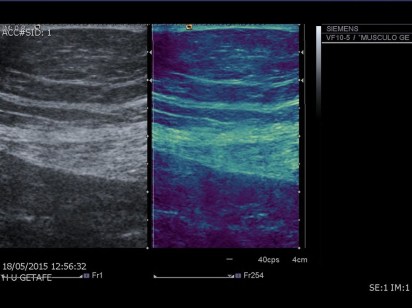
32. Artefactos Nocivos.

En el Post anterior comentábamos los artefactos beneficiosos…https://ecografiafacil.com/2018/02/20/31-los-artefactos-artefactos-beneficiosos/

Hoy toca hablar de esos otros artefactos, los nocivos. De forma general vamos a decir que hay una gran cantidad de artefactos nocivos, algunos muy difíciles de percibir, otros muy claros, aquí vas a ver un resumen de los que a mi modo de ver, me parecen más importantes.

In the previous Post we mentioned the beneficial artifacts … http: //ecografiafacil.com/2018/02/20/31-los-artefactos-artefactos-beneficiosos/ Today we have to talk about those other artifacts, the noxious ones. In a general way we are going to say that there are a lot of harmful devices, some very difficult to perceive, others very clear, here you will see a summary of those that in my opinion, seem more important to me.
  1. Reverberaciones: Se producen cuando el haz de ultrasonidos incide sobre una interfase que separa dos medios de muy diferente impedancia acústica, como por ejemplo entre un sólido ecogénico y gas en el tubo digestivo.El empleo de armónicos y reducción de las ganancias minimizan la presencia de este artefacto.
    Reverberations: They occur when the ultrasound beam impinges on an interface that separates two media of very different acoustic impedance, such as between an echogenic solid and gas in the digestive tract. The use of harmonics and reduction of gains minimize the presence of this artifact.

    Las imágenes hipercogénicas de la izquierda de la imagen, como en bandas, son típicas del gas intestinal, un artefacto recurrente por el que se impone pedir a los pacientes que vayan en ayunas a las exploraciones de Ecografía Abdominal.

    The hypercogenic images on the left of the image, as in bands, are typical of the intestinal gas, a recurrent artifact that requires patients to be asked to go on fasting to Abdominal Ultrasound scans.

    Cola de cometa: Ocurre cuando el haz de ultrasonidos choca contra una interfase estrecha y muy ecogénica apareciendo detrás de esta interfase una serie de ecos lineales. Adenomiomas de pared vesical o pequeñas burbujas de aire en el seno de un medio sólido.Cuerpos extraños muy ecogénicos.

    Comet tail: Occurs when the ultrasound beam hits a narrow and very echogenic interface, appearing behind this interface a series of linear echoes. Adenomyomas of bladder wall or small bubbles of air in the bosom of a solid medium. Very echogenic foreign bodies.

    Casi inapreciable, pero marcada con una flecha blanca, observamos una imagen hiperecogénica, pegada a la pared de la vesícula, anecoica, y una pequeña línea hiperecogénica que sale de ella.

    Almost imperceptible, but marked with a white arrow, we observed a hyperechoic image, attached to the wall of the gallbladder, anechoic, and a small hyperechoic line that comes out of it.
  2. Imagen en espejo: Se produce cuando una interfase muy ecogénica se encuentra delante de otra imagen curva tan ecogénica como ella. Es muy típico la imagen que ves a continuación donde la lesión medida en el parénquima hepático, hiperecogénica aparece al otro lado de la línea del diafragma (muy hiperecogénica) simulando otra lesión (flecha blanca), que no es real.
    Es un error en la lectura de los ecos de retorno, me explico, cuando el haz llega a la estructura y vuelven al transductor lo hacen apropiadamente, pero hay otra parte del haz que llega a la siguiente capa hiperecogénica, que devuelve ecos que chocan contra la parte posterior de la primera interfase hiperecogénica, estos ecos tardan más en llegar al transductor y por tanto hace que parezca que está más profundo, es para explicarlo muy básicamente, una doble lectura en tiempos distintos. En ecografía el tiempo de lectura equivale a profundidad, por tanto la segunda lectura del objeto será incongruente y ocasiona esta falsa imagen en profundo.


  3. Refracción divergente: Cuando el sonido traspasa dos medios de diferente velocidad de propagación. Se puede observar un efecto de discontinuidad como en el caso de la imagen siguiente, efecto irreal debido al cambio de velocidad entre dos tejidos de muy diferente impedancia. https://ecografiafacil.com/2017/12/15/5-magnitudes-de-la-onda-otras-magnitudes/       
    Divergent refraction: When the sound passes through two media of different velocity of propagation. A discontinuity effect can be observed as in the case of the following image, an unreal effect due to the change in speed between two tissues of very different impedance. 
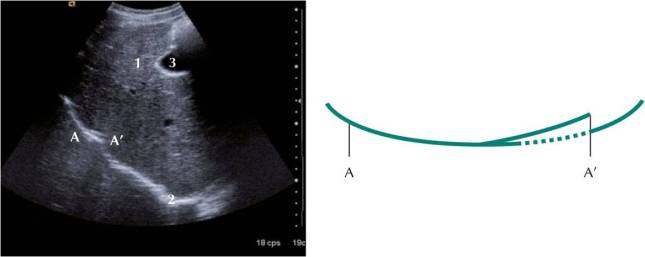
    Imagen propiedad de Francisco Ordoñez en su manual de ecografía.                                                                                                                                                                         
  4. Aliasing: Es un artefacto típico del modo de trabajo Doppler, donde vamos a encontrar un lectura incoherente de la señal doppler. Las causas son múltiples, desde limitaciones técnicas hasta la anatomía del paciente pueden provocar este artefacto. En la imagen vamos a ver una imagen desestructurada del Doppler. En La imagen observamos el efecto anómalo de lectura Doppler provocado por una litiasis  ureteral.
    Aliasing: It is a typical artifact of Doppler work mode, where we will find an inconsistent reading of the Doppler signal. The causes are multiple, from technical limitations to the anatomy of the patient can cause this artifact. In the image we will see a dysfunctional Doppler image. In the image we observe the anomalous effect of Doppler reading caused by a ureteral lithiasis.
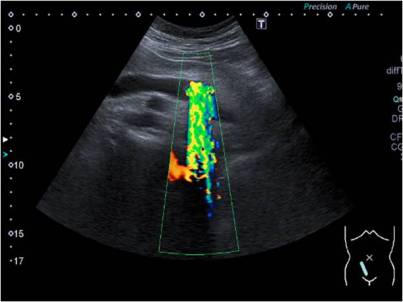
    Aliasing.


  5. Anisotropía: Es la propiedad que tienen algunos tejidos de variar su ecogenicididad dependiendo del ángulo de incidencia del haz ultrasónico sobre ellos. La estructura anisotrópica por excelencia es el tendón. Este artefacto es exclusivo de la ecografía muscular. Una correcta ejecución de la técnica garantiza la no aparición de dicho artefacto. Obsérvese en el recuadro rojo el origen del tendón del biceps, ovalado e hiperecogénico y la correcta colocación del transductor en ángulo de 90º con respecto al eje largo del húmero y su mala angulación en la imagen inferior con la consecuente repercusión en la imagen ecográfica donde no se visualiza dicho tendón.
    Anisotropy: It is the property that some tissues have to vary their echogenicity depending on the angle of incidence of the ultrasonic beam on them. The anisotropic structure par excellence is the tendon. This artifact is exclusive of muscle ultrasound. A correct execution of the technique guarantees the non-appearance of said artifact. Observe in the red box the origin of the biceps tendon, oval and hyperechogenic and the correct placement of the transducer at an angle of 90º with respect to the long axis of the humerus and its mala angulation in the lower image with the consequent repercussion in the ultrasound image where said tendon is visualized.
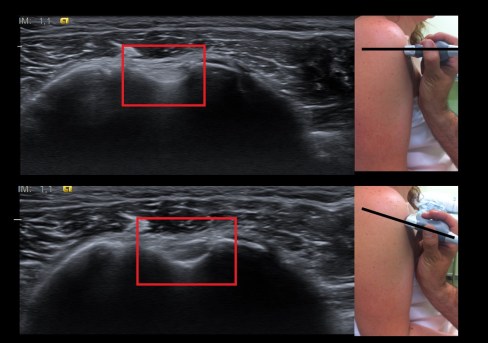
    Anisotropía en Tendón del Biceps.


  6. Imagen doble: Debido a la refracción, pueden presentarse objetos reales en localización falsa. Se minimiza con un ángulo de incidencia lo más cercano posible a 90º. En este caso que pongo a continuación, una aguja de punción cuyo efecto parece simular que existan varias, siendo esta imagen el artefacto que estamos tratando en este punto.
    Double image: Due to refraction, real objects can be presented in a false location. It is minimized with an angle of incidence as close as possible to 90º. In this case that I put next, a needle of puncture whose effect seems to simulate that there are several, this image being the artifact that we are dealing with at this point.
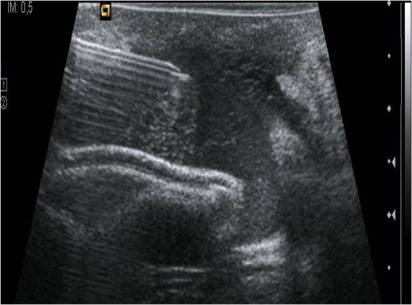
     

    Aguja con varias capas en profundidad, sólo la primera es real.


  7. Ausencia de apoyo: Se produce al no apoyar el transductor en la piel del paciente convenientemente, bien por la estructura de la anatomía a estudiar o por falta de gel. En la imagen a la derecha de esta, se objetiva un área donde no se ve el tejido a estudio por falta de apoyo del transductor. Es típico del aprendizaje este tipo de artefactos que la experiencia pule y corrige.
    Absence of support: It occurs when the transducer is not supported on the patient’s skin conveniently, either by the structure of the anatomy to be studied or by lack of gel. In the image to the right of this, an area where the study tissue is not seen due to lack of transducer support is objectified. It is typical of learning this type of artifacts that experience polishes and corrects.
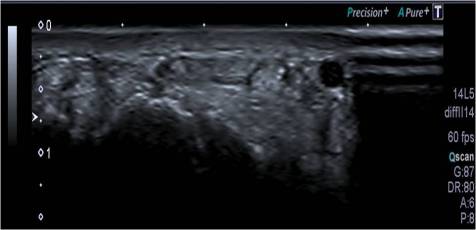
    Falta de apoyo en margen derecho de la imagen.


    Se puede luchar contra estos indeseables artefactos, la depuración de la técnica logrará minimizarlos, pero a continuación te recomiendo una serie de acciones que se pueden llevar a cabo para intentar hacer que desaparezcan.

    Recomendaciones:

    1. Acceder a la zona explorada por otra ventana. 

    2. Uso de gel adecuado para una buena transmisión.

    3. Estudio con otra frecuencia. (Ancho de banda).

    4. Ajuste de la ganancia total y parcial.https://ecografiafacil.com/2018/01/10/15-la-ganancia-general/

    5. Revisar situación del foco. https://ecografiafacil.com/2018/01/18/19-el-foco/

    6. Cambio de la profundidad y del ángulo de incidencia. https://ecografiafacil.com/2018/01/16/18-la-profundidad/

    7. Mover al paciente si es posible, por ejemplo cuando hay mucho gas intestinal para tratar de movilizarlo.

You can fight against these undesirable artifacts, the debugging technique will minimize them, but then I recommend a series of actions that can be carried out to try to make them disappear.
Recommendations:
1. Access the scanned area by another window.
2. Use of gel suitable for a good transmission.
3. Study with another frequency. (Bandwidth).
4. Adjustment of the total and partial profit.http: //ecografiafacil.com/2018/01/10/15-la-ganancia-general/
5. Review focus situation. https://ecografiafacil.com/2018/01/18/19-el-foco/
6. Change of depth and angle of incidence. https://ecografiafacil.com/2018/01/16/18-la-profundidad/
7. Move the patient if possible, for example when there is a lot of intestinal gas to try to mobilize it.
 

31. Los Artefactos.Artefactos Beneficiosos.

El ultrasonido cuando atraviesa los tejidos y estos devuelven los ecos de retorno no siempre lo hacen coherentemente, es decir, en ocasiones en  la imagen ecográfica vamos a ver imágenes que no son deseadas, o sí…son los artefactos.

Artefactos hay en todas las técnicas de imagen, desde la radiología convencional hasta la Ecografía pasando por la RMN o el TAC.Cada una tiene sus propias características, íntimamente relacionadas con la naturaleza física de la técnica que estemos usando.

Los Artefactos ecográficos nocivos son Interacciones del haz con la materia que producen imágenes no deseadas. Pueden llevar a equívoco y/o facilitar el diagnóstico. ¿Todos los artefactos son negativos en Ecografía? la respuesta es NO.Hay algunos artefactos que son buenos, beneficiosos, porque ayudan al diagnóstico.

Dos tipos de Artefactos ecográficos:

  • Útiles
  • Nocivos

En este Post31 vamos a tratar los buenos, que además son importantísimos, porque los vamos a «disfrutar» todos los días que nos dediquemos a realizar ecografía…Por tanto…

Artefactos Ecográficos beneficiosos:

  1. Sombra Acústica Posterior:

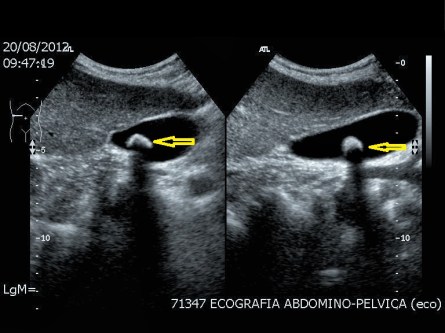
El ultrasonido choca con una interfase https://ecografiafacil.com/2017/12/19/7-las-interfases/ muy ecogénica y no puede atravesarla. (Flecha Amarilla). 

No hay información detrás de esta interfase tan ecogénica. (Sombra Posterior).

Es muy característico de las litiasis biliares y renales y de las calcificaciones musculares y otro tipo de estructuras ricas en calcio.

The ultrasound when it crosses the tissues and these return echoes do not always do so coherently, that is, sometimes in the ultrasound image we will see images that are not desired, or yes … they are the artifacts. Artifacts are found in all imaging techniques, from conventional radiology to ultrasound through MRI or CT. Each has its own characteristics, closely related to the physical nature of the technique we are using. Harmful ultrasound artifacts are beam interactions with matter that produce unwanted images. They can mislead and / or facilitate diagnosis. Are all artifacts negative in Ultrasound? the answer is NO. There are some artifacts that are good, beneficial, because they help the diagnosis.
Two types of sonographic artifacts:
Tools
Harmful
In this Post31 we will try the good ones, which are also very important, because we are going to «enjoy» them every day that we dedicate ourselves to perform ultrasound … Therefore … Beneficial Ecographic Artifacts: Rear Acoustic Shade: Ultrasound collides with an interface that is very echogenic and can not pass through it. (Yellow arrow).
There is no information behind this echogenic interface. (Rear Shadow). It is very characteristic of biliary and renal stones and muscle calcifications and other types of structures rich in calcium.
Litiasis Biliar y su Sombra Posterior.

En la imagen anterior observas, señalada por una flecha amarilla, una imagen hiperecogénica, porque brilla, redonda, única, dentro de una estructura anecoica (contiene líquido). Tras la imagen hiperecogénica vemos una estela negra alargada que busca la profundidad de la imagen…Bien, esta estela negra se llama Sombra Acústica Posterior. En la imagen estás viendo una piedra dentro de una vesícula biliar, es decir, una litiasis biliar.

Analicemos el término «Sombra Acústica Posterior». Sombra nos habla de una ausencia de luz. Acústica hace referencia a la naturaleza de los ultrasonidos. Posterior indica que se produce después de algo.

La sombra acústica posterior es la ausencia de información producida tras la piedra que impide que el haz ultrasónico atraviese dicha piedra debido a su alta impedancia provocando que el haz de ultrasonido que llega  la piedra vuelva reflejado casi en su totalidad hacia el transductor.

In the previous image you can see, indicated by a yellow arrow, a hyperechoic image, because it shines, round, unique, inside an anechoic structure (it contains liquid). After the hyperechogenic image we see an elongated black wake that looks for the depth of the image … Well, this black stele is called Posterior Acoustic Shade. In the image you are seeing a stone inside a gall bladder, that is, a biliary lithiasis. Let’s analyze the term «Posterior Acoustic Shade». Shadow speaks of an absence of light. Acoustics refers to the nature of ultrasound. Later indicates that it occurs after something. The posterior acoustic shadow is the absence of information produced after the stone that prevents the ultrasonic beam from crossing that stone due to its high impedance, causing the ultrasound beam that reaches the stone to return reflected almost entirely to the transducer.
Reflexión total del haz de US y Sombra Posterior.

En la foto anterior ves dos flechas, la amarilla representa el tren de ultrasonidos que llega a la litiasis y la flecha roja los ecos de retorno que se devuelven hacia el transductor ya que no consiguen atravesarla y como consecuencia la sombra acústica posterior.

In the previous photo you see two arrows, the yellow represents the train of ultrasound that arrives at the lithiasis and the red arrow the return echoes that are returned to the transducer as they can not pass through and consequently the subsequent acoustic shadow.

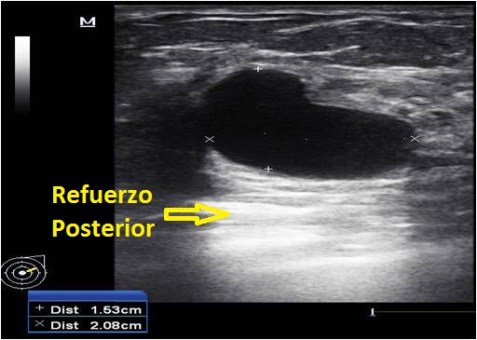
2. Refuerzo Posterior:

Se produce cuando el ultrasonido atraviesa un medio sin interfases en su interior y pasa a un medio sólido ecogénico.

Nos permite diferenciar quistes.

Permite estudiar estructuras usando como ventana estructuras llenas de líquido.

Este artefacto funciona diametralmente opuesto al anterior, ya que en vez de devolver todos los ecos del haz cuando llega a una estructura, estos ecos, en el caso de una estructura acuosa, atraviesan la estructura en un 100% prácticamente, y al llegar al tejido posterior a dicha estructura, se ve un halo hiperecogénico, es decir, más brillante, que es el Refuerzo Posterior y que responde a un paso casi total del haz de ultrasonido emitido desde nuestra sonda.

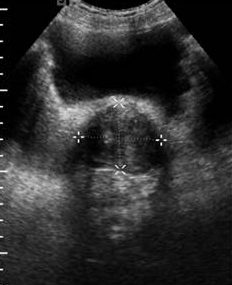
Es típico de los quistes, cuyo contenido es acuoso, y de las vejigas, y de aquellas estructuras cuyo porcentaje de agua sea muy elevado y que funcionan como ventanas para estudios de otros órganos, como el de la próstata, el útero y los ovarios, por eso decimos a los pacientes que para estudiar estas estructuras masculinas y femeninas, deben acudir a la cita con la vejiga llena.

2. Posterior Reinforcement: It occurs when the ultrasound passes through a medium without interfaces in its interior and passes to a solid echogenic medium. It allows us to differentiate cysts. It allows studying structures using structures filled with liquid as a window. This device works diametrically opposite to the previous one, since instead of returning all the echoes of the beam when it reaches a structure, these echoes, in the case of an aqueous structure, practically cross the structure in a 100%, and when reaching the tissue After this structure, a hyperechogenic halo is seen, that is, brighter, which is the Posterior Reinforcement and responds to an almost total passage of the ultrasound beam emitted from our probe. It is typical of cysts, whose content is aqueous, and bladders, and those structures whose water percentage is very high and which work as windows for studies of other organs, such as the prostate, uterus and ovaries, that’s why we tell patients that to study these male and female structures, they should go to the appointment with a full bladder.
Halo Hiperecogénico correspondiente a Refuerzo Posterior.
Estudio de Próstata con vejiga llena.

En la imagen anterior vemos la vejiga con líquido y una estructura posterior, hipoecogénica y que está medida, la próstata, que de no ser porque la vejiga está llena de líquido, no se podría haber estudiado tan bien.

Hemos estudiado dos importantes conceptos que te van a acompañar en todo el viaje que hagas por el mundo de la ecografía. La Sombra Posterior y El Refuerzo Posterior. Forman parte de los Artefactos Beneficiosos.

En el próximo post haré un resumen de los principales artefactos nocivos.

In the previous image we see the bladder with fluid and a posterior structure, hypoechoic and that is measured, the prostate, that of not being because the bladder is full of liquid, it could not have been studied so well. We have studied two important concepts that will accompany you throughout the journey you make in the world of ultrasound. The Posterior Shadow and the Posterior Reinforcement. They are part of the Beneficial Artifacts. In the next post I will summarize the main harmful artifacts.

Resolvemos las preguntas del Post anterior https://ecografiafacil.com/2018/02/17/30-la-homogeneidad-y-la-hetergenicidad-de-la-imagen/

Imagen 1: Heterogénea.

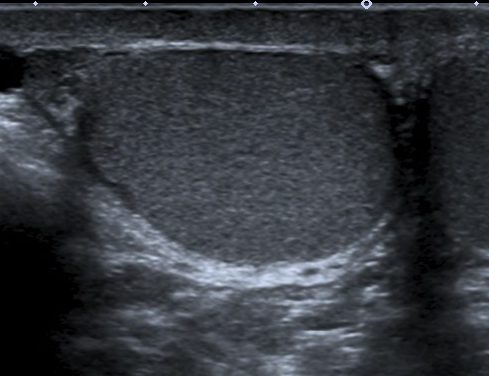
Imagen 2: Homogénea.


30. La Homogeneidad y la Heterogenicidad de la Imagen.

Es muy poco conocida y casi nunca explicada esta característica de la imagen en ecografía. Es más, aprendes esta característica de la imagen en el trabajo diario, no en libros, sin embargo es fundamental que seamos capaces de distinguir este tipo de diferencias en la imagen, porque muchos tejidos cambian de homogéneo a heterogéneo cuando se ven afectados por alteraciones patológicas.

Bien, profundicemos pues…

Lo primero es saber lo que es homogéneo y heterogéneo, la definición:

Homogéneo: Que está formado por elementos con características comunes referidas a su clase o naturaleza, lo que permite establecer entre ellos una relación de semejanza y uniformidad.

Heterogéneo: Que está formado por elementos de distinta clase o naturaleza.

Pero qué significa esto, bien, como una imagen vale más que mil palabras, te pongo dos imágenes, mira:

It is very little known and almost never explained this feature of the image in ultrasound. Moreover, you learn this characteristic of the image in daily work, not in books, however it is fundamental that we are able to distinguish this type of differences in the image, because many tissues change from homogeneous to heterogeneous when they are affected by pathological changes . Well, let’s go deeper then … The first thing is to know what is homogeneous and heterogeneous, the definition: Homogeneous: That is formed by elements with common characteristics referring to their class or nature, which allows to establish between them a relation of similarity and uniformity. Heterogeneous: That is formed by elements of different class or nature. But what does this mean, well, as a picture is worth a thousand words, I put two images, look:
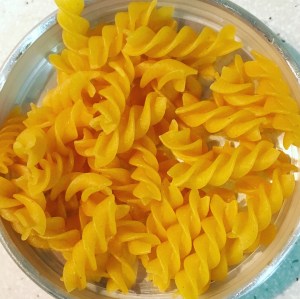
Imagen A.
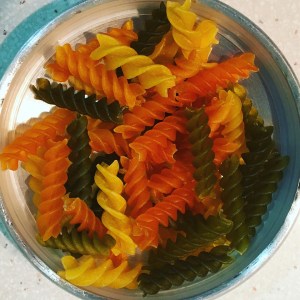
Imagen B.

En la imagen A vemos un tipo de pasta, pasta de la de comer, sin gluten además…puedes reconocer que su color es uniforme, que globalmente, todo es igual…Bien, la imagen B es diferente, es la misma pasta, también sin gluten, pero en este caso toda diferente,con variedad de tonos, siendo de naturaleza idéntica…no es una clase de cocina, me sirve para explicarte que el tejido, a veces, cuando se ve afectado por algún tipo de patología, cambia, y siendo tejido igual, de un mismo órgano o lugar de la anatomía, se vuelve diferente…

Te lo voy a demostrar con una imagen ecográfica..

In the picture A we see a type of pasta, the pasta to eat, gluten-free addition … you can recognize that its color is uniform, that globally, everything is the same … Well, the image B is different, it is the same pasta, also gluten-free, but in this case all different, with a variety of shades, being identical in nature … it’s not a cooking class, it helps me to explain that the fabric, sometimes, when it is affected by some type of pathology, it changes, and being the same tissue, of the same organ or place of anatomy, it becomes different … I’ll show you with an ultrasound image ..
Imagen C.

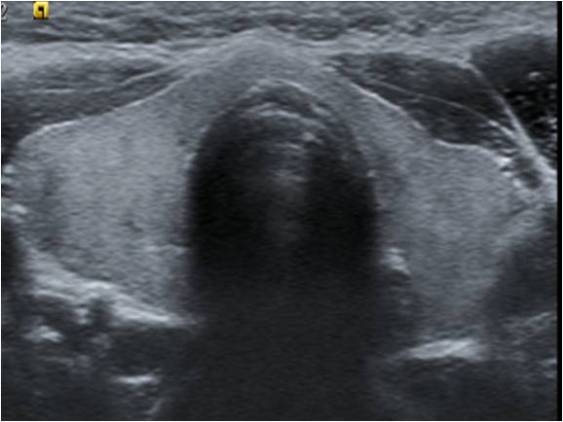
Ves en la imagen C, es un Tiroides, ecográficamente ves una glándula que es de aspecto hiperecogénico, es decir, es gris, brillante respecto al tejido que lo bordea, que son los músculos, y la tráquea que es una mancha hipoecogénica central, provocada por el aire que contiene…El tejido de Tiroides es gris y además es un gris uniforme, igual en toda la glándula, se dice que es Homogéneo.

Siguiente imagen…

You see in the image C, it is a thyroid, ecographically you see a gland that is hyperechogenic, that is, it is gray, bright with respect to the tissue that borders it, which are the muscles, and the trachea that is a central hypoechoic spot, provoked by the air it contains … Thyroid tissue is gray and is also a uniform gray, the same throughout the gland, it is said to be Homogeneous. Next image …
Imagen D.

En la imagen D vemos otro Tiroides, sin embargo ves claramente que este Tiroides es diferente, su gris, su aspecto global, ha cambiado, tiene un aspecto parcheado,ves varios tonos de gris, grises claros (hiperecogénicos) con otros más oscuros (hipoecogénicos), a esa mezcla le concede a la imagen el calificativo de Heterogénea…y sí, efectivamente, este Tiroides es una glándula afectada por un proceso patológico que afecta a su tejido…Es Heterogéneo.

Esto es lo que quería que aprendieses hoy, que algunas patologías hacen cambiar el aspecto de los tejidos, que es vital que el Técnico de Radiología y otros profesionales que trabajen con ecografía,conozcan, conozcamos, el aspecto normal de los tejidos para tener una base con la que valorar el posible cambio o afectación patológica de un órgano, y aunque no somos radiólogos, no podemos diagnosticar, somos los primeros en ver las imágenes y podemos alertar de esta condición que sufren algunos tejidos a quien tiene que firmar un informe, que es el Especialista.

Podemos ver este tipo de cambios en enfermedades de toda clase, tendinopáticas, inflamatorias, neoplásicas, etc. De facto, las lesiones también pueden ser ellas mismas homogéneas o heterogéneas…

Es muy importante este conocimiento para los Fisioterapeutas que trabajan con ecografía y deben valorar las características de una lesión…

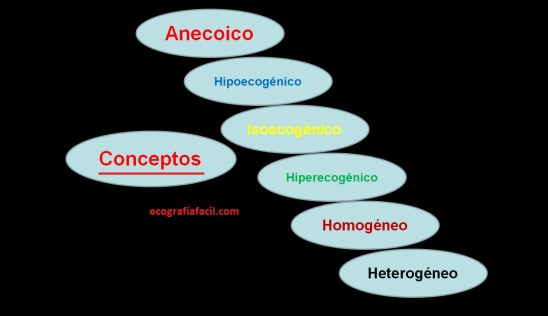
Ahora ya sabemos manejar varios conceptos con los que puedes identificar el aspecto ecográfico de los tejidos, entre el post anterior y este, recopilamos y sabemos lo que es Anecoico, Hipoecogénico, Isoecogénico, Hiperecogénico, Homogéneo y Heterogéneo, pero es que además, cualquiera de las características del post anterior es combinable con las que hemos estudiado hoy…Es decir, una estructura puede ser hipoecogénica y además heterogénea…o Hiperecogénea y homogénea, como la imagen A, porque cada tejido se refleja en la imagen según su naturalez y su afectación y siempre tenemos que caracterizar las imágenes de forma global, es decir, un Hígado, un testículo, una rotura muscular, lo que sea, lo vamos a evaluar de forma global, y así todas las estructuras.

In D image we see another Thyroid, however you see clearly that this Thyroid is different, its gray, its global aspect, has changed, it has a patchy appearance, you see several shades of gray, light gray (hyperechogenic) with darker ones (hypoechogenic) ), that mixture gives the image the qualification of Heterogeneous … and yes, indeed, this Thyroid is a gland affected by a pathological process that affects its tissue … It is Heterogeneous. This is what I wanted you to learn today, that some pathologies change the appearance of tissues, that it is vital that the Radiology Technician and other professionals who work with ultrasound, know, know, the normal appearance of the tissues to have a base with which to evaluate the possible change or pathological involvement of an organ, and although we are not radiologists, we can not diagnose, we are the first to see the images and we can alert of this condition that some tissues suffer to those who have to sign a report, which He is the Specialist. We can see this type of changes in diseases of all kinds, tendinophatic, inflammatory, neoplastic, etc. De facto, the lesions can also be themselves homogeneous or heterogeneous … This knowledge is very important for Physiotherapists who work with ultrasound and must assess the characteristics of an injury … Now we know how to handle several concepts with which you can identify the ecographic aspect of tissues, between the previous post and this, we collect and know what Anecoic, Hypoecogenic, Isoechogenic, Hyperecogenic, Homogeneous and Heterogeneous, but it is also that the characteristics of the previous post is combinable with those we have studied today … That is, a structure can be hypoechogenic and also heterogeneous … or Hyperecognea and homogeneous, like image A, because each tissue is reflected in the image according to its nature and its affectation and we always have to characterize the images globally, that is, a Liver, a testicle, a muscle break, whatever, we will evaluate it globally, and so all the structures.
Conceptos básicos de la imagen en ecografía.

Te pongo dos imágenes y quiero que me digas como las ves, si homogénea o heterogénea.

Imagen 1.
Imagen 2.

Las imágenes 1 y 2 son la imagen de un testículo. Observa las diferencias y elige como son:

Imagen 1: 

a. Heterogénea

b. Homogénea

Imagen 2:

a. Heterogénea

b. Homogénea

Resolvemos las imágenes del post anterior…https://ecografiafacil.com/2018/02/15/29-la-semiologia-ecografica/

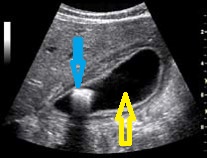
  • Hipercogénico , flecha azul, porque brilla inténsamente, típico de las piedras vesiculares.
  • Anecoico, flecha amarilla, porque es negro (líquido) de la vesícula biliar.
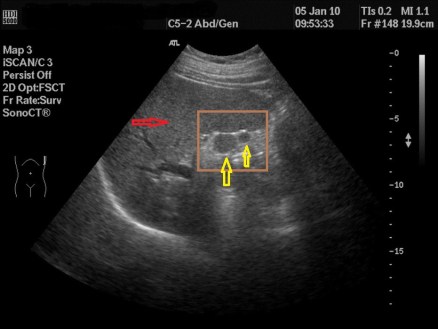
  • Isocoico, en el rectángulo, porque los bazos accesorios, las dos bolitas que se ven (flechas amarillas), son del mismo tejido que el órgano grande, que es el bazo (flecha roja).


29. La Semiología Ecográfica. La Ecogenicidad.

Se acabó la parte más teórica de la ecografía, ahora toca disfrutar con las imágenes.

En este post vas a aprender como se ven las estructuras y su comportamiento ecográfico según de la naturaleza que estén hechos. En radiología tenemos una serie de densidades que tenemos que estudiar cuando hacemos un estudio radiológico, en ecografía, el comportamiento de esas densidades es vital para poder identificar estructuras y patologías.

El comportamiento de esas estructuras cuando interaccionan con el haz ultrasónico va a dar una serie de imágenes, entre el blanco y el negro y todos los grises que hay entre medias, según sean negro, gris oscuro, gris, gris claro o casi blanco vamos a poder identificar esas estructuras como son, el agua, la grasa, el hueso, el aire…bueno, el aire no, ya sabes que en ecografía el aire provoca ausencia de información…Lo bueno de la ecografía a diferencia de la radiología convencional es que es capaz de identificar diferentes densidades de agua, por ejemplo, sangre, pus, etc.

Vamos a utilizar una serie de palabras para identificar esa representación de grises, es el argot de la ecografía y eso tiene un nombre, se conoce como la ECOGENICIDAD de la estructuras…eso es lo que voy a intentar explicar en este Post…adelante…

Anecoico o anecogénico: No devuelve ecos de retorno, cuando el haz llega a una estructura anecoica, esta va a dejar pasar todo el tren de ultrasonidos y es típico comportamiento del líquido, y donde tenemos líquido en el cuerpo, Vejiga (Orina), Vesícula (Bilis), Vasos (Sangre), LCR (Líquido cefalo-raquídeo)…También estructuras patológicas como los Quistes simples,que tienen un contenido acuoso…bien todas estas estructuras se van a ver en la imagen en colo negro. Por tanto, Anecoico=Negro.

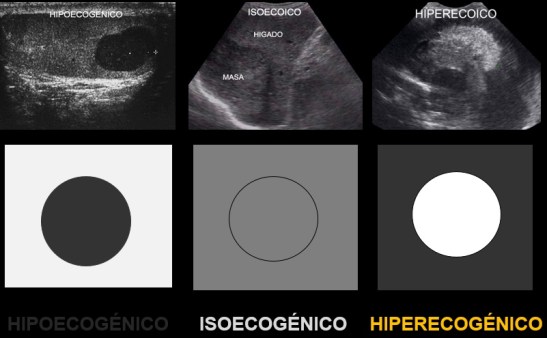
Hipoecogénico o Hipoecoico: Estas estructuras devuelven muy pocos ecos, su aspectos no es negro, pero tienden a un gris muy oscuro y son multitud de estructuras las que se ven así, tanto normales, como patológicas.

Isoecogénico o Isoecoico: Estas estructuras tienen un comportamiento que identificamos igual a la estructura con la que la comparamos, es decir, dentro de la escala de grises de mi equipo, ambas estructuras, aunque distintas anatómicamente, tienen que verse igual, es decir, del mismo gris, por ejemplo, el parénquima hepático y la corteza renal son isoecogénicas, es decir, iguales, el mismo gris.

Hipercogénico o hiperecoico: Estas estructuras devuelven muchos ecos en su interfase, su aspectos no es blanco, pero tienden a un gris muy claro, casi blanco, es decir, brillan mucho y son multitud de estructuras las que se ven así, tanto normales, como patológicas.

The most theoretical part of ultrasound is over, now it’s time to enjoy the images. In this post you will learn how the structures and their ecographic behavior are seen according to the nature they are made of. In radiology we have a series of densities that we have to study when we do a radiological study, in ultrasound, the behavior of these densities is vital to be able to identify structures and pathologies. The behavior of these structures when interacting with the ultrasonic beam will give a series of images, between white and black and all grays that are in between, depending on whether they are black, dark gray, gray, light gray or almost white. to be able to identify those structures as they are, water, fat, bone, air … well, the air does not, you know that in ultrasound the air causes lack of information … The good thing about ultrasound, unlike the Conventional radiology is that it is able to identify different densities of water, for example, blood, pus, etc. We are going to use a series of words to identify that representation of grays, it is the slang of the ultrasound and that has a name, it is known as the ECOGENICITY of the structures … that is what I will try to explain in this Post .. .ahead… Anechoic or anechogenic: It does not return echoes, when the beam reaches an anechoic structure, it will let the whole train of ultrasound pass and it is typical behavior of the liquid, and where we have fluid in the body, Bladder (Urine), Vesicle (Bile), vessels (blood), cerebrospinal fluid (cerebrospinal fluid) … Also pathological structures such as simple cysts, which have an aqueous content … well all these structures will be seen in the image in black. Therefore, Anecoico = Black. Hypoechogenic or Hypoechoic: These structures return very few echoes, their aspects are not black, but they tend to a very dark gray and there are many structures that look like this, both normal and pathological. Isoechogenic or Isoechoic: These structures have a behavior that we identify equal to the structure with which we compare it, that is, within the gray scale of my team, both structures, although different anatomically, have to look the same, that is, the same gray, for example, the hepatic parenchyma and the renal cortex are isoechogenic, that is, equal, the same gray. Hypercogenic or hyperechoic: These structures return many echoes in their interface, their aspects are not white, but tend to a very light gray, almost white, that is, they shine a lot and there are a multitude of structures that look this way, both normal and pathological.
La Ecogenicidad y sus variables.

Cuando decimos que una estructura es Hipo, Iso, Hiper – Ecoico, Ecogénico o Refringente – lo hacemos porque la comparamos, habitualmente, con la estructura que tenemos al lado…No sé si te ha quedado muy claro esto, pero te lo explico de otro modo, con imágenes…verás como lo entiendes.

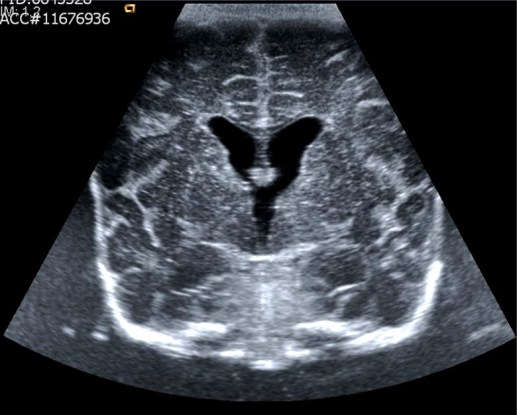
Anecoico: Negro, que no devuelve ecos. En la imagen que ves a continuación ves el corte coronal de un neonato en el contexto de una ecografía transfontanelar, se ven las circonvoluciones del cerebro y en el centro en forma de «Y» y completamente negro el líquido cefalorraquídeo en los ventrículos laterales.El LCR normal se ve así, negro, anecoico.

When we say that a structure is Hipo, Iso, Hiper – Ecoico, Ecogenic or Refringente – we do it because we compare it, usually, with the structure that we have next … I do not know if this has been very clear to you, but I explain it to you otherwise, with images … you’ll see how you understand it. Anechoic: Black, which does not echo. In the image that you see below you see the coronal cut of a neonate in the context of a transfontanel ultrasound, you can see the circonvolutions of the brain and in the center in the form of «Y» and completely black the cerebrospinal fluid in the lateral ventricles. Normal CSF looks like this, black, anechoic.
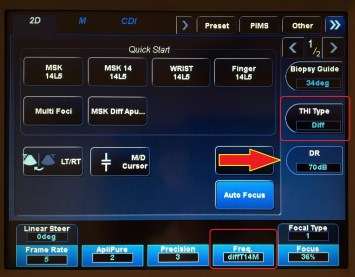
Imagen del LCR con aspecto Aneocico (Negro)
Imagen de la vejiga.Anecoica.

En la imagen inmediatamente superior objetivamos un corte longitudinal de la vejiga, completamente llena de orina, líquido, por tanto anecoico.

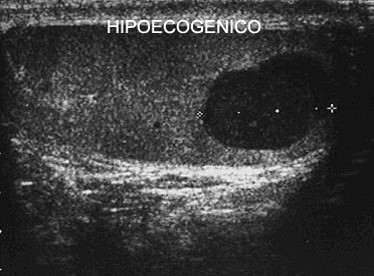
Hipoecogénico: Es toda aquella imagen que sea más oscura que el tejido que tenga alrededor o con el tejido que lo queramos comparar…esta imagen siguiente te lo va a aclarar.

In the image immediately above we objectify a longitudinal section of the bladder, completely filled with urine, liquid, therefore anechoic. Hypoecogenic: It is all that image that is darker than the tissue that has around or with the tissue that we want to compare … this next image will clarify it.
Estructura hipoecogénica dentro de un teste.

En la imagen, bastante antigua, por cierto, vemos una imagen de una estructura ovalada que en su interior alberga otra estructura más pequeña y oscura.Bien, en este caso, es el estudio de un testículo que en su interior tiene una masa de aspecto hipoecogénico, es hipoecogénico porque sin ser negro, es más oscuro que el testículo que lo contiene.

In the image, quite old, by the way, we see an image of an oval structure that inside houses another smaller and darker structure. Well, in this case, it is the study of a testicle that inside has a mass of appearance hypoechogenic, it is hypoechoic because without being black, it is darker than the testicle that contains it.
Isoecogenicidad de corteza renal y parénquima hepático.

En la imagen anterior vemos parénquima hepático y corteza renal cuyo gris es muy parecido, esa es la normalidad, se dice que ambas estructuras se ven isoecogénicas, si alguna de ellas no respetase ese aspecto, nos alertaría de una patología sobre ese órgano, por eso es vital un perfecto ajuste de los parámetros técnicos y una imagen técnicamente bien ejecutada.

Isoecogénico, por tanto será que tiene el mismo gris que el tejido que lo envuelve o con el que lo comparemos…por ejemplo…En la imagen que ves a continuación hay dos estructuras ovoides, del mismo gris, son los testículos en su aspecto ecogénico normal, por tanto iguales. Mismo tono de gris se dice que son de igual ecogenicidad, por tanto aplicamos el sufijo iso para interpretar igualda, por tanto ambos testes entre si son Isoecogénicos.

In the previous image we see liver parenchyma and renal cortex whose gray is very similar, that is normality, it is said that both structures are isoechogenic, if any of them did not respect that aspect, it would alert us of a pathology on that organ, for that reason a perfect adjustment of the technical parameters and a technically well executed image is vital. Isoechogenic, therefore it will be that it has the same gray as the tissue that surrounds it or with which we compare it … for example … In the image that you see below there are two ovoid structures, of the same gray, are the testicles in its normal ecogenic appearance, therefore equal. Same shade of gray is said to be of equal echogenicity, therefore we apply the iso suffix to interpret equal, therefore both tests are Isoechogenic
Comparativa de ambos testículos.

Hipercogénico, hiperecoico o hiperrefringente, son las diferentes denominaciones que unidas al sufijo hiper indican que brilla más que el tejido con el que lo compraremos…por ejemplo…

Estas imágenes devuelven muchos ecos de retorno, sus interfases https://ecografiafacil.com/2017/12/19/7-las-interfases/ son más potentes y por eso brillan más.

En esta imagen que ves a continuación,vemos un riñón, concrétamente el derecho, junto al hígado. Este riñón tiene aspecto ovalado y dos áreas muy definidas, la corteza (flecha naranja) y el seno renal (flecha azul).La corteza es hipoecogénica con respecto a la grasa del seno renal que se objetiva más brillante y por tanto hipercogénica.

Hypercogenic, hyperechoic or hyperrefrigent, are the different names that together with the hyper suffix indicate that it shines more than the tissue with which we will buy it … for example … These images return many echoes of return, their interfaces https://ecografiafacil.com/2017/12/19/7-las-interfases/ are more powerful and therefore shine more. In this image that you see below, we see a kidney, specifically the right, next to the liver. This kidney has an oval aspect and two very defined areas, the cortex (orange arrow) and the renal sinus (blue arrow). The cortex is hypoechoic with respect to the fat of the renal sinus that is seen as brighter and therefore hypercogenic.
Corteza y seno renal y su aspecto ecogénico diferente.

En la imagen anterior vemos una estructura anecoica (negra), que es la vesícula llena de bilis, en su interior una estructura Hiperecogénica, muy brillante, que corresponde a una colelitiasis.

Ya sabes que los tejidos se ven en escala de grises y según sea su brillo los vamos a catalogar. Normales o patológicos los hallazgos deben de interpretarse en base al conocimiento de la normalidad.

A continuación te voy a poner dos imágenes para que puedas evaluar el aspecto ecográfico, en el próximo post te daré la solución.

In the previous image we see an anechoic (black) structure, which is the gall bladder, inside it is a very bright Hyperecogenic structure, corresponding to cholelithiasis. You already know that the fabrics are seen in gray scale and according to their brightness we are going to catalog them. Normal or pathological findings should be interpreted based on knowledge of normality. Next I’m going to put two images so you can evaluate the echographic aspect, in the next post I will give you the solution.
Imagen A. 

En la imagen A tienes que decir qué aspecto ecográfico tiene la estructura que marca la flecha azul:

  1. Hiperecogénico
  2. Isoecogénico
  3. Anecoico
  4. Hipoecogénico.

En la imagen A tienes que decir qué aspecto ecográfico tiene la estructura que marca la flecha amarilla:

  1. Hiperecogénico
  2. Isoecogénico
  3. Anecoico
  4. Hipoecogénico.
Imagen B.

En la imagen B ves dos estructuras redondas dentro de un rectángulo y marcadas con flecha amarilla. Quiero que me digas que aspecto ecográfico tienen respecto del parénquima del bazo marcado con flecha roja.

  1. Hiperecogénico
  2. Isoecogénico
  3. Anecoico
  4. Hipoecogénico.


28. La Calidad de la Imagen. La Resolución.

Cuando nos enfrentamos a una ecografía, lo más importantes es ver lo que necesitamos estudiar y verlo lo me mejor posible.

La Resolución de la imagen es aquella cualidad del equipo que nos permite ver mejor la cantidad de detalles que dicha imagen pueda mostrarnos.

Cuando nos compramos un televisor nuevo lo que buscamos es que se vea bien, en la tienda todos tienen muy buena imagen, pero si te pones a comparar unos con otros, observas diferencias en la imagen, unos se ven mejor y otros se ven un poco peor, casi siempre en relación con el precio, los mejores, más caros siempre…

Con un ecógrafo pasa algo parecido, cuanta más alta es la gama del equipo, mejor imagen vamos a tener.

Esa calidad de imagen depende de varios aspectos, muchos los hemos tratado en los parámetros técnicos, pero hay uno que no hemos tratado y es la resolución de imagen, así que vamos a ello.

Existen varios tipos de resoluciones. Vamos a separarlas, definirlas y detallarlas una por una y desmenuzando los factores de los que dependen, vas a ver que te suenan la inmensa mayoría, porque ya los hemos estudiado.

1. Resolución Espacial:

Capacidad para distinguir interfases muy cercanas.

En esta resolución, podemos distinguir a su vez, otras dos:

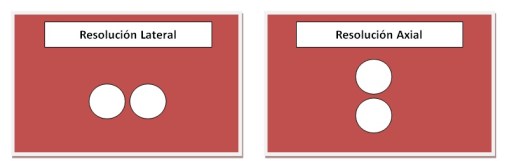
a. Resolución Axial:

 Capacidad para distinguir dos estructuras en profundidades distintas.

 Factores:

– Amplitud del pulso transmitido, siendo cuanto más corto mejor.

– Ancho de banda del transductor, es mejor siempre un transductor de banda ancha.

– Ancho de banda del receptor.

b.Resolución Lateral:

 Capacidad para distinguir dos objetos uno al lado del otro.

 Factores:

– Longitud de onda: A menor Longitud de onda, mejor resolución y mayor atenuación.

– Apertura del transductor siendo mejor cuanto más sea su apertura.

– Focalización.

– Profundidad del objeto. A más profundidad, pero resolución lateral.

When we are faced with an ultrasound, the most important thing is to see what we need to study and see it as well as possible. The resolution of the image is that quality of the equipment that allows us to see better the amount of details that this image can show us. When we buy a new television, what we look for is that it looks good, in the store all have a very good image, but if you start comparing with each other, you notice differences in the image, some look better and others look a bit worse, almost always in relation to the price, the best, most expensive always … With an ecograph something similar happens, the higher the range of the equipment, the better image we will have. That image quality depends on several aspects, many of us have dealt with the technical parameters, but there is one that we have not dealt with and it is the image resolution, so let’s go to it. There are several types of resolutions. We are going to separate them, define them and detail them one by one and shredding the factors on which they depend, you will see that they sound the vast majority, because we have already studied them. 1. Spatial Resolution: Ability to distinguish very close interfaces. In this resolution, we can distinguish, in turn, two others: to. Axial Resolution: Ability to distinguish two structures in different depths. Factors: – Amplitude of the transmitted pulse, the shorter the better. – Transducer bandwidth, a broadband transducer is always better. – Bandwidth of the receiver. b.Side Resolution: Ability to distinguish two objects side by side. Factors: – Wavelength: A shorter Wavelength, better resolution and greater attenuation. – Opening of the transducer, the better the opening. – Focus. – Depth of the object. Deeper, but lateral resolution.
Resolución espacial y sus dos variables.

2. Resolución Temporal.

La velocidad de refresco de la imagen en tiempo real debe ser suficientemente alta para que la imagen no vaya a saltos, es el “frame rate” y se mide en “imágenes por segundo”, puede ser un ajuste ecográfico que podamos variar en el menú.

Factores:

Profundidad de la imagen: A más profundidad, menos resolución temporal.

Campo de visión temporal: Cuanto más sea el campo de visión, más tiempo necesitará.

Focalización dinámica: A más focos menos resolución espacial.

Escanear zonas pequeñas siempre mejorará la resolución temporal, por eso mejora con frecuencias altas.

3. Resolución de Contraste.

Determina qué diferencia de amplitud deben tener dos ecos para que se les asigne distintos niveles de grises.

Cuanto mejor sea mi equipo más capacidad de distinguir dos grises muy parecidos y por tanto, más capacidad tengo de distinguir patologías.

Factores:

Depende del Rango Dinámico. El rango dinámico sufre la compresión reduciendo las amplitudes más pequeñas y más grandes, la diferencia de estas amplitudes es lo que se conoce como rango dinámico.

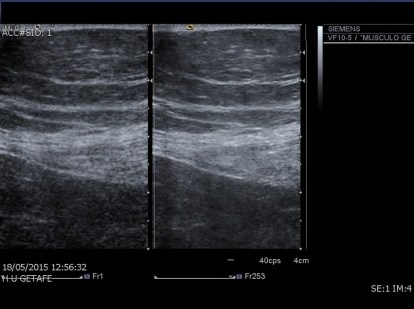
Como una imagen vale más que mil palabras os dejo esta imagen para que la comparéis.

2. Temporary Resolution. The refresh rate of the image in real time must be high enough so that the image does not jump, is the «frame rate» and is measured in «images per second», it may be an ultrasound adjustment that we can vary in the menu . Factors: – Depth of the image: The more depth, the less time resolution. – Temporal field of vision: The more the field of vision, the more time you will need. – Dynamic focus: A more spotlights less spatial resolution. Scanning small areas will always improve the temporal resolution, so it improves with high frequencies. 3. Contrast Resolution. Determine what difference in amplitude two echoes must have in order to be assigned different levels of grays. The better my team is, the more ability to distinguish two very similar grays and therefore, the more ability I have to distinguish pathologies. Factors: – Depends on the Dynamic Range. The dynamic range suffers compression by reducing the smaller and larger amplitudes, the difference of these amplitudes is what is known as dynamic range. As a picture is worth a thousand words I leave this image for you to compare.
Gran Resolución.
Mala Resolución.

En las imágenes observamos el Tendón Extensor de los dedos de la mano en dos equipos diferentes, uno de alta gama y otro de gama media-baja, observar el detalle de los tendones.

Esta es la resolución de imagen, cuanto mejor imagen tengamos, mejor vamos a poder distinguir estructuras. Los mejores equipos ayudan al diagnóstico.

In the images we see the Tendon Extender of the fingers of the hand in two different equipment, one of high range and another one of medium-low range, to observe the detail of the tendons. This is the image resolution, the better image we have, the better we will be able to distinguish structures. The best equipment helps the diagnosis.


27. Efectos biomecánicos del ultrasonido.

Habéis contactado conmigo algunos de vosotros por redes sociales a raíz del post sobre la potencia de transmisión y los posibles efectos adversos del sonido y aunque lo quería dejar para un poco más adelante vamos a tratar este tema para intentar despejar algunas dudas.

Hemos dicho y está probado científicamente que el ultrasonido utilizado en medicina puede ocasionar una serie de efectos en el tejido que atraviesa y que deben estar representados en la pantalla por los índices referidos en este post que te enlazo https://ecografiafacil.com/2018/02/04/24-la-potencia-de-transmision/ y que podemos dividir muy genéricamente en Efectos Térmicos y Efectos No Térmicos. Si bien, es una obviedad que el ultrasonido es una técnica segura en el ámbito de diagnóstico.

Por tanto, aunque es una técnica segura, vamos a estudiar aquellos efectos referidos en el párrafo anterior para comprender un poco más sobre los efectos del ultrasonido en el tejido.

Como norma general tenemos que el ultrasonido y sus efectos dependerán de:

Duración de la exposición.

Tipo de tejido expuesto.

Tasa de proliferación celular.

Potencial de regeneración.

Edad y estado del desarrollo (Fetales y Neonatos).

Debemos considerar además que:

  • Los adultos son más tolerantes a aumentos de temperatura.
  • En exposiciones a 50 horas de US no se ha observado efectos biológicos lo que hace entender a las claras que esta técnica es absolutamente segura en el ámbito del diagnóstico, pero debemos tener muy claro que la potencia acústica de salida en los dispositivos de US es suficiente para elevar la temperatura fetal y por tanto, debemos usarla, como recomiendan los organismos internacionales de modo responsable y siempre por profesionales cualificados.
You have contacted me some of you on social networks following the post on the power of transmission and the possible adverse effects of the sound and although I wanted to leave it for a little later we will try this topic to try to clear up some doubts. We have said and is scientifically proven that the ultrasound used in medicine can cause a series of effects on the tissue that crosses and that must be represented on the screen by the indexes referred to in this post that I link https://ecografiafacil.com/2018 / 02/04/24-the-power-of-transmission / and that we can divide very generically in Thermal Effects and Non-Thermal Effects. Although, it is a truism that ultrasound is a safe technique in the diagnostic field. Therefore, although it is a safe technique, we will study those effects referred to in the previous paragraph to understand a little more about the effects of ultrasound on tissue. As a general rule we have that ultrasound and its effects depend on:
-Duration of the exhibition.
-Type of exposed tissue.
-Cell proliferation rate.
-Potential regeneration.
-Age and state of development (Fetal and Neonatal).
We must also consider that: Adults are more tolerant of temperature increases. In exposures to 50 hours in the US, no biological effects have been observed, which makes it clear that this technique is absolutely safe in the field of diagnosis, but we must be very clear that the output acoustic power in US devices is sufficient to raise fetal temperature and therefore, we must use it, as recommended by international organizations in a responsible way and always by qualified professionals.

El riesgo más importante es por tanto, el aumento de temperatura reflejado en los Efectos Térmicos.

Efectos Térmicos:

Cuando hablábamos de que el ultrasonido recorre el tejido y pierde energía por la atenuación, es decir, energía debilitada en parte, por su transformación en calor que absorben los tejidos.Dicho de otro modo, la atenuación es la resulta de dos procesos, la dispersión del haz y la absorción del calor, nos interesa el último.

Con la absorción hay aumento de la temperatura tisular debido a una serie de factores muy claros en los que destacan estos. A saber:

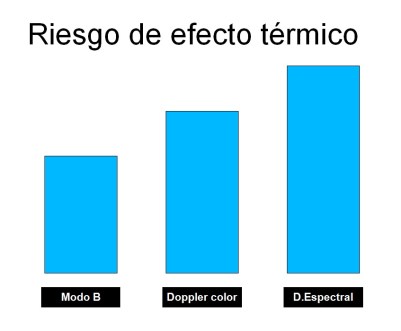
  • Intensidad del ultrasonido o la forma en que la potencia de transmisión es entregada en los tejidos y de ellos depende mucho los modos de trabajo, donde el modo M y el PW mantienen un haz de ultrasonido quieto, inmóvil y por tanto,más dañino. En modo B o Doppler Color y Power doppler no son inmóviles, siendo por tanto en estos últimos menos acusado el efecto térmico.
  • Tiempo de permanencia a la exposición de los ultrasonidos, lógicamente el efecto será mayor,dependiendo de cuánto tiempo estemos realizando una prueba diagnóstica…pensemos en los comienzos o cuando tenemos poca práctica, los tiempos se alargan.
  • Coeficiente de atenuación  de los tejidos, es decir, no todos los tejidos absorben del mismo modo el calor provocado por el ultrasonido,por ejemplo, es irrelevante en tejido sanguíneo, pero es muy alto para el hueso, donde en la superficie de este tejido se puede presentar un aumento de temperatura muy rápido.
Thermal Effects: When we talked about the ultrasound travels through the tissue and loses energy by attenuation, that is, energy weakened in part, by its transformation into heat absorbed tissues. Said otherwise, the attenuation is the result of two processes, the dispersion of the beam and the absorption of heat, we are interested in the last one. With absorption, there is an increase in tissue temperature due to a series of very clear factors in which these stand out. Namely: Intensity of the ultrasound or the way in which the transmission power is delivered in the tissues and they depend on the modes of work, where the M mode and the PW maintain a still, motionless and, therefore, more harmful ultrasound beam. In B mode or Doppler Color and Power Doppler are not immobile, being therefore in these last less accused the thermal effect. Time of permanence to the exposure of the ultrasounds, logically the effect will be greater, depending on how long we are performing a diagnostic test … think of the beginnings or when we have little practice, the times lengthen. Attenuation coefficient of the tissues, that is, not all tissues absorb the heat caused by ultrasound in the same way, for example, it is irrelevant in blood tissue, but it is very high for the bone, where on the surface of this tissue it is It can present a very rapid temperature increase.
Escala de modos de trabajo y riesgo de ET.

Todo estos condicionantes y algunos otros van a hacer que el IT deba estar representado en la pantalla si bien no es necesario que aparezca en todos los equipos.

Podemos resumir según las conclusiones de la  AIUM, lo siguiente:

  • Es muy difícil que las exploraciones en adultos produzcan un aumento de hasta 2 grados centígrados y por tanto ocasionen efectos térmicos.
  • En exposiciones al feto, pueden producirse incrementos de temperatura superiores a los grados mencionados en el punto anterior.
  • Este efecto es multifactorial:–AtenuaciónAbsorciónVelocidad del sonidoImpedancia acústicaConductibilidad térmica

    Estructura anatómica

  • El hueso osificado es especialmente sensible.
  • El IT es el índice que mejor refleja los aumentos de temperatura.

Es especialmente sensible el Feto, como es comprensible, y debemos tener en cuenta estas consideraciones que detallamos a continuación siempre según la AIUM:

  • Cerca del hueso la temperatura es mayor que en tejidos blandos, aumentando pues con la osificación.
  • Mayores efectos visualizados en la Organogénesis.
  • Exposiciones que elevan la temperatura fetal + de 4ºC durante 5 minutos o más pueden inducir a Alteraciones graves del desarrollo

–Los equipos disponibles en la práctica clínica habitual hacen que sea improbable que se den este tipo de exposiciones térmicas.

Efectos Mecánicos (no térmicos):

  • Estos efectos son alteraciones mecánicas producidas por los ultrasonidos en los cuerpos gaseosos, se conoce como cavitación.
  • Pueden manifestarse como burbujas de aire microscópicas.
  • El índice mecánico (IM) se relaciona con la probabilidad de la formación de estas cavidades.
  • El IM es inversamente proporcional a la raíz cuadrada de la frecuencia del ultrasonido.
  • La Cavitación es un efecto producido por la presión ejercida por el ultrasonido para desencadenar el crecimiento de una cavidad de líquido. Esa presión mínima necesaria para originar dicho efecto cavitador tiene un umbral que sobrepasado, puede dar origen a este efecto.
    • Es un efecto mucho menos conocido y estudiado que el efecto térmico y sus consecuencias.
    • Tiene que ver obviamente con técnicas donde se emplee contraste ecográfico ya que dicho contraste se basa en microburbujas de gas estabilizadas.

Los efectos mecánicos tienen dos agentes participantes, el primero el ultrasonido y sus características, frecuencias, repeticiones de pulsos, etc. El segundo agente, es donde se produce el efecto, el líquido y sus características, por ejemplo, su viscosidad o su densidad.

Por tanto y para terminar, dos causas, el calor y sus efectos térmicos y la base mecánica de producción del ultrasonido como culpable de los efectos «no térmicos».

All these conditions and some others are going to make the IT should be represented on the screen although it is not necessary to appear on all computers. We can summarize according to the conclusions of the AIUM, the following: It is very difficult that the explorations in adults produce an increase of up to 2 degrees centigrade and therefore cause thermal effects. In exposures to the fetus, temperature increases higher than the degrees mentioned in the previous point may occur.
This effect is multifactorial: -Attenuation-Absorption-Speed ​​of sound-Acoustic impedance -Conductibility thermal -Anatomical structure Ossified bone is especially sensitive. IT is the index that best reflects temperature increases. The Fetus is especially sensitive, as is understandable, and we must take into account these considerations that we detail below according to the AIUM: Near the bone, the temperature is higher than in soft tissues, increasing with ossification. Greater effects visualized in the Organogenesis. Exposures that raise fetal temperature + 4 ° C for 5 minutes or more may induce severe developmental disturbances -The equipment available in routine clinical practice makes it unlikely that this type of thermal exposures will occur. Mechanical effects (non-thermal): These effects are mechanical alterations produced by ultrasounds in gaseous bodies, known as cavitation. They can manifest as microscopic air bubbles. The mechanical index (MI) is related to the probability of the formation of these cavities. The IM is inversely proportional to the square root of the ultrasound frequency. Cavitation is an effect produced by the pressure exerted by ultrasound to trigger the growth of a fluid cavity. That minimum pressure necessary to cause this cavitador effect has a threshold that exceeded, can give rise to this effect. It is a much less known and studied effect than the thermal effect and its consequences. It obviously has to do with techniques where ultrasound contrast is used since said contrast is based on stabilized gas microbubbles. The mechanical effects have two participating agents, the first the ultrasound and its characteristics, frequencies, repetitions of pulses, etc. The second agent is where the effect occurs, the liquid and its characteristics, for example, its viscosity or its density. Therefore and to finish, two causes, heat and its thermal effects and the mechanical basis of production of ultrasound as the culprit of the «non-thermal» effects.


26. Autoevaluación.

Después de tantos post y tanta información llega el momento de medir si los conceptos han sido asimilados.

Vas a tener la posibilidad de autoevaluarte con estas preguntas en las que hay 4 respuestas con una sola opción correcta.

Apenas te llevará media hora, es un test fácil, adelante…

La ecografía es…

  1. Una radiación ionizante que aprovecha las propiedades acústicas de la materia.
  2. Una radiación no ionizante que aprovecha las propiedades aéreas de la materia.
  3. Una radiación no ionizante que aprovecha las propiedades acústicas de la materia.
  4. Ninguna es correcta.

https://ecografiafacil.com/2017/11/23/que-es-la-ecografia/

¿Dónde se produce el efecto piezoeléctrico?

  1. En el monitor del ecógrafo.
  2. En el transductor.
  3. En las interfases.
  4. En los tejidos.

https://ecografiafacil.com/2017/12/22/8-la-piezoelectricidad/

Clasifica los sonidos según su frecuencia. Señala la correcta.

  1. INFRASONIDOS: entre 0 y 20 KHz.
  2. SONIDOS AUDIBLES: entre 20 Hz y 20 MHz.
  3. ULTRASONIDOS: entre 20 KHz y 1 GHz ( 1 GHz = 109 Hz).
  4. HIPERSONIDOS: a partir de 100 GHz.

https://ecografiafacil.com/2017/12/08/3-clasificando-los-ultrasonidos/

Señala la correcta respecto del concepto del ultrasonidos:

  1. El ultrasonido es capaz de arrancar electrones de la órbita.
  2. El ultrasonido tiene frecuencias inferiores a los sonidos audibles.
  3. La onda de ultrasonido es sinusoide con áreas de rarefacción y compresión.
  4. b y c son correctas

https://ecografiafacil.com/2017/12/13/3-la-onda-ultrasonica-caracteristicas/

De modo general el US se propaga en el cuerpo humano a una velocidad de:

  1. 331 m/s
  2. 1450 m/s
  3. 1540 m/s
  4. 4080 m/s

https://ecografiafacil.com/2017/12/15/5-magnitudes-de-la-onda-otras-magnitudes/

La frecuencia en ecografía se define como:

  1. Número de ciclos que se producen por unidad de tiempo.
  2. Número de sondas por segundo.
  3. Es la máxima distancia que se desplaza una molécula desde su estado normal.
  4. Es la distancia de una compresión a la siguiente.

https://ecografiafacil.com/2017/12/14/4-magnitudes-de-la-onda-ultrasonica-la-frecuencia/

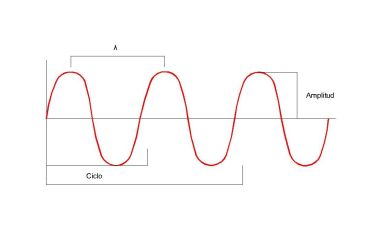
Define longitud de onda…

  1. Número de ciclos que se producen por unidad de tiempo.
  2. Es la máxima distancia que se desplaza una molécula desde su estado normal.
  3. Distancia entre dos puntos correspondiente de una curva de presión.
  4. Ninguna es cierta.

https://ecografiafacil.com/2017/12/15/5-magnitudes-de-la-onda-otras-magnitudes/

Respecto de la impedancia acústica, di la correcta:

  1. Es la resistencia del medio a la propagación de la onda sonora.
  2. Los sólidos tienen una alta impedancia, y los líquidos, partes blandas y gases tienen una baja impedancia.
  3. El gas transmite muy mal el ultrasonido.
  4. Todas son ciertas.

https://ecografiafacil.com/2017/12/17/6-interaccion-del-haz-ultasonico-y-la-materia/

¿Qué efectos aparecen en una interfase? Señala la correcta.

  1. Reflexión, relajación y excitación.
  2. Atenuación, relajación y excitación.
  3. Refracción, relajación y excitación.
  4. Calor.

https://ecografiafacil.com/2017/12/19/7-las-interfases/

¿la zona de mayor utilidad para la ecografía, respecto del haz ultrasónico, es?:

  1. Zona Focal.
  2. Fraunhofer.
  3. Fresnel
  4. b y c son correctas.

https://ecografiafacil.com/2017/12/23/9-el-haz-ultrasonico/

¿Qué  sonda ecográfica usaremos en un estudio normal de Abdomen?

  1. Cónvex
  2. Lineal
  3. Intracavitaria
  4. Sonda lápiz

https://ecografiafacil.com/2018/01/01/11-tipos-de-transductores/

¿Qué  sonda ecográfica usaremos en un estudio normal de Tiroides?

  1. Cónvex
  2. Lineal
  3. Intracavitaria
  4. Sonda lápiz

https://ecografiafacil.com/2018/01/01/11-tipos-de-transductores/

¿Qué  sonda ecográfica usaremos en un estudio normal de Cadera Pediátrica?

  1. Cónvex
  2. Lineal
  3. Intracavitaria
  4. Sonda lápiz

https://ecografiafacil.com/2018/01/01/11-tipos-de-transductores/

El Modo B o 2D es:

  1. Modulación de amplitud.
  2. Modulación de brillo.
  3. El modo más usado en medicina.
  4. b y c son correctas.

https://ecografiafacil.com/2018/01/07/14-parametros-tecnicos-los-modos-de-trabajo/

La Ganancia General es:

  1. Capacidad que tenemos de modificar el contraste de la imagen.
  2. Capacidad que tenemos de modificar el brillo de toda la imagen.
  3. Es la modulación de la amplitud del ultrasonido.
  4. b y c son las correctas.

https://ecografiafacil.com/2018/01/10/15-la-ganancia-general/

Respecto del Foco o Enfoque señala la falsa:

  1. Aumentamos la nitidez en la línea donde lo situemos.
  2. Es un comando dependiente del Técnico que esté realizando la ecografía.
  3. Los equipos modernos son monofocales.
  4. Es vital su uso para una correcta visualización de la estructura a estudio.

https://ecografiafacil.com/2018/01/18/19-el-foco/

¿En ecografía médica si aumentamos la frecuencia en un estudio…?

  1. Obtendremos menos profundidad, pero obtendremos más nitidez.
  2. Obtendremos más profundidad, pero obtendremos menos nitidez.
  3. Obtendremos menos profundidad y obtendremos menos nitidez.
  4. Obtendremos más profundidad y obtendremos más nitidez.

https://ecografiafacil.com/2018/01/24/21-la-frecuencia/

Del Rango Dinámico depende…

  1. El brillo de la pantalla.
  2. Depende el contraste de la pantalla.
  3. Depende la nitidez de la imagen.
  4. a y b son correctas.

https://ecografiafacil.com/2018/02/02/23-el-rango-dinamico/

Usaremos el armónico cuando…

  1. La imagen fundamental no es buena.
  2. Es recomendable cuando hay muchas interfases.
  3. La imagen armónica procesa ecos generados por la imagen fundamental.
  4. Todas son correctas.

https://ecografiafacil.com/2018/01/29/22-los-armonicos/

La Potencia de transmisión del ecógrafo:

  1. tiene que ver con el criterio ALARA.
  2. Tiene que ver con el IM.
  3. Tiene que ver con la calidad de la imagen.
  4. Todas son correctas.

https://ecografiafacil.com/2018/02/04/24-la-potencia-de-transmision/

Espero que hayas disfrutado. En cada pregunta tienes el enlace para que busques la respuesta correcta.


25. Otros Ajustes o Parámetros.

Hemos estudiado hasta aquí los parámetros más importantes del manejo de un ecógrafo, todos ellos eslabones vitales de una cadena sin la que es imposible conseguir una imagen diagnóstica en modo 2D.

Existen, sin embargo, gran cantidad de cantidad de ajustes o parámetros que son, desde mi punto de vista, menos importantes. ¿Porqué?, te preguntarás, te explico:

1.- Estos parámetros no aparecen en la botonera, suelen estar en el submenú.Y su uso es ocasional, en ocasiones de uso excepcional.

2.- Dependen de cada casa comercial, es decir, cada marca implementa en sus equipos una serie de ajustes para optimizar la imagen, por ejemplo, filtros, escalas de grises y otros que lo que hacen es modificar la imagen ligeramente, a veces, de manera casi imperceptible, por lo que, según mi opinión y para ti que estás empezando, pierden un poco de valor. Cuando ya estemos muy sueltos con el manejo de los equipos podemos empezar a trastear con estos otros comandos.

Eso no quiere decir que no los tengas que conocer, y por eso te presento alguno de ellos:

De estos ajustes «menos importantes», vamos a ver el primero que es el más importante de los menos importantes:

La Persistencia. Ojo, este ajuste puede variar de denominación según cada marca, pero sus efectos en la imagen son estos:

  • Lo que conseguimos con este ajuste es obtener una imagen más suave al aumentar este valor.
  • Elimina el moteado aleatorio.
  • Lo que estamos haciendo es controlar el tiempo que cada imagen permanezca en la pantalla antes de cambiarla por la siguiente.
  • Una imagen sin persistencia tendrá mucho grano.
  • Si la persistencia es demasiado alta la imagen estará “borrosa”

El Contorno: Ojo, este ajuste puede variar de denominación según cada marca, pero sus efectos en la imagen son estos:

  • Con este parámetro controlamos el tamaño del pixel.
  • Al aumentar el contorno aumentamos el pixel.
  • Si aumentamos el contorno mejoramos la diferenciación, pero ojo, si aumentamos en exceso podemos encontrar una imagen con demasiado grano.

Mapa o Escala de grises:

  • Son las distribuciones de la escala de grises.
  • Tendremos mapas muy contrastados, otros con más blancos, más suaves, etc.
  • Suele estar en todas las marca, pero su uso es residual.
We have studied until now the most important parameters of the handling of an ultrasound, all of them vital links of a chain without which it is impossible to obtain a diagnostic image in 2D mode. There are, however, a large amount of adjustments or parameters that are, from my point of view, less important. Why ?, you ask, I explain:
1.- These parameters do not appear in the keypad, they are usually in the submenu.And their use is occasional, sometimes of exceptional use.
2.- They depend on each commercial house, that is, each brand implements a series of adjustments in its equipment to optimize the image, for example, filters, gray scales and others that what they do is modify the image slightly, sometimes, almost imperceptibly, so, in my opinion and for you that you are starting, they lose a bit of value. When we are already very loose with the management of the equipment we can start to mess with these other commands. That does not mean that you do not have to know them, and that’s why I present one of them: Of these «less important» adjustments, we will see the first that is the most important of the least important:
Persistence Beware, this setting may vary in denomination according to each brand, but its effects on the image are these: What we achieve with this setting is to obtain a smoother image by increasing this value. Eliminate random speckle. What we are doing is controlling the time that each image remains on the screen before changing it for the next one. An image without persistence will have much grain. If the persistence is too high the image will be «blurry»
The Outline: Eye, this setting may vary in denomination according to each brand, but its effects in the image are these: With this parameter we control the size of the pixel. When increasing the contour we increase the pixel. If we increase the contour we improve the differentiation, but beware, if we increase in excess we can find an image with too much grain.
Map or Grayscale: They are the distributions of the gray scale. We will have very contrasted maps, others with whiter, softer, etc. It is usually in all brands, but its use is residual
Mínimos cambios en la imagen.

Tinte:

  • Es el cambio del color de la imagen.Nos puede mostrar cambios sutiles en el tejido que quizás no veríamos con la escala de grises…Hay tonos azules, Sepia, Rojo, etc.
  • Suele estar en todas las marca, pero su uso es residual.
Dye: It is the change of the color of the image. It can show us subtle changes in the fabric that perhaps we would not see with the grayscale … There are blue tones, Sepia, Red, etc. It is usually in all brands, but its use is residual.
Tinte azul.

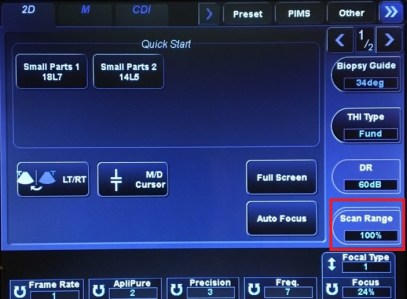
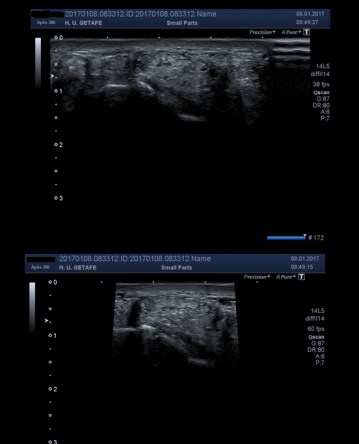
Campo visual:

  • Modificamos la anchura de la imagen, menos campo visual, más imagen de refresco, más imágenes por segundo en nuestra pantalla.
  • Tiene que ver con la huella del transductor, es decir, la medida que tiene, no siempre necesitamos toda la huella de la sonda para estudiar una estructura. Por ejemplo en las imágen siguientes.
Visual field or Scan Range
We modify the width of the image, less visual field, more refresh image, more images per second on our screen. It has to do with the trace of the transducer, that is, the measurement it has, we do not always need the entire trace of the probe to study a structure. For example in the following images.
Scan Range de 100%.
Imagen superior Scan Range 100%, Inferior, 50%.

Otros:

Realce de bordes: Incrementa el contraste entre diferentes interfases.

Suavizado: Suaviza la imagen, reduciendo el ruido global.

Rechazo: Umbralización para incrementar el contraste.

Recuerda, cada fabricante implementa los suyos y hay muchísimos. Los importantes están bien explicados, pero cuando te pones delante de un ecógrafo hay que conocer los importantes y los no tan importantes y para eso tenemos un técnico de aplicaciones que nos va a instruir en todos aquellos ajustes que su marca haya instalado en el modelo de ecógrafo con el que tengamos que trabajar. Quiero destacar aquí su gran labor porque conocen el ecógrafo al dedillo.

Con este post terminamos el estudio de los parámetros, a partir de ahora, nuestro objetivo va a ser la imagen de ecografía. Te espero.

Others:
Edge enhancement: Increase the contrast between different interfaces.
Smoothing: Softens the image, reducing overall noise.
Rejection: Threshold to increase the contrast.
Remember, each manufacturer implements their own and there are many. The important ones are well explained, but when you put yourself in front of an ultrasound scanner you have to know the important ones and the not so important ones and for that we have an application technician who will instruct us in all those adjustments that your brand has installed in the model of ecograph with which we have to work. I want to highlight here your great work because they know the ecograph at your fingertips. With this post we finish the study of the parameters, from now on, our objective will be the image of ultrasound. I wait for you.

24. La Potencia de Transmisión.

Cuando empecé a hablar de los ajustes ecográficos o los parámetros técnicos, como se prefiera, quizá debería haber empezado por este ajuste, la razón es la siguiente, este ajuste, es el encargado de proporcionar la energía sónica que tiene que atravesar los tejidos y que lo hace partiendo desde el transductor. Sin esta energía, ninguno de los otros parámetros explicados aquí hasta ahora tendrían mucho sentido ya que la imagen, sin una correcta Potencia de Transmisión, no es válida, pero como el orden de los factores no altera el producto…empezamos…

La definición es: Es la potencia eléctrica que le llega a la sonda ecográfica o transductor.

Esta energía que luego, por el Efecto Piezoeléctrico https://ecografiafacil.com/2017/12/22/8-la-piezoelectricidad/ se convertirá en nuestro haz de ultrasonidos. Por tanto, a más energía eléctrica, mi haz será más potente también, pero…

Tiene relación estrecha con el índice mecánico (IM) y el Índice térmico (IT).

Estos índices son ambos efectos biomécanicos del sonido, efectos que requieren su post particular y que estudiaremos más adelante. Estos efectos pueden ser potencialmente dañinos.

La Potencia de Transmisión debe ser siempre ser tan baja como sea posible, según el criterio ALARA. ALARA son las siglas en inglés de «As Low As Reasonably Achievable» es decir “tan bajo como sea razonablemente alcanzable”. De este criterio sabemos muchísimo los Técnicos de Radiología ya que somos los responsables de aplicar estas energías o radiaciones, tanto ionizantes como no ionizantes,a los pacientes.

Por otro lado es necesario que para comprender como funciona la Potencia de Transmisión, entiendas lo que son estos dos índices, así que vamos a explicarlo brevemente.

El IM tiene que ver con el Riesgo de cavitación (aumento de presión y temperatura de las burbujas o cavidades con gas o líquidos). Este IM es un efecto No Térmico. Algunos equipos actuales pueden ocasionar este efecto, potencialmente dañino.

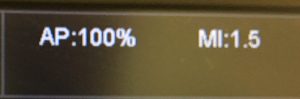
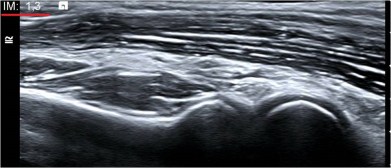
Este índice nunca debe ser superior a 1,9 y además este valor aparecerá en la pantalla para que lo tengamos bajo control.

When I started talking about the echographic settings or the technical parameters, as you prefer, maybe I should have started with this adjustment, the reason is this, this adjustment, is responsible for providing the sonic energy that has to go through the tissues and that it does so starting from the transducer. Without this energy, none of the other parameters explained here would make much sense since the image, without a correct Transmission Power, is not valid, but as the order of the factors does not alter the product … we started … The definition is: It is the electrical power that reaches the sonographic probe or transducer. This energy that then, by the Piezoelectric Effect https://ecografiafacil.com/2017/12/22/8-la-piezoelectricidad/ will become our ultrasound beam. Therefore, the more electrical energy, my beam will be more powerful too, but … It has a close relationship with the mechanical index (IM) and the thermal index (IT). These indices are both biomechanical effects of sound, effects that require their particular post and that we will study later. These effects can be potentially harmful. The Transmission Power must always be as low as possible, according to the ALARA criteria. ALARA stands for «As Low As Reasonably Achievable» that is «as low as reasonably achievable». From this criterion we know a lot Radiology Technicians since we are responsible for applying these energies or radiations, both ionizing and non-ionizing, to patients. On the other hand it is necessary that to understand how the Transmission Power works, understand what these two indexes are, so let’s explain it briefly. The IM has to do with the risk of cavitation (increase in pressure and temperature of bubbles or cavities with gas or liquids). This IM is a Non-Thermal effect. Some current equipment can cause this effect, potentially harmful. This index should never be higher than 1.9 and this value will also appear on the screen so that we have it under control.

El IT es otro valor numérico que indica la capacidad del ultrasonido de aumentar la temperatura del tejido. Este es un valor que marca efectos térmicos.

Se ha demostrado aumentos de 0,2 º Celsius por minuto a ultrasonido entregado a 1 W/cm2 a 1MHz.

Si no se superan 2º C  es difícil que ocasionen efectos.

Ambos valores pueden estar representados en la imagen y deben seguir estas normas:

 – Deben ser claramente visibles en pantalla cuando el valor sobrepase un 0,4.

 – Aquellos equipos incapaces de sobrepasar un índice de 1 están exentos de representar este valor.

 – Pueden estar representado un solo índice (IT o IM) en función del que pueda ocasionar el efecto.

El objetivo es ajustar la potencia para obtener una información clínicamente útil o que la imagen sea diagnóstica, para enternos.

Pero claro, sería lógico pensar que deberíamos reducir esta energía al mínimo, lamentablemente no puede ser porque al reducir la potencia disminuimos la calidad de imagen ya que reducimos la amplitud de señal, sí, otra vez la amplitud, magnitud de onda importantísima.https://ecografiafacil.com/2017/12/15/5-magnitudes-de-la-onda-otras-magnitudes/ 

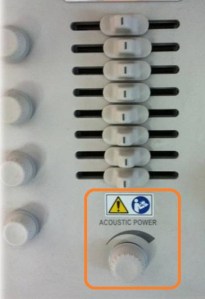
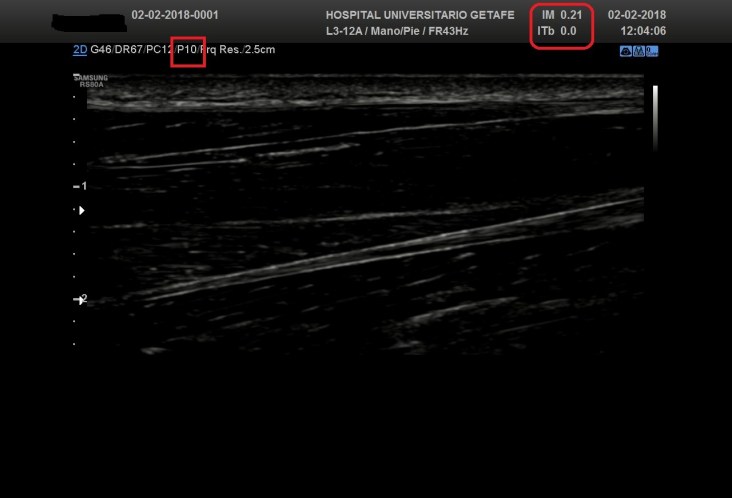
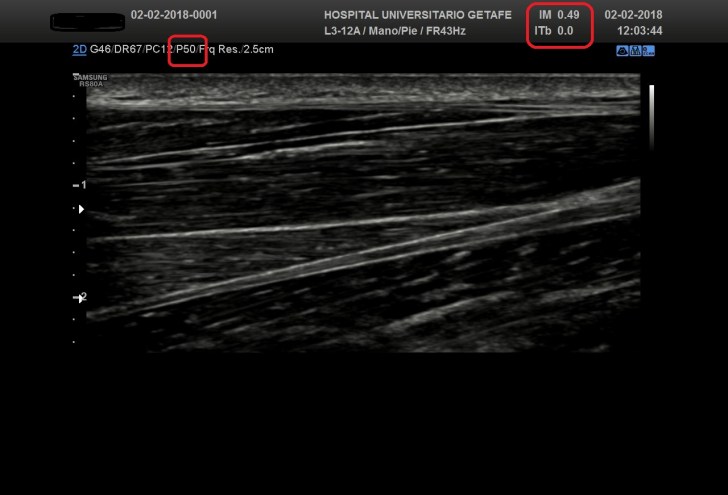
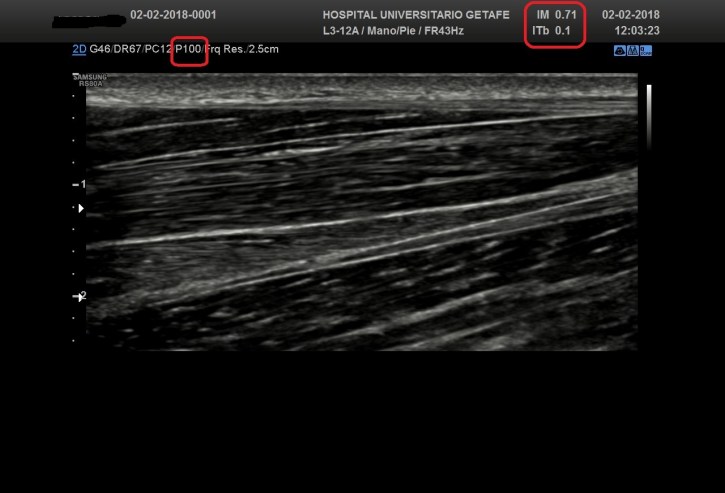
La potencia de transmisión es un ajuste que podemos manejar a través de un comando en forma de rueda, que se encuentra normalmente en la botonera o en el menú táctil en los equipos más nuevos y que en la pantalla se refleja en un porcentaje o en un valor numérico entre el 10 y el 100.

IT is another numerical value that indicates the ability of ultrasound to increase tissue temperature. This is a value that marks thermal effects. It has been shown increases of 0.2 º Celsius per minute to ultrasound delivered at 1 W / cm2 at 1MHz. If they are not exceeded 2 º C is difficult to cause effects. Both values ​​can be represented in the image and must follow these rules: – They must be clearly visible on the screen when the value exceeds 0.4. – Those teams incapable of exceeding an index of 1 are exempt from representing this value. – A single index (IT or IM) can be represented depending on the one that may cause the effect. The objective is to adjust the power to obtain a clinically useful information or that the image is diagnostic, to enternos. But of course, it would be logical to think that we should reduce this energy to the minimum, unfortunately it can not be because when reducing the power we reduce the image quality since we reduce the amplitude of the signal, yes, again the amplitude, important magnitude of the wave.http: //ecografiafacil.com/2017/12/15/5-magnitudes-of-la-onda-otras-magnitudes/ The transmission power is an adjustment that we can manage through a wheel-shaped command, which is normally found in the keypad or in the touch menu in the newer equipment and which is reflected in the screen in a percentage or in a numerical value between 10 and 100.
Potencia de Transmisión, aspecto en botonera.
Potencia de transmisión en menú digital.
Acustic power del 100 e IM de 1,5.
Valor IM señalado con línea roja.

Si disminuimos este porcentaje, bajamos el valor de los índices antes comentados y también la calidad de imagen, así que ojo…

Las imágenes a continuación expuestas nos enseñan como la Potencia influye decisivamente en la calidad de la imagen obtenida y además como los IM e IT se ven afectados según el valor de dicha potencia…observa.

If we decrease this percentage, we lower the value of the aforementioned indexes and also the image quality, so beware … The following images show us how the Power decisively influences the quality of the image obtained and also how the IM and IT are affected according to the value of said power … observe.
Potencia de 10, en rojo, Índices bajos, mala calidad de imagen.
Potencia media (P50), regular calidad de imagen, IM y IT medios.
Potencia máxima (P100), buena calidad de imagen, IM y IT altos, pero dentro de los márgenes de tolerancia.

En el caso de que hagamos una Ecografía con contraste, la potencia de transmisión tiene que estar al mínimo.Normalmente en estos casos, ya viene en la configuración del preset especial para contrates ecográficos que trataremos en un Post más adelante.

In the case that we do an Ultrasound with contrast, the transmission power must be at minimum. Normally in these cases, it already comes in the configuration of the special preset for ultrasound contracts that we will deal with in a Post later.

23. El Rango Dinámico.

El Rango dinámico es un ajuste ecográfico importante desde el punto de vista de la imagen. Es un ajuste que no es de uso extendido por los operadores, ya que es un ajuste que el técnico de aplicaciones nos dejará integrado para cada preseteado cuando nos instala el equipo.

De importancia capital a la hora de tener una escala de grises apropiada en la pantalla.

Es un valor de comprensión y uso amable, porque funciona parecido al contraste de imagen de cualquier televisor, eso sí, en ecografía la imagen es una escala de grises en el modo de trabajo 2D.

Aparece en el menú, a la vista del operador y su conocimiento y uso apropiado da un salto de calidad en la imagen que por ejemplo, el Técnico de Radiología presenta a la radióloga/o.

The dynamic range is an important sonographic adjustment from the point of view of the image. It is a setting that is not widely used by operators, since it is an adjustment that the application technician will leave integrated for each preset when we install the equipment. Of capital importance when it comes to having an appropriate gray scale on the screen. It is a value of understanding and friendly use, because it works similar to the image contrast of any television, however, in ultrasound the image is a gray scale in the 2D working mode. It appears in the menu, in view of the operator and its knowledge and appropriate use gives a leap of quality in the image that for example, the Radiology Technician presents to the radiologist.
DR con flecha roja.

Es un valor dependiente del operador que puede manipular la señal de retorno interviniendo en el brillo y contraste de la imagen.

Cuando modificamos este ajuste estamos manejando la escala de grises debido a que manipulamos e intervenimos sobre la amplitud de la onda, de la que hablábamos al principio, en las magnitudes de la onda.https://ecografiafacil.com/2017/12/15/5-magnitudes-de-la-onda-otras-magnitudes/

It is a value dependent on the operator that can manipulate the return signal by intervening in the brightness and contrast of the image. When we modify this adjustment we are managing the gray scale because we manipulate and intervene on the amplitude of the wave, of which we spoke at the beginning, in the magnitudes of the wave.

La escala depende de cada casa comercial y se expresa en un valor numérico normalmente entre 25 y 150, pero ya digo que es según la marca…se modifica en saltos de 5 normalmente en el menú, esto también depende de cada casa comercial y no aparece en la botonera de forma habitual.

Si la escala del rango dinámico de nuestro equipo va de 25 a 100, por ejemplo, sabemos que entre 60 y 75 vamos a encontrar la horquilla de variantes que normalmente hace que la imagen sea correcta. Pero repito, depende de cada marca, algunos por ejemplo tienen ese valor medio recomendado en 135…

No es un valor que debamos tocar constantemente, normalmente variaremos muy poco este ajuste.

Puede aparece con varios nombre alternativos a Rango Dinámico, como «Intervalo Dinámico» o «Dinamic Range»

El valor que estemos usando aparecerá en la pantalla nombrado como «DR» junto a otros valores como la ganancia general, potencia de transmisión y otros…

The scale depends on each commercial house and is expressed in a numerical value normally between 25 and 150, but I say that it is according to the brand … it is modified in jumps of 5 normally in the menu, this also depends on each commercial house and it does not appear on the keypad as usual. If the scale of the dynamic range of our team goes from 25 to 100, for example, we know that between 60 and 75 we will find the range of variants that normally makes the image correct. But I repeat, it depends on each brand, some for example have that recommended average value in 135 … It is not a value that we should constantly touch, normally we will vary this adjustment very little. It may appear with several alternative names to Dynamic Range, such as «Dynamic Range» or «Dynamic Range» The value that we are using will appear on the screen named «DR» along with other values ​​such as general profit, transmission power and others …
Puede aparecer con otro nombre. Línea Roja.

Para concretar, y como conclusión que debemos recordar siempre, si variamos el Rango Dinámico lo que hacemos es contrastar más o menos los grises de la pantalla. de modo que:

  • Si trabajamos con una rango dinámico alto tendremos una imagen suave con muchos grises.
  • Si lo hacemos con una rango bajo predominarán más los blancos y los negros teniendo una imagen más contrastada.

Será el rango dinámico adecuado el que nos permita ver  dos estructuras de ecogenicidad parecida.

To specify, and as a conclusion that we must always remember, if we vary the Dynamic Range what we do is to contrast more or less the grays of the screen. so that:
If we work with a high dynamic range we will have a smooth image with many grays.
If we do it with a low range, whites and blacks will predominate, having a more contrasted image.
It will be the appropriate dynamic range that allows us to see two structures of similar echogenicity.
Rango Dinámico excesivamente bajo = Mucho contraste
Rango dinámico correcto = Imagen correcta.
Rango dinámico elevado = Imagen excesivamente suave.

El Técnico de Rayos conoce a la perfección una imagen demasiado contrastada de una demasiado gris y que ambas son malas para el diagnóstico, así que cito a Aristóteles y su frase «La Virtud está en el medio» para recomendar valores apropiados de Rangos Dinámicos.

The Technician knows perfectly an image too contrasted with too gray and that both are bad for the diagnosis, so I quote Aristotle and his phrase «Virtue is in the middle» to recommend appropriate values ​​of Dynamic Ranges.