22. Los Armónicos.

Los Armónicos o frecuencia armónica es un ajuste ecográfico que está muy ligado a la frecuencia de la que hablábamos en el capítulo anterior y que de modo general es un parámetro técnico muy desconocido para la mayoría de los operadores que se sientan frente a un ecógrafo a realizar una eco.

Es un ajuste o parámetro de difícil comprensión en lo que a su formación se refiere, pero es muy útil y vamos a intentar desmenuzar bien su base teórica para que nos ayude a usarlos mejor…

Es un sistema de recepción de ecos para captar señales con una frecuencia el doble o más que la emitida, que solo es posible producirla por la reverberación de los tejidos y nunca por un artefacto. Es decir, yo emito un pulso de ultrasonidos a 5 MHz y recojo ecos de retorno de 10 MHz discriminando los que están por debajo de ese umbral. Uno de los efectos perseguidos con este ajuste es «limpiar» la imagen de aquellos ecos de retorno que no son útiles y «ensucian» la imagen con ese moteado característico de la imagen fundamental de la ecografía.

En resumen, puedo emitir una frecuencia f y recibir aquellos ecos de retorno que sean 2f, 3f o más…

¿Imagen fundamental?, te explico, la imagen fundamental es una imagen primaria, sin armónicos, con sus cosas buenas y sus cosas malas desde el punto de vista diagnóstico, es la imagen de base que nos ofrece el ecógrafo. Esta imagen es susceptible de ser modificada con todos los ajustes que hemos ido explicando hasta ahora y luego, aplicar los armónicos para ver si nos ofrece ese salto de calidad, que se produce casi siempre cuando ponemos los armónicos.

Harmonics or harmonic frequency is an ultrasound adjustment that is closely linked to the frequency that we talked about in the previous chapter and that in general is a technical parameter that is very unknown to most operators who sit in front of an ultrasound machine to perform an echo It is an adjustment or parameter that is difficult to understand in terms of its training, but it is very useful and we are going to try to break down its theoretical base to help us use them better … It is a system of reception of echoes to pick up signals with a frequency twice or more than that emitted, which can only be produced by the reverberation of the tissues and never by an artifact. That is to say, I issue a pulse of ultrasound at 5 MHz and I collect echoes of 10 MHz return discriminating those that are below that threshold. One of the effects pursued with this adjustment is to «clean» the image of those return echoes that are not useful and «dirty» the image with that mottled characteristic of the fundamental image of the ultrasound. In summary, I can issue a frequency f and receive those return echoes that are 2f, 3f or more … Fundamental image ?, I explain, the fundamental image is a primary image, without harmonics, with its good things and its bad things from the diagnostic point of view, is the basic image that the ultrasound machine offers us. This image is susceptible to be modified with all the adjustments that we have been explaining so far and then apply the harmonics to see if it offers that quality jump, which occurs almost always when we put the harmonics.
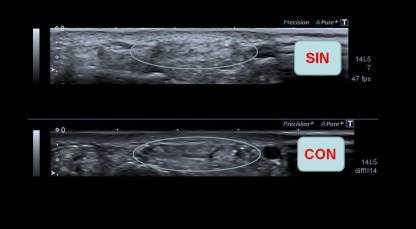
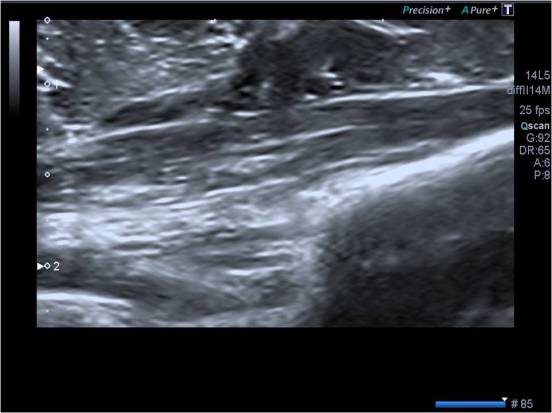
Imagen de alta frecuencia con y sin armónicos.

Las diferencias en algunos estudios son extremadamente llamativas, pudiendo llegar a diferenciar estructuras usando este ajuste que con la imagen fundamental se observan dificultosamente. En la imagen anterior, Tendón extensor común de los dedos de la mano. Misma imagen sin y con armónicos. Juzgar vosotros.

The differences in some studies are extremely striking, being able to differentiate structures using this adjustment that with the fundamental image are observed difficultly. In the previous image, Tendon extensor common of the fingers of the hand. Same image without and with harmonics. Judge you.
Observa las diferencias entre las dos imágenes.

En la imagen vemos dos imágenes, observamos que la nitidez y la definición de las estructuras es mucho mayor con armónicos que sin ellos.

Los armónicos es un ajuste implementado gracias al avance y la investigación de las casas comerciales en pos de conseguir una imagen mejor. Ya suelen estar integrados en los presets que vienen de fábrica o en la configuración personal que nos ofrece el técnico de aplicaciones cuando nos instala el equipo, una labor vital, por cierto.

Podemos explicar que los armónicos son, ecos de retorno múltiplos de la frecuencia transmitida en origen y que se debe a una propagación de la onda de ultrasonidos donde el componente de alta presión o compresión se transmite más rápidamente que el componente negativo o rarefacción.

Como esta explicación resulta bastante dura, pero no hay otra, puesto que es física pura, vamos a centrarnos en lo que importa en la práctica y que son sus ventajas, las mismas que a continuación te presento esquemáticamente.

In the image we see two images, we observe that the clarity and definition of the structures is much greater with harmonics than without them. The harmonics is an adjustment implemented thanks to the advance and research of the commercial houses in pursuit of achieving a better image. They are usually integrated in the presets that come from the factory or in the personal configuration that the application technician offers us when he installs the equipment, a vital task, by the way. We can explain that harmonics are return echoes multiples of the frequency transmitted at origin and that is due to a propagation of the ultrasound wave where the component of high pressure or compression is transmitted faster than the negative component or rarefaction. As this explanation is quite hard, but there is no other, since it is pure physics, we are going to focus on what matters in practice and what are its advantages, the same ones that I present here schematically.
  • Reducen los artefactos y aumentan la resolución.
  • Los armónicos o frecuencia armónica mejora la imagen respecto de la frecuencia fundamental, ya que esta debida a las interfases puede resultar poco resolutiva
  • Utilizaremos armónicos cuando la imagen fundamental no sea suficientemente buena.
  • Es una imagen más nítida ya que “limpia” la imagen fundamental.
  • En frecuencias altas ofrece una gran calidad de imagen.
  • Con los armónicos reducimos el moteado.
  • They reduce the artifacts and increase the resolution.
  • The harmonics or harmonic frequency improves the image with respect to the fundamental frequency, since this due to the interfaces can be not very resolutive
  • We will use harmonics when the fundamental image is not good enough.
  • It is a sharper image because it «cleans» the fundamental image.
  • In highs frequencies it offers a great image quality.
  • With the harmonics we reduce the mottling.

El moteado es un factor de degradación de la imagen producido por la dispersión de ultrasonidos de pequeños reflectores o pequeñas interfases, mostrando una imagen con un grano característico. En estas pequeñas interfases se producen ecos de retorno que ensucian la imagen y no aportan información porque una parte de los ecos de retorno producidos en las interfases ni siquiera llega al transductor, los eliminamos y nos queda una imagen mejor.

No confundamos, para ir terminando, armónicos con filtros porque no es lo mismo, el armónico es una representación selectiva de los mejores ecos de retorno. Dependiendo del equipo, normalmente de su gama, podemos disfrutar de varios tipos de armónicos.

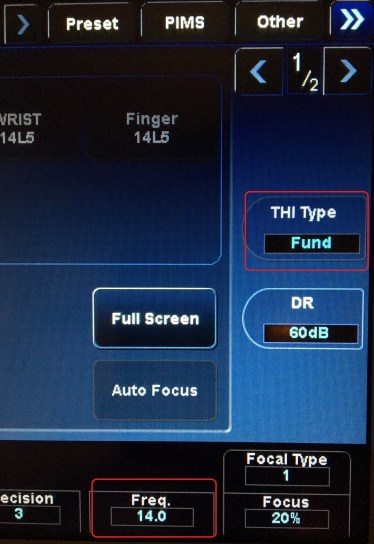
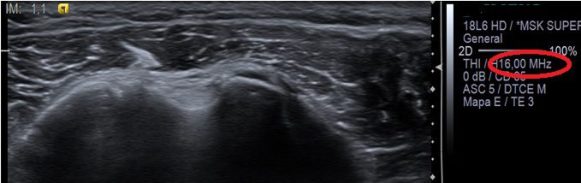
En la pantalla la imagen armónica se identifica habitualmente dependiendo de la casa comercial acompañando al valor de la frecuencia alguna letra o palabra, en la imagen fundamental, la frecuencia aparecerá como un valor numérico solitario (últimas imágenes).

Los armónicos deben estar siempre a disposición del operador, y se identifican en muchas marcas como THI o tissue harmonic imaging. El uso de los armónicos no es obligatorio, pero recomendable. Siempre asociando su uso a las características del paciente y del estudio.

Mottle is a factor of degradation of the image produced by the scattering of ultrasound of small reflectors or small interfaces, showing an image with a characteristic grain. In these small interfaces return echoes are produced that dirty the image and do not provide information because a part of the return echoes produced at the interfaces does not even reach the transducer, we eliminate them and we have a better image. Let’s not confuse, to finish, harmonics with filters because it is not the same, the harmonic is a selective representation of the best return echoes. Depending on the equipment, normally of its range, we can enjoy several types of harmonics. In the screen the harmonic image is usually identified depending on the commercial house accompanying the value of the frequency some letter or word, in the fundamental image, the frequency will appear as a solitary numerical value (last images). Harmonics must always be available to the operator, and are identified in many brands as THI or tissue harmonic imaging. The use of harmonics is not mandatory, but recommended. Always associating its use with the characteristics of the patient and the study.
Observar en recuadro rojo el tipo de armónico y su valor numérico con las letras.
Imagen fundamental y valor de frecuencia en solitario.


21. La Frecuencia.

La Frecuencia es sin duda el ajuste ecográfico más importante desde el punto de vista técnico a la hora de hacer una ecografía, es el eslabón más importante de la cadena que forman los «5 fantásticos» que son en mi opinión, la Ganancia General, la Ganancia Parcial, el Foco, la Profundidad y la mencionada Frecuencia. Manejando estos 5 parámetros podemos estar seguros de que si los usamos correctamente, nuestra imagen será diagnóstica, claro está, si sabemos como realizar los cortes de la estructura anatómica a estudio.

Este ajuste lo enlazamos https://ecografiafacil.com/2017/12/14/4-magnitudes-de-la-onda-ultrasonica-la-frecuencia/ con este episodio donde hablábamos de modo más abstracto de esta magnitud, pero que son la misma cosa. En ese episodio decía que según las frecuencia utilizadas en los ecógrafos que usamos para realizar los estudios, utilizaremos diferentes transductores o sondas ecográficas para llevar a cabo dichos estudios, me explico…

Si utilizamos frecuencias bajas (entre 2 y 6 MHz), tenemos que usar una sonda cónvex, y estudiaremos estructuras con profundidades grandes, Abdómenes y Ginecológicas.

Si usamos frecuencias altas (entre 10 y 18 MHz), utilizamos sonda lineal y serán objeto de estudio estructuras superficiales como, Músculos, Tendones, Ligamentos, Partes Blandas, Tiroides y Cuello, estructuras vasculares superficiales, Testes, Mama, Ojos, etc…Muy versátiles, por tanto, estas frecuencias altas. Incluso, podemos usar éstas en ecografía pediátrica, si la/el paciente es suficientemente pequeño, por ejemplo, es muy normal realizar ecografía de Caderas, Transfontanelar y Abdomen a bebés, y estas frecuencias altas son ideales.

¿Pero qué logramos en realidad usando una u otra frecuencia? Debemos partir de la base que siempre debemos usar la mayor frecuencia posible para obtener la imagen con máxima resolución posible.

Para realizar el estudio de un músculo, por ejemplo, usaremos, dentro de las frecuencias altas, la más alta si el músculo es muy superficial, pero si el músculo es más profundo y/o el paciente es muy voluminoso quizá sea bueno bajar un salto de frecuencia, así ganaremos un poco más de visión profunda aunque perdamos un poco de resolución o nitidez.

This adjustment is linked to https://ecografiafacil.com/2017/12/14/4-magnitudes-of-the-onda-ultrasonica-la-frecuencia/ with this episode where we talked in a more abstract way of this magnitude, but which are the same thing. In that episode he said that according to the frequency used in the ultrasound machines that we use to carry out the studies, we will use different transducers or sonographic probes to carry out these studies, I mean … If we use low frequencies (between 2 and 6 MHz), we have to use a convex probe, and we will study structures with large depths, abdomens and gynecology. If we use high frequencies (between 10 and 18 MHz), we use linear probe and will study superficial structures such as muscles, tendons, ligaments, soft parts, thyroid and neck, superficial vascular structures, testes, breast, eyes, etc. . Very versatile, therefore, these high frequencies. We can even use these in pediatric ultrasound, if the patient is small enough, for example, it is very normal to perform ultrasound of hips, transfontanel and abdomen to babies, and these high frequencies are ideal. But what do we actually achieve by using one or the other frequency? We must start from the base that we should always use as often as possible to obtain the image with maximum possible resolution. To perform the study of a muscle, for example, we will use, within the high frequencies, the highest if the muscle is very superficial, but if the muscle is deeper and / or the patient is very voluminous, it may be good to jump down of frequency, this way we will gain a little more of deep vision although we lose a little resolution or clarity.
Diferencias de nitidez. Frecuencias altas.

En la imagen superior observamos dos imágenes idénticas del Tendón extensor común de los dedos de la mano (flecha amarilla) estudiado con sonda de alta frecuencia y donde en la imagen superior se observa en recuadro rojo que se emplean 12 MHz y en la inferior, la misma estructura (flecha verde) estudiada con 7 MHz. Nótese la abrumadora diferencia de nitidez de la imagen superior.

Dentro de las frecuencias altas y bajas podemos elegir entre varias, eso es debido al Ancho de Banda…Es decir, para frecuencias bajas, por ejemplo para hacer un abdomen, usaré frecuencia de 3 mHz si en paciente es obeso (mucha profundidad) y 5 mHz si el paciente es muy delgado (poca profundidad), o de otra manera, mi sonda cónvex (baja frecuencia) puede usar varias frecuencias bajas en función de las necesidades del estudio. De otro modo, el ancho de banda es una horquilla de frecuencias que puedo usar dentro de un tipo de frecuencias, bien sean altas o bajas. Un ejemplo de esto lo tenemos en las imágenes siguientes.

In the upper image we observed two identical images of the common extensor tendon of the fingers of the hand (yellow arrow) studied with high frequency probe and where in the upper image it is observed in red box that 12 MHz are used and in the lower one, the same structure (green arrow) studied with 7 MHz. Note the overwhelming difference in sharpness of the upper image.
Within the high and low frequencies we can choose among several, that is due to the Bandwidth … That is, for low frequencies, for example to make an abdomen, I will use a frequency of 3 mHz if the patient is obese (a lot of depth) and 5 mHz if the patient is very thin (shallow), or otherwise, my convex probe (low frequency) can use several low frequencies depending on the needs of the study. Otherwise, the bandwidth is a fork of frequencies that I can use within a type of frequencies, either high or low. We have an example of this in the following images.
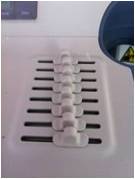
3 MHz.
5 MHz.

Otro ejemplo…para hacer un hombro, usaré frecuencia alta de 12 mHz si en paciente es muy musculoso (mucha profundidad) y 18 mHz si el paciente es muy delgado (poca profundidad), o de otra manera, mi sonda lineal (alta frecuencia) puede usar varias frecuencias altas en función de las necesidades del estudio.

Por ejemplo en algunas patologías es muy útil el cambio de frecuencias, por ejemplo en los hígados con Esteatosis Hepática donde no se observa bien los planos más profundos del órgano afectado. En la imagen siguiente podemos ver como disminuyendo la frecuencia ganamos poder de penetración pudiéndose observar en la profundidad con más claridad la interfase producida por el diafragma (línea blanca hiperecogénica o brillante).

Another example … to make a shoulder, I will use a high frequency of 12 mHz if the patient is very muscular (very deep) and 18 mHz if the patient is very thin (shallow), or otherwise, my linear probe (high frequency) can use several high frequencies depending on the needs of the study. For example, in some diseases it is very useful to change frequencies, for example in livers with Hepatic steatosis where the deeper planes of the affected organ are not well observed. In the following image we can see how decreasing the frequency we gain penetration power being able to observe in the depth with more clarity the interface produced by the diaphragm (hyperechogenic or bright white line).

En el equipo la presentación de este ajuste puede estar en la botonera o en la pantalla táctil, en casi todos los equipos ya se incorpora en esta última apariencia. Además esa frecuencia puede aparecer con un valor numérico o con grados de poder de penetración, como en las imágenes de a continuación.

In the equipment the presentation of this adjustment can be in the keypad or on the touch screen, in almost all the equipment is already incorporated in this last appearance. In addition, this frequency can appear with a numerical value or with degrees of penetration power, as in the images below.
Frecuencia con valor numérico.
Frecuencia con valor según poder de penetración.

En función del grado de penetración, tendremos «Penetración» para las frecuencias bajas dentro del ancho de banda correspondiente a esa sonda y «Resolución», para frecuencias altas dentro de esa misma sonda, el punto intermedio se queda para «General».

Si el valor fuese numérico, lo veremos reflejado en la pantalla, como en la imagen siguiente…

Depending on the degree of penetration, we will have «Penetration» for the low frequencies within the bandwidth corresponding to that probe and «Resolution», for high frequencies within that same probe, the intermediate point stays for «General». If the value were numeric, we will see it reflected on the screen, as in the following image …
En rojo, rodeado el valor de la frecuencia usada.

Es un parámetro dependiente del operador, del Técnico en nuestro caso, su buen uso relanza la calidad del estudio.

Por tanto y para terminar este denso pero importantísimo capítulo, resumimos con dos frases que deben ser grabadas para cualquiera que se precie de sentarse delante de un ecógrafo…y son…

Si aumentamos la frecuencia tendremos menor poder de penetración pero mayor resolución.

Si disminuimos la frecuencia tendremos mayor poder de penetración pero menor resolución.

Además, la elección de la frecuencia correcta la marca las características físicas de cada paciente, cuando mas grueso sea, menos frecuencia debemos emplear.

It is a parameter dependent on the operator, the Technician in our case, its good use re-launches the quality of the study. Therefore and to finish this dense but very important chapter, we summarize with two phrases that should be recorded for anyone who claims to sit in front of an ultrasound … and they are … If we increase the frequency we will have less penetration power but higher resolution. If we decrease the frequency we will have greater penetration power but lower resolution. In addition, choosing the correct frequency marks the physical characteristics of each patient, the thicker it is, the less frequently we should use it.

20. Medidas.

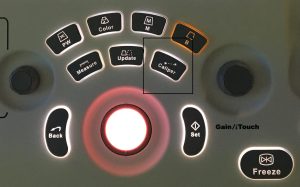
Os voy a hablar hoy de las medidasEl botón de medida o caliper, no es en si mismo un ajuste ecográfico, pero está integrado en la botonera y su uso y su función es muy importante porque nos va a permitir conocer cuales son las proporciones de las estructuras que estamos estudiando o las velocidades de la sangre en los estudios vasculares.

En algunos equipos esta función puede aparecer directamente en la pantalla, pero lo normal es que aparezca en la botonera, es, desde un aspecto de vista funcional, mucho más práctico, pero esto es una opinión personal.

I am going to talk about the measurements today … The measure button, or caliper, is not an echographic adjustment in itself, but it is integrated in the keypad and its use and function is very important because it will allow us to know which are the proportions of the structures that we are studying or the velocities of the blood in the vascular studies. In some teams this function can appear directly on the screen, but it is normal to appear on the keypad, it is, from a functional aspect, much more practical, but this is a personal opinion.

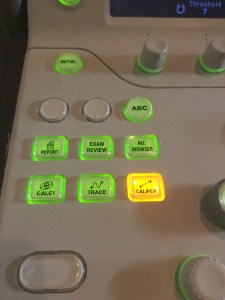
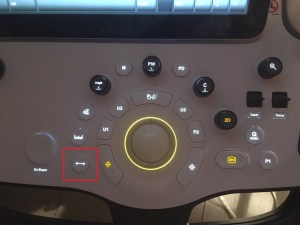
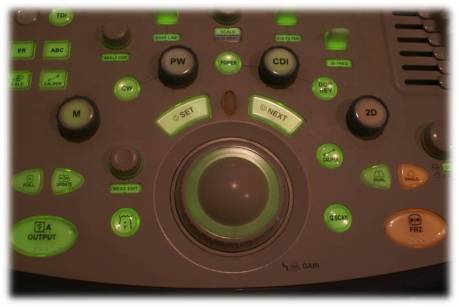
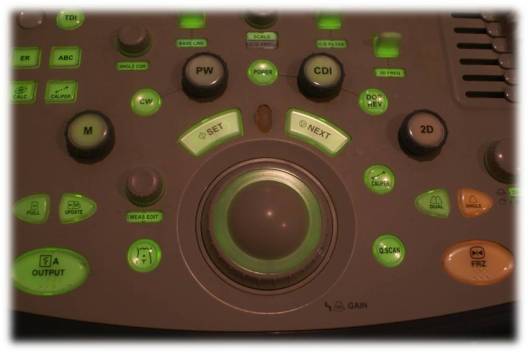
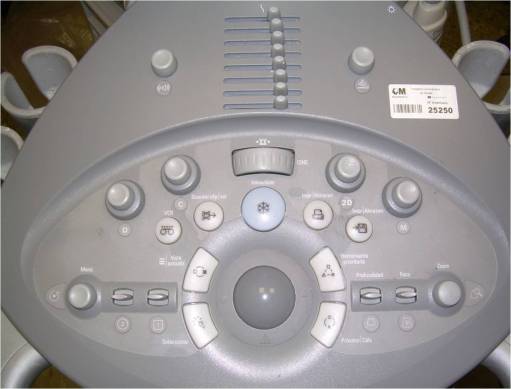
En estas tres imágenes anteriores vemos los diferentes aspectos que pueden tomar esta función y que cada marca comercial implementa según su criterio.

No es un ajuste ecográfico porque no afecta a la calidad de la imagen. Pero la verdad, es tan importante en el día a día que, en mi opinión, merece estar aquí.

Suele aparecer en la botonera cerca de Trackball, nos vamos a valer del Trackball para poder manejar los comandos del medidor en la pantalla por lo que ambas funciones, medidas y trackball están íntimamente relacionadas.

In these three previous images we see the different aspects that this function can take and that each commercial brand implements according to its criteria. It is not an ultrasound adjustment because it does not affect the quality of the image. But the truth is that it is so important in the day to day that, in my opinion, it deserves to be here. It usually appears in the keypad near Trackball, we will use Trackball to be able to handle the meter commands on the screen, so both functions, measurements and trackball are closely related.
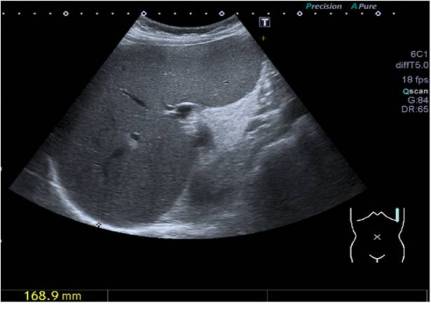
Medida de un Bazo.

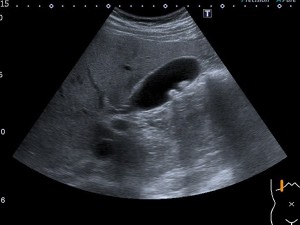
Cuando tenemos una estructura que queremos medir, por ejemplo, el tamaño del Bazo, vamos a localizar la imagen, después vamos a congelarla y si nos gusta, procedemos a hacer una medida. Para ello pulsaremos el botón de medidas, en la pantalla aparecerá un comando en forma de «+» o de «*» o de alguna forma similar, llevaremos con el trackaball ese comando hasta el principio de la estructura que queramos medir, pulsaremos el botón de «SET» o botón de función idéntica aunque no tenga este nombre (marcas comerciales) que habitualmente está junto a trackball, fijando ese primer comando y desplazamos otro signo igual que el que hemos utilizado y que aparece al pulsar «SET» hasta el punto final de la estructura a medir, otra vez, como no, con el trackball. Nos aparecerá en pantalla una medida, correspondiente a la medida de la estructura a estudio. Fácil.

El ejemplo de la foto anterior observamos un bazo medido y su medida abajo a la izquierda de la imagen.

Podemos repetir esto tantas veces como deseemos volviendo a pulsar el botón de medida.

When we have a structure that we want to measure, for example, the size of the Spleen, we will locate the image, then we will freeze it and if we like it, we proceed to make a measurement. For this we will press the button of measures, in the screen it will appear a command in the form of «+» or of «*» or in some similar way, we will take with the trackaball that command until the beginning of the structure that we want to measure, we will press the button «SET» or identical function button even if it does not have this name (trademarks) that is usually next to trackball, setting that first command and move another sign like the one we used and that appears when you press «SET» to the point end of the structure to be measured, again, of course, with the trackball. A measure will appear on the screen, corresponding to the size of the study structure. Easy. The example in the previous photo shows a measured spleen and its measurement at the bottom left of the image. We can repeat this as many times as we wish by pressing the measurement button again.
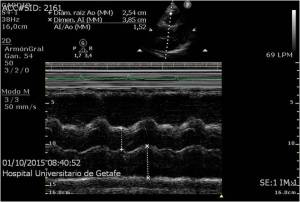
Medidas de un estudio vascular.

En la imagen anterior, la medida de la velocidad en una arteria en un estudio Doppler de TSA.

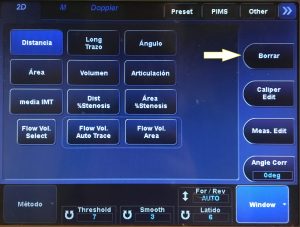
Cuando pulsamos el botón de medida, en la pantalla táctil de los ecógrafos más modernos suele desplegarse un submenú con las funciones que alberga dentro de si el botón de medida, por ejemplo, medida de volumen, para las próstatas, medidas de indices de resistencia para estudio vasculares, medidas de áreas, las más usadas y un largo etcétera de sub-funciones que por norma general son de uso ocasional. Por ejemplo la foto que observas a continuación.

In the previous image, the measurement of the velocity in an artery in a Doppler study of TSA. When we press the measurement button, on the touch screen of the most modern echographs, a submenu is usually displayed with the functions that it houses inside the measurement button, for example, measurement of volume, for prostates, measures of resistance indices for vascular studies, measurements of areas, the most used and a long etcetera of sub-functions that as a rule are for occasional use. For example, the photo you see below.

En esta imagen observamos que en el modo 2D podemos ejecutar estas acciones dentro de la función de medir. El el modo Doppler, tendremos otro submenú con tareas específicas de la función de medir y que se usarán en estudios de vascular y en el modo M, para cardio, pero os digo que en este caso es la presentación de una marca comercial, otras implementarán estas acciones de manera similar, pero no igual.

Cuando medimos distancias lo haremos en centímetros, por ejemplo, en el Bazo que has visto antes, pero en estudios vasculares mediremos en cm/s ya que medimos velocidades y no distancias.

En la imagen, observamos, señalada con flecha blanca, la palabra «Borrar», es obvio que si nos equivocamos al ejecutar una medida, podamos borrarla para realizarla correctamente.

Hoy hemos tratado un tema «amable», fácil de entender y de usar, te invito a que te suscribas al Blog y así poder seguir cada nuevo Post, te advierto, el próximo será muy, muy interesante…será muy didáctico.

In this image we observe that in the 2D mode we can execute these actions within the function of measuring. In the Doppler mode, we will have another submenu with specific tasks of the function to measure and that will be used in studies of vascular and M-mode, for cardio, but I tell you that in this case it is the presentation of a commercial brand, others will implement These actions similarly, but not the same. When we measure distances we will do it in centimeters, for example, in the Spleen that you have seen before, but in vascular studies we will measure in cm / s since we measure speeds and not distances. In the image, we observe, marked with a white arrow, the word «Delete», it is obvious that if we make a mistake when executing a measurement, we can erase it to perform it correctly. Today we have treated a «friendly» theme, easy to understand and use, I invite you to subscribe to the Blog and thus be able to follow each new Post, I warn you, the next one will be very, very interesting … it will be very educational.

19. El foco.

También conocido como enfoque, es una herramienta vital en día a día. Es el ajuste ecográfico que vamos a utilizar para ver con mayor nitidez aquella parte de la pantalla en la que tenemos la estructura que nos interesa estudiar. Es decir, imagina que estamos utilizando una profundidad de 12 centrímetros en el estudio de un hígado, pero ese hígado tiene en la parte mas superficial de la pantalla, como a 4 centímetros de la piel, una estructura sospechosa, una lesión, que necesito estudiar con más cuidado, lo que voy a hacer es llevar el foco a la profundidad de 4 centrímetros para ver con mayor resolución, con mayor nitidez,  en esa parte de la imagen, eso conllevará una resolución menor en otras profundidades de la imagen, tanto mayores como menores.

Si no objetivamos nada particular en la imagen que debamos estudiar, tendremos el foco colocado en aquella zona donde observemos la imagen globalmente, lo más nítida posible, suele ser en la zona central de la profundidad, siempre que ésta esté acorde con la zona de estudio, como expliqué en el capítulo anterior.

Also known as focus, it is a vital tool on a day-to-day basis. It is the ultrasound adjustment that we are going to use to see more clearly that part of the screen in which we have the structure that we are interested in studying. That is, imagine that we are using a depth of 12 centimeters in the study of a liver, but that liver has in the most superficial part of the screen, about 4 centimeters from the skin, a suspicious structure, an injury, that I need to study more carefully, what I’m going to do is take the focus to the depth of 4 centimeter to see with higher resolution, with greater clarity, in that part of the image, that will lead to a lower resolution in other depths of the image, both higher as minors. If we do not objectify anything particular in the image that we must study, we will have the focus placed in that area where we observe the image globally, as clearly as possible, usually in the central area of ​​the depth, as long as it is in accordance with the study area , as I explained in the previous chapter.
Foco o Focus, junto a Profundidad o Depth
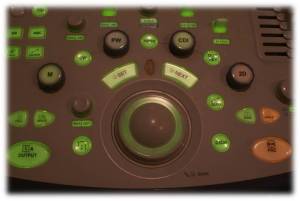
Aspecto de rueda pequeña superior al Trackball.

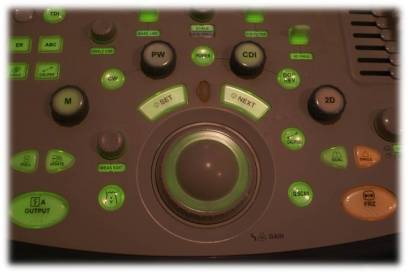
El foco es un comando que puede tener diferentes aspectos en la botonera, puede ser una pequeña rueda, en la imagen anterior, entre las teclas SET y NEXT. Puede ser una tecla que se pueda accionar arriba y abajo, debe estar siempre cerca de la profundidad, a mi me gusta que sea así, porque su uso está bastante relacionado.

The focus is a command that can have different aspects in the keypad, it can be a small wheel, in the previous image, between the SET and NEXT keys. It can be a key that can be operated up and down, it must always be close to the depth, I like it to be that way, because its use is quite related.
Foco y profundidad en rectángulo amarillo.

Este ajuste está íntimamente relacionado con la propagación del haz ultrasónico y sus partes https://ecografiafacil.com/2017/12/23/9-el-haz-ultrasonico/.

En ese capítulo veíamos que justo antes de la divergencia del haz había una zona conocida como «zona focal», esa zona la podemos modificar para corregir la divergencia del haz y poder ver con mayor nitidez en la profundidad de la pantalla, por ejemplo.

El foco o enfoque tiene que estar siempre en la línea de interés o un poco por debajo de ella.

Los equipos de ecografía cuanto mejores son, más foco dependientes son, es decir, que tengamos un equipo de alta gama no nos evita la utilización de este ajuste, sino que en la práctica, puedo asegurar que es más efectivo y necesario.

This adjustment is closely related to the propagation of the ultrasonic beam and its parts https://ecografiafacil.com/2017/12/23/9-el-haz-ultrasonico/. In that chapter we saw that just before the divergence of the beam there was an area known as «focal area», that area can be modified to correct the divergence of the beam and be able to see more clearly in the depth of the screen, for example. The focus or focus must always be on the line of interest or a little below it. The sonography equipment the better they are, the more dependent they are, that is to say, that we have a high-end equipment does not prevent us from using this adjustment, but in practice, I can assure that it is more effective and necessary.
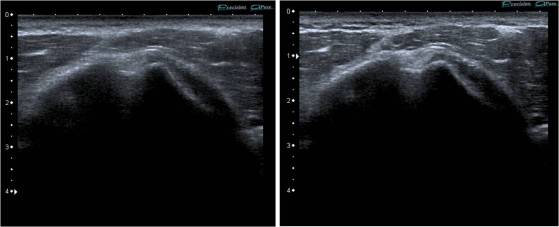
Colocación óptima del foco mejora la imagen en zona de interés.

En las imágenes anteriores se demuestra mejor visualización del Tendón del Biceps en la corredera bicipital si situamos el foco a su altura, más nítido que si situamos el foco en la profundidad de la imagen.

Su aspecto en pantalla suele ser un triángulo blanco junto a la línea centimetrada de la profundidad, pueden ser varios focos a la vez los que utilicemos, de manera que «enfoquemos» mejor en varias zonas de la pantalla, pero esto lógicamente tiene un precio, que es el refresco de la pantalla, es decir, vamos a hacer que tengamos menos imágenes por segundo en pantalla y podamos observar que la imagen va como a «saltos», como cuando vemos una película en fotogramas…eso en la práctica agota y por eso se recomienda el uso de un solo foco, en la zona de interés.

In the previous images, better visualization of the Biceps Tendon in the bicipital slider is shown if we place the focus at its height, more clear than if we place the focus in the depth of the image. Its appearance on the screen is usually a white triangle next to the centimeter line of the depth, there may be several bulbs at the same time that we use, so that we «focus» better in several areas of the screen, but this logically has a price, which is the refresh of the screen, that is, we are going to have less images per second on the screen and we can observe that the image goes as «jumps», as when we see a film in frames … that actually exhausts and for that reason the use of a single focus is recommended, in the area of ​​interest.
2 focos en pantalla, a casi 1 cm y a 2 cms. Obsérvese el triángulo blanco a dos alturas.

Este ajuste se usa también en otros modos de imagen, como el doppler, no es exclusivo del Modo «B» o «2D».

Es un ajuste de uso exclusivo del operador…y es esencial su conocimiento con el objetivo de conseguir la mejor imagen posible, con la mayor nitidez en la zona de interés.

This setting is also used in other image modes, such as the Doppler, it is not exclusive to the «B» or «2D» mode. It is an adjustment for the exclusive use of the operator … and his knowledge is essential in order to achieve the best possible image, with the greatest clarity in the area of ​​interest.

18. La Profundidad.

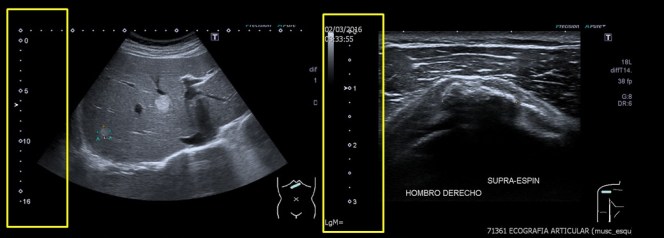
La profundidad es un ajuste ecográfico en el cual vamos a poder controlar la distancia a la que queremos trabajar o la distancia que necesitamos en centímetros para estudiar aquella estructura que deseemos. Por ejemplo, usaremos profundidades muy diferentes para estudiar un tendón supraespinoso o de un hígado.

Para estudios superficiales como pueden ser ecografías musculares o de partes blandas emplearemos profundidades pequeñas de máximo 4 cms para un paciente estándar, pero para estudiar el Abdomen de un adulto necesitamos perentoriamente utilizar profundidades de unos 15 cms…

The depth is an ultrasound adjustment in which we will be able to control the distance we want to work or the distance we need in centimeters to study that structure we want. For example, we will use very different depths to study a supraspinatus or a liver tendon. For superficial studies such as muscle or soft tissue ultrasounds we will use small depths of maximum 4 cm for a standard patient, but to study the abdomen of an adult we need to use depths of approximately 15 cm.
Imágenes de Hígado y Tendón del Supraespinoso y sus profundidades de estudio en rectángulo amarillo.

Bien, esto es fácil de entender, pero este tipo de distancias se acompañan de la elección de sondas ecográficas que nos den la imagen correcta para cada estudio…cuando hablamos de los tipos de transductores, dijimos que los lineales eran de alta frecuencia y los cónvex de baja frecuencia. En el siguiente enlace puedes consultar esta información. https://ecografiafacil.com/2018/01/01/11-tipos-de-transductores/

Por tanto, para técnicas que requieran estudios de poca profundidad usaremos sondas de alta frecuencia y para estudios de más profundidad, usaremos sondas de baja frecuencia.

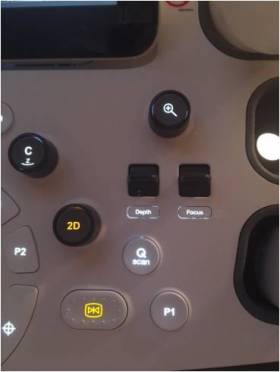
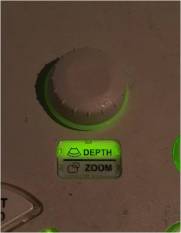
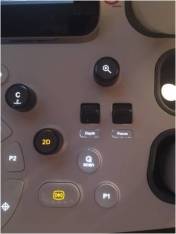
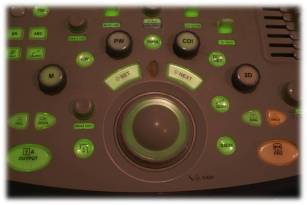
Este ajuste suele estar situado en la botonera a la derecha del trackball y el freezer, se puede identificar en ingles como «Depth» y suele situarse junto al foco, otro ajuste de gran importancia y que estudiaremos muy próximamente. En algunas marcas como Toshiba, este ajuste se integra en el mismo botón con el Zoom y no se deben de confundir, en otras marcas como Samsung, están separados como puedes ver en las fotos expuestas a continuación.

Well, this is easy to understand, but this type of distance is accompanied by the choice of ultrasound probes that give us the correct image for each study … when we talk about the types of transducers, we said that the linear ones were of high frequency and the low frequency convex. In the following link you can check this information. https://ecografiafacil.com/2018/01/01/11-tipos-de-transductores/ Therefore, for techniques that require shallow studies we will use high frequency probes and for deeper studies, we will use low frequency probes. This adjustment is usually located in the keypad to the right of the trackball and the freezer, can be identified in English as «Depth» and is usually placed next to the focus, another adjustment of great importance and we will study very soon. In some brands like Toshiba, this setting is integrated in the same button with the Zoom and should not be confused, in other brands such as Samsung, are separated as you can see in the photos shown below.

En las dos primera imágenes vemos ambas funciones y un solo botón, en la tercera un botón negro con una lupa con un + dentro y abajo la tecla «Depth», funciones separadas.


Debemos diferenciar profundidad y zoom. Profundidad es la distancia que necesitamos ver para llevar a cabo un estudio y el zoom se usa para captar una imagen en unas condiciones y mediante la aplicación de un software, realizar un aumento, «inventando» píxeles inexistentes a partir de otros que se han recogido. Es como hacer una foto, donde la distancia sería el tamaño de pantalla que necesitamos para meter dentro un atardecer en el mar y el zoom sería una imagen, ampliada a posteriori, sólo del sol…solo que en ecografía, el zoom puede usarse en tiempo real. Por tanto, siempre tendremos más calidad de imagen usando la profundidad y no el zoom, siendo este último de uso específico para ampliar alguna estructura en particular.

Si cambiamos la profundidad modificamos la velocidad de refresco de la pantalla, sabremos más de esto más adelante, no es lo mismo escanear 5 cms que 20 cms.

In the first two images we see both functions and a single button, in the third a black button with a magnifying glass with a + inside and below the «Depth» key, separate functions. We must differentiate depth and zoom. Depth is the distance we need to see to carry out a study and zoom is used to capture an image in some conditions and by applying software, make an increase, «inventing» nonexistent pixels from others that have been collected . It’s like taking a picture, where the distance would be the screen size we need to put a sunset in the sea and the zoom would be an image, enlarged a posteriori, only from the sun … only in ultrasound, the zoom can be used in real time. Therefore, we will always have more image quality using depth and not zoom, the latter being of specific use to extend some particular structure. If we change the depth we modify the refresh rate of the screen, we will know more about it later, it is not the same to scan 5 cm than 20 cm.


17. Freezer y Cine.

En este post vamos a tratar dos ajustes ecográficos muy usados, uno de ellos el que más, que es el Freezer o congelador de la imagen y que va acompañado del Cine que es un ajuste que sin ser tan usado, su utilidad es muy relevante, sobre todo en alguna técnica ecográfica donde el paciente no sea colaborador…empezamos…

El congelador o freezer es el botón más usado de la botonera de control del ecógrafo. Cada vez que queramos hacer una foto vamos a congelar la imagen para verla detenida en pantalla y ver si es correcta para almacenar.

In this post we are going to discuss two very used echographic adjustments, one of them the most, which is the Freezer or Freezer of the image and that is accompanied by the Cinema that is an adjustment that without being so used, its usefulness is very relevant, especially in some ultrasound technique where the patient is not a collaborator … we started … The freezer or freezer is the most used button of the control panel of the ecograph. Every time we want to take a picture we will freeze the image to see it stopped on screen and see if it is correct to store.
Marca 1.Botón azul grande por encima del trackball con icono de copo de nieve.
Marca 2.Botón grande anaranjado abajo a la derecha de la imagen.
Marca 3.Botón grande anaranjado abajo a la derecha de la imagen.


Suele tener un aspecto principal en la botonera, suele ser más grande y llamativo, estará centrado o ligeramente tirado a la derecha, cerca siempre del trackball. Como vemos en las tres imágenes anteriores de tres marcas diferentes.

Cuando congelamos la imagen no solo paramos la imagen en la pantalla, también hacemos que los cristales del transductor se queden en pausa y por tanto dejen de trabajar, cuestión muy importante para su conservación duradera, recomendamos encarecidamente que cuando el equipo no esté usándose, por ejemplo, entre paciente y paciente, que el freezer esté activado (imagen parada) para que los cristales no trabajen y la pantalla tampoco. Esta función del freezer es mayúscula.

Es el botón que más se usa, fácil de entender, porque cada imagen que queramos guardar activaremos esta función, aunque algunas veces esa imagen no sea válida y tengamos que volver a descongelar.

Cuando nuestro ojo ve en pantalla una imagen que quiere guardar y nuestro cerebro le da la orden a nuestro dedo para congelar la imagen, pasan décimas de segundo que el paciente, por ejemplo un bebé, puede aprovechar para moverse y hacer que la imagen que queríamos ya no aparezca en la pantalla…¿Por qué razón cuento esto? Esta cuestión viene a colación del segundo ajuste del día de hoy, el cine…

El cine es un ajuste que permite revisar una serie de imágenes que el ecógrafo ha ido guardando previamente antes de pulsar el congelador con objeto de poder «rebobinar» y volver hacia atrás para encontrar la imagen que mi ojo había visto, seleccionarla y poder hacer la foto deseada antes de que el bebé de nuestro ejemplo se hubiese movido…es un ajuste genial¡¡¡

En algunos ecógrafos este ajuste está integrado en la botonera, pero otras veces es un ajuste automático que se activa al pulsar el botón de freezer y es el trackball el que asume esta función.

¿Pero cuantas imágenes puedo guardar? Desgraciadamente solo podemos guardar unas cientos de imágenes, eso es a penas unos segundos antes de apretar el botón de freezer ya que la imagen ecográfica que vemos en la pantalla es la representación de una gran superposición de imágenes que se van refrescando automáticamente, pero esta cuestión la abordaremos más adelante.

Estas cientos de imágenes que puedo guardar son más que de sobra para lo que nos interesa ya que almacena varios segundos y por tanto varios decenas o cientos de imágenes.Eso sí, cuando volvamos a activar la imagen o a descongelarla, esas imágenes se perderán y volverán a almacenarse otras hasta que volvamos a pulsar de nuevo el congelador. Sólo se almacenan imágenes durante unos segundos previos a la activación del freezer, si pasan minutos entre uso y uso del freezer sólo se almacenan la imágenes que se han guardado unos segundos antes de pulsar el esta función.

It usually has a main aspect in the keypad, it is usually bigger and more striking, it will be centered or slightly pulled to the right, always close to the trackball. As we see in the three previous images of three different brands. When we freeze the image we not only stop the image on the screen, we also make the transducer glasses stand still and therefore stop working, a very important issue for its lasting conservation, we strongly recommend that when the equipment is not being used, example, between patient and patient, that the freezer is activated (stop image) so that the crystals do not work and the screen does not work either. This function of the freezer is capitalized. It is the button that is most used, easy to understand, because each image that we want to save will activate this function, although sometimes that image is not valid and we have to re-unfreeze it. When our eye sees an image on the screen that we want to save and our brain orders our finger to freeze the image, it takes tenths of a second for the patient, such as a baby, to take advantage of the movement to make the image we want no longer appears on the screen … Why do I tell this? This question comes to mind the second adjustment of today, the cinema … The cinema is a setting that allows reviewing a series of images that the ultrasound system has previously saved before pressing the freezer in order to «rewind» and go back to find the image that my eye had seen, select it and be able to do it. desired picture before the baby of our example had moved … it’s a great fit! In some echographs this adjustment is integrated in the keypad, but other times it is an automatic adjustment that is activated when the freezer button is pressed and it is the trackball that assumes this function. But how many images can I save? Unfortunately we can only save a few hundred images, that is hardly a few seconds before pressing the freezer button since the ultrasound image that we see on the screen is the representation of a large superposition of images that are refreshed automatically, but this question we will address it later.
These hundreds of images that I can save are more than enough for what interests us since it stores several seconds and therefore several tens or hundreds of images. That is, when we re-activate the image or defrost it, those images will be lost and will return to store others until we press the freezer again. Only images are stored for a few seconds before the freezer is activated, if minutes pass between the use and use of the freezer, only the images that have been stored for a few seconds are saved before pressing this function.

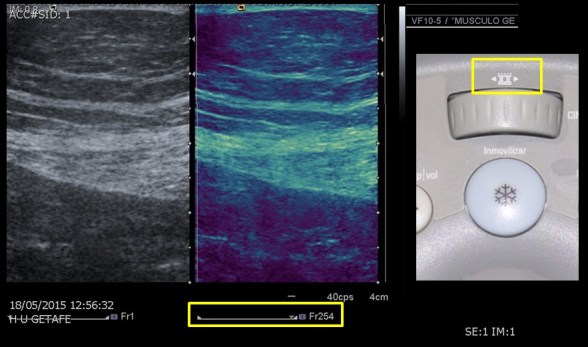
En la imagen vemos dos rectángulos amarillos. En el superior a la derecha es el del icono del cine que es la rueda que está justo debajo, integrado en la consola, justo superior al botón azul de congelar o inmovilizar la imagen. Repito, en esta marca, en otras, es una función asumida por el trackball.

Abajo y central, otro rectángulo que marca una serie de imágenes o frames (acostumbraros a esta terminología) y que marca un Fr254, que quiere decir que se ha escogido la imagen 254 de todas las que habían sido guardadas en la serie, que en este caso estaría en torno a 300 imágenes…

Ambas funciones son «operador-dependiente», es decir, es la persona que está realizando el estudio, el Técnico de Radiología, en nuestro caso, el encargado de manejar dichas funciones.

Nos vemos en el siguiente…

In the image we see two yellow rectangles. In the upper right is the icon of the cinema that is the wheel that is just below, integrated into the console, just above the blue button to freeze or immobilize the image. I repeat, in this brand, in others, it is a function assumed by the trackball. Bottom and center, another rectangle that marks a series of images or frames (accustomed to this terminology) and that marks a Fr254, which means that the image 254 of all those that had been saved in the series has been chosen, that in this case would be around 300 images … Both functions are «operator-dependent», that is, it is the person who is conducting the study, the Radiology Technician, in our case, the person in charge of handling said functions. See you in the next …

16. La Ganancia Parcial.

En el capítulo anterior hablábamos de que somos capaces de intervenir en la amplitud de los ecos para poner la imagen más brillante o menos brillante, de modo general, es decir, en toda la pantalla, pero además te cuento hoy que somos capaces de intervenir en esa amplitud de forma parcial, según la zona de la pantalla que me interese, con este ajuste ecográfico que se llama «Ganancia Parcial» o TGC (compensación tiempo ganancia).

La ganancia parcial es un ajuste ecográfico donde 8 potenciómetros se reparten el brillo de la pantalla en 8 zonas diferentes de superficial a profundo, de modo que soy capaz de potenciar los ecos de retorno producidos en las interfases más profundas (débiles por la atenuación producida por la distancia) para que se «vean» igual de bien, que los ecos de retorno mas superficiales, que son «más fuertes»… Me explico, los ecos de retorno profundo son más débiles que los más superficiales, lógico, porque la energía tiene que recorrer más espacio y se debilita, yo puedo «ecualizar», reforzar esos ecos de retorno profundos para que lleguen mejor al transductor.

Si estoy hablando con una persona a 2 metros la oiré mejor que si hablo con ella a 20 metros, en este caso, tendremos que hablar más alto a 20 metros que a 2, esto es lo que hago con la TGC, elevar el volumen de los ecos de retorno lejanos para oírlos mejor.

In the previous chapter we talked about how we are able to intervene in the amplitude of the echoes to make the image brighter or less bright, in a general way, that is, in the whole screen, but I also tell you today that we are able to intervene in that amplitude of partial form, according to the area of ​​the screen that interests me, with this ultrasound adjustment called «Partial Gain» or TGC (compensation time gain). The partial gain is an echographic adjustment where 8 potentiometers share the brightness of the screen in 8 different shallow to deep zones, so that I am able to boost the return echoes produced in the deeper interfaces (weak by the attenuation produced by distance) so that they «look» just as well, as the more superficial return echoes, which are «stronger» … I mean, the deep return echoes are weaker than the shallower ones, logical, because the Energy has to travel more space and weakens, I can «equalize», reinforce those deep return echoes so they get better to the transducer. If I am talking to a person at 2 meters I will hear it better than if I talk to her at 20 meters, in this case, we will have to talk higher at 20 meters than at 2 meters, this is what I do with the TGC, raise the volume of the distant echoes of return to hear them better.
Potenciómetros TGC.

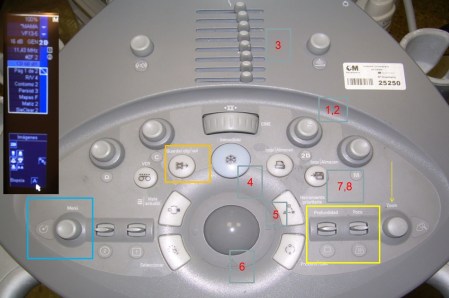
En la imagen anterior ves marcado con el número 3 una serie de botones escalados y en cifra de 8. El superior corresponderá a la parte más superficial de la imagen, la más cercana al transductor, y el inferior a la parte más alejada del transductor, la más profunda en la imagen. Los 8 se reparten así toda la pantalla, el 4 y el 5 potenciómetro, así conocidos cada botón, serán la parte central de la imagen.

Si movemos los potenciómetros a la izquierda oscurecemos la imagen, si lo hacemos a la derecha la haremos brillar más en la región de la imagen correspondiente al potenciómetro que movamos…Basta de literatura, ejemplos…

In the previous image you see marked with the number 3 a series of buttons scaled and in figure of 8. The superior will correspond to the most superficial part of the image, the closest to the transducer, and the inferior to the furthest part of the transducer, the deepest in the image. The 8 are distributed so the entire screen, 4 and 5 potentiometer, well known each button, will be the central part of the image. If we move the potentiometers to the left we darken the image, if we do it to the right we will make it shine more in the region of the image corresponding to the potentiometer that we move … Enough of literature, examples …

En estas imágenes anteriores observamos una imagen correctamente realizada en función de la alineación correcta de los potenciómetros de la TGC, que si observas, están ligeramente oblicuados a la derecha para que en la parte más profunda de la imagen los ecos de retorno sean reforzados…

In these previous images we see an image correctly made based on the correct alignment of the potentiometers of the TGC, which if observed, are slightly oblique to the right so that in the deepest part of the image the return echoes are reinforced

Si realizo mal la técnica y alineo mal los potenciómetros 4 y 5 y los llevo a la izquierda dejaré en negro y sin información, la parte central de la imagen, tal como reflejan estas dos últimas imágenes.

Bien, para resumir…La TGC es la ganancia selectiva a diferentes profundidades para minimizar los efectos de la atenuación sobre la imagen. El ajuste de las ganancias conllevará un cambio en la imagen.Es un ajuste dependiente del operador que maneje dicho equipo, en nuestro caso, del Técnico de Rayos, responsable por tanto de la consecución de una imagen perfecta y diagnóstica.

Este ajuste siempre ha estado en la botonera, pero los equipos más modernos lo tienen integrado en su aspecto digital, funcionando exactamente igual. En esta imagen que ves a continuación y señalado con una fecha en rojo, ves la TGC en la pantalla táctil del equipo, cada vez más habitual, y no en la botonera…muy típico también de los equipos de ecografía portátiles, eso sí siempre dependiendo de cada marca comercial.

If I make the wrong technique and I align the potentiometers 4 and 5 wrongly and I take them to the left, I will leave the central part of the image in black and without information, as these last two images reflect. Well, to summarize … The TGC is the selective gain at different depths to minimize the effects of attenuation on the image. The adjustment of the gains will entail a change in the image. It is a dependent adjustment of the operator that manages said equipment, in our case, of the Rays Technician, responsible therefore for the achievement of a perfect and diagnostic image. This adjustment has always been in the keypad, but the most modern equipment has it integrated in its digital aspect, working exactly the same. In this image that you see below and marked with a date in red, you see the TGC on the touch screen of the equipment, more and more usual, and not in the keypad … very typical also of portable ultrasound equipment, yes always depending on each commercial brand.
TGC digital.


15. La Ganancia General.

En el botón 2D encontramos otra función vital además de la representación de la imagen en 2 dimensiones, a la que accedemos presionando este botón.

Encontramos que normalmente este botón tiene la capacidad de girar como una rueda y así intervenimos en el brillo de la imagen de manera global en la pantalla. Esta otra función del botón 2D es la llamada «Ganancia General» o «Gain» y la podemos definir como la capacidad que tenemos de modificar la amplitud del eco (magnitud de onda ultrasónica), resultando una imagen más o menos brillante. Los cambios de la ganancia general afectan a toda la imagen por igual. Dependerá y tendrá que ser adaptada a las características de cada paciente.

Es como si estás escuchando tu programa favorito de la televisión, pero no lo oyes bien y subes el volumen del aparato para poder escuchar correctamente…

In the 2D button we find another vital function besides the representation of the image in 2 dimensions, which we access by pressing this button. We find that normally this button has the ability to rotate like a wheel and so we intervene in the brightness of the image globally on the screen. This other function of the 2D button is called «General Gain» or «Gain» and we can define it as the ability we have to modify the amplitude of the echo (ultrasonic wave magnitude), resulting in a more or less bright image. Changes in the general gain affect the entire image equally. It will depend and it will have to be adapted to the characteristics of each patient. It’s as if you’re listening to your favorite TV show, but you do not hear it well and you raise the volume of the device to be able to listen correctly …
Marca 1
Marca 2

En la marca 1 solo podemos controlar la ganancia general en el botón 2D, en la marca 2 podemos hacerlo en 2D y además en la rueda central que rodea el track ball y que está marcado con la palabra «gain».

La ganancia general interviene por tanto sobre los eco recibidos, es decir, sobre los ecos de retorno, y solo sobre ellos. En la imagen vamos a ver que lo que estamos haciendo al manejar la ganancia general, es intervenir sobre el brillo de la imagen de manera global, como hemos dicho antes, pero quiero que lo veas en imágenes…

In the 1 mark we can only control the general gain in the 2D button, in the 2 mark we can do it in 2D and also in the central wheel that surrounds the track ball and that is marked with the word «gain». The general gain therefore intervenes on the echoes received, that is, on the return echoes, and only on them. In the image we will see that what we are doing when managing the general gain, is to intervene on the brightness of the image in a global way, as we have said before, but I want you to see it in images …

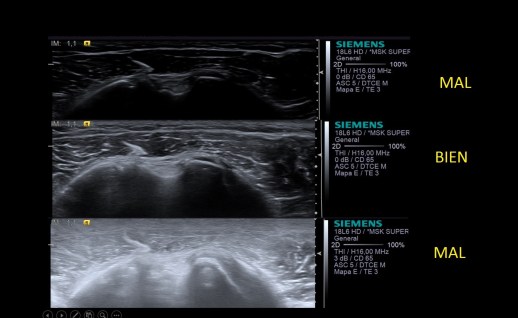
En estas 3 imágenes que vemos, tenemos una imagen que se ve con muy poco brillo, la primera, otra con un brillo óptimo, la segunda y una tercera excesivamente brillante. Tanto la primera como la tercera tienen una ganancia general incorrecta y nosotros la podemos modificar hasta dejar un brillo correcto, como en la imagen segunda.

Por tanto, este ajuste ecográfico o parámetro técnico depende del operador y es modificable por el mismo. Es el operador el que puede intervenir con este comando sobre la imagen. Es importantísimo y además se usa asíduamente, siendo uno de los principales ajustes ecográficos que tenemos que conocer y manejar perfectamente.

Para resumir, la ganancia general interviene en el brillo general de la pantalla, es modificable por el operador y es la capacidad que tenemos de modificar la amplitud de eco, recordemos la magnitudes de la onda ecográfica que estudiamos en el episodio 5… Depende del paciente y del estudio y es función del Técnico, del operador, encontrar la ganancia más apropiada para conseguir la mejor imagen posible para su uso diagnóstico.

In these 3 images that we see, we have an image that is seen with very little brightness, the first, another with an optimal brightness, the second and an excessively bright third. Both the first and the third have an incorrect general gain and we can modify it to leave a correct brightness, as in the second image. Therefore, this ultrasonic adjustment or technical parameter depends on the operator and is modifiable by the operator. It is the operator who can intervene with this command on the image. It is very important and it is also used regularly, being one of the main echographic adjustments that we have to know and handle perfectly. To summarize, the general gain intervenes in the overall brightness of the screen, is modifiable by the operator and is the ability we have to modify the amplitude of echo, remember the magnitudes of the ultrasound wave we studied in episode 5 … It depends of the patient and the study and it is the function of the Technician, of the operator, to find the most appropriate gain to obtain the best possible image for its diagnostic use.

14. Parámetros técnicos. Los modos de trabajo.

Marca 1
Marca 2

En el botón de la fotografía marca 1 encontramos marcado con los números 1 y 2. En este apartado vamos a ver la función 1 de este mando y que es el referente a los modos de trabajo o también conocidos como representaciones de la imagen.

Del mismo aspecto que el botón previamente mencionado encontramos otros 3, absolutamente idénticos. El más importante es el indicador de 2D, representa la imagen bidimensional (2 Dimensiones) típica de la imagen ultrasónica. Es la imagen estándar de trabajo, la que más vamos a usar, además este botón va a devolvernos a la imagen normal (cuando lo accionemos) si hemos tenido que aplicar algún otro método de imagen, como el doppler.

In the picture button marked 1 we are marked with the numbers 1 and 2. In this section we will see the function 1 of this command and which is the reference to working modes or also known as image representations. In the same way as the previously mentioned button we find other 3, absolutely identical. The most important is the 2D indicator, representing the two-dimensional image (2 Dimensions) typical of the ultrasonic image. It is the standard image of work, the one that we are going to use the most, in addition this button will return us to the normal image (when we activate it) if we have had to apply some other image method, like the Doppler.
Modo 2D

A su lado tenemos otro botón, llamado M y que nos sirve para estudios donde tengamos que usar el Modo M para trabajar, como la ecocardio o estudios donde necesitemos estudiar estructuras y su movimiento, por ejemplo, el diafragma.

Beside it we have another button, called M, which is useful for studies where we have to use Mode M to work, like the echocardio or studies where we need to study structures and their movement, for example, the diaphragm.
Modo M

Al otro lado otros dos botones, marcados con C y con D.

El llamado C es aquel que corresponde a la imagen en Modo Doppler Color, puedes encontrarlo con la denominación C o CDI, y si lo accionamos, activaremos la caja de color, habitualmente en rojo y azul, típica de la técnica utilizada para estudio de vasos, por ejemplo, pero muy útil igualmente cuando tenemos que estudiar estructuras que necesitamos saber si están vascularizadas. En este mismo botón, tanto en la marca 1 y 2 de ecógrafos aquí mostrados, encontramos integrado el Modo Angio o Power Doppler, es decir, otro tipo de Doppler, más sensible a flujos lentos, es decir, sensible a la cantidad de flujo, que en caso de ser muy escaso, no sería detectado por el doppler color… y que estudiaremos más adelante con todo detalle. En el modo angio no tenemos dos colores, tan solo 1, normalmente naranja, pero que puede ser también de otro color, según la casa comercial. En este caso, ambas casas coinciden.

El botón D o PW (pulsed wave) es aquel en el que encontramos el Doppler Pulsado propiamente dicho y que usamos de manera específica para medir las velocidades a las que pasa el flujo sanguíneo en un punto que nosotros decidamos, muy útil en estudios vasculares, por ejemplo, en sospechas de trombosis venosas.

On the other side two other buttons, marked with C and D. The C call is the one that corresponds to the image in color Doppler mode, you can find it with the name C or CDI, and if we activate it, we activate the color box, usually in red and blue, typical of the technique used to study glasses , for example, but very useful also when we have to study structures that we need to know if they are vascularized. In this same button, both in the 1 and 2 brands of ultrasound machines shown here, we find the Angio or Power Doppler Mode integrated, that is, another type of Doppler, more sensitive to slow flows, that is, sensitive to the amount of flow, that in case of being very scarce, it would not be detected by the color Doppler … and that we will study later in detail. In angio mode we do not have two colors, only 1, normally orange, but that can also be of another color, according to the commercial house. In this case, both houses coincide. The button D or PW (pulsed wave) is the one in which we find the Pulsed Doppler itself and that we use in a specific way to measure the speeds at which the blood flow passes at a point that we decide, very useful in vascular studies, for example, in suspicion of venous thrombosis.
Doppler Color
Power Doppler
Doppler Pulsado

Sé que tienes la necesidad de conocer más sobre el doppler, pero todo a su tiempo, llegará…hoy toca conocer los modos de trabajo, que si te has percatado, son los modos de representación de la imagen que hemos estudiado hace muy poco y que te pongo el enlace aquí para que lo repases. https://ecografiafacil.com/2018/01/02/12-la-imagen-modos-de-representarla/

Tanto en la imagen 1 como en la 2 de arriba, encontramos los 4 botones, distribuidos y llamados de distinta forma en el caso del doppler color y el pulsado, pero con la misma función, 2D, M, Doppler Color, Doppler Pulsado, en función de las casas comerciales. El Modo 2D y el Modo M se denominan igual en ambas casas comerciales.

Ya estás preparada o preparado para conseguir diferentes modos de trabajo, pero no son los únicos, hay equipos que hacen estudios 3D, por ejemplo…y que tendrían que llevar integrado el software apropiado, pero no son los habituales en ecografía clínica y sí en obstetricia.

I know you have the need to know more about the Doppler, but everything in time, will come … today it is necessary to know the ways of working, that if you have noticed, are the modes of representation of the image that we have studied very recently and that I put the link here for you to review. https://ecografiafacil.com/2018/01/02/12-la-imagen-modos-de-representarla/ Both in image 1 and 2 above, we find the 4 buttons, distributed and called differently in the case of color Doppler and pulsed, but with the same function, 2D, M, Color Doppler, Pulsed Doppler, in Function of commercial houses. The 2D Mode and the M Mode are named equally in both commercial houses. You are already prepared or prepared to get different ways of working, but they are not the only ones, there are teams that do 3D studies, for example … and that they should have integrated the appropriate software, but they are not the usual ones in clinical ultrasound and yes in obstetrics


13. Parámetros técnicos.

¿Qué son los parámetros técnicos?…Una definición válida sería aquella que los definiese como aquellos elementos del equipo de ecografía que están encaminado una imagen óptima y que sirva para el diagnóstico y que además puedan ser modificados al gusto del operador, en nuestro caso, del Técnico de Rayos.

Cada paciente transmite de una forma diferente debido a sus características acústicas. Estos parámetros se modifican para tratar de obtener la mejor imagen posible.

En este caso en el que el Técnico realiza la técnica para que el radiólogo informe el estudio, la imagen debe ser perfecta, en ejecución técnica para conseguir la mejor imagen posible para el diagnóstico, este es el objetivo principal.

Los ecógrafos son equipos de uso sencillo, cuyo conocimiento requiere a penas un par de días para sacarle todo el jugo, si se tiene experiencia en el campo que estamos tratando en este blog. Las diferentes marcas, salvo excepciones, suelen hacer equipos bastante intuitivos de manejar y similares entre ellos, aunque cada marca tiene su estética.

En un ecógrafo vamos a encontrar una serie de parámetros o ajustes técnicos que son vitales para la consecución de la imagen, y digo vitales, porque sin un conocimiento exhaustivo de ellos, la imagen sería deficiente. Hay otros ajustes menos importantes, pero que pueden ayudarnos a mejorar la imagen en algún caso específico.

Estos ajustes «más importantes», suelen estar a disposición del usuario en la botonera, a la vista…

Os presento hoy una botonera tipo, de una marca cualquiera y vamos a ir desgranando poco a poco los diferentes ajustes que podrás modificar para conseguir la imagen perfecta.

What are the technical parameters? … A valid definition would be one that defines them as those elements of the ultrasound equipment that are aimed at an optimal image and that serve for diagnosis and that can also be modified to suit the operator, in our case, of the Lightning Technician. Each patient transmits in a different way due to its acoustic characteristics. These parameters are modified to try to obtain the best possible image. In this case in which the Technician performs the technique for the radiologist to report the study, the image must be perfect, in technical execution to achieve the best possible image for the diagnosis, this is the main objective. The ecographs are simple equipment, whose knowledge requires just a couple of days to get all the juice, if you have experience in the field that we are dealing with in this blog. The different brands, with some exceptions, tend to make teams that are quite intuitive to handle and similar to each other, although each brand has its own aesthetic. In an ultrasound we will find a series of parameters or technical adjustments that are vital for the achievement of the image, and I say vital, because without an exhaustive knowledge of them, the image would be deficient. There are other less important settings, but they can help us improve the image in some specific case. These «most important» adjustments are usually available to the user in the keypad, at sight … I present you today a type of keypad, of any brand and we will gradually unravel the different settings that you can modify to get the perfect image.
Botonera


Botonera

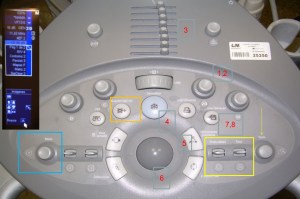
En las dos primeras imágenes vemos equipos de marcas diferentes, estéticamente hablando muy diferenciados, porque en lo fundamental, son muy parecidos, si sabes de ecografía.

Botonera

Estos botones intervienen decisivamente  en la imagen que vamos a conseguir y como la vamos a almacenar. Suelen ser universales, es decir, deben llamarse igual sea cual sea la marca del fabricante. Pueden verse afectado por el aspecto cada vez más digital de los equipos…pero en su mayoría y a día de hoy, son muy reconocibles sea cual sea la marca, aunque siempre hay excepciones.

A parte de este menú principal situado en la botonera, los equipos tienen un submenú, que podemos ver en la imagen 3, arriba a la izquierda de la imagen…este submenú controla otros ajustes también modificables y dependientes del operador, pero que por regla general suelen ser menos decisivos para la imagen, como los filtros, textos, etc. pero que de igual manera vamos a estudiar en episodios sucesivos.

En negrita y a continuación los «más importantes»…os los presento…

  1. Modos de trabajo: 2D, Doppler, 3D, etc
  2. Ganancia Total, botón giratorio coincidente con el modo de trabajo (Ganancias independientes)
  3. Ganancia Parcial (8 potenciometros en vertical)
  4. 4. Congelado o Freezer, el más grande, el más usado
  5. Medidas o Caliper
  6. Trackball para medidas, textos, opciones de menú
  7. Botón de impresión
  8. Botón de almacenamiento 
These buttons intervene decisively in the image that we are going to get and how we are going to store it. They are usually universal, that is, they must be called the same regardless of the manufacturer’s brand. They can be affected by the increasingly digital aspect of the equipment … but for the most part and to this day, they are very recognizable whatever the brand, although there are always exceptions. Apart from this main menu located in the keypad, the equipment has a submenu, which we can see in image 3, at the top left of the image … this submenu controls other adjustments that are also modifiable and dependent on the operator, but that General rule are usually less decisive for the image, such as filters, texts, etc. but in the same way we will study in successive episodes. In bold and then the «most important» … I present them to you …
Working modes: 2D, Doppler, 3D, etc …
Total gain, rotary knob coinciding with the work mode (independent Gains)
Partial gain (8 vertical potentiometers)
4. Frozen or Freezer, the largest, the most used
Measures or Caliper
Trackball for measurements, texts, menu options
Print button
Storage button