110. Hidronefrosis.

Empezamos esta serie de micro posts donde vamos a repasar la patología habitual que podemos encontrar en la exploración ecográfica abdominal pediátrica, sí ya sé, este Blog no es de patología, pero me parece interesante enseñar en la mínima expresión posible la patología y su semiología, y sobre todo, la comparación con la normalidad, que para un Técnico de Radiología es base.

Empezamos con la Hidronefrosis, y sus grados, conocer esta enfermedad nos ayudará a reconocer sus signos, y sobre todo, detente donde habla de los grados de hidronefrosis, superinteresante.

En algunas ecografía antenatales ya lxs Ginecologxs ya son capaces de detectar esta patología que luego hay que confirmar en la etapa neonatal.

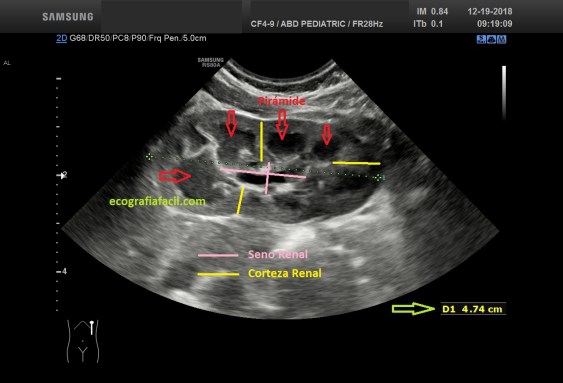
El Riñón ecográficamente normal es este:

We started this series of micro posts where we will review the usual pathology that can be found in pediatric abdominal ultrasound exploration, yes I know, this blog is not pathology, but I think it is interesting to teach the pathology and its semiology in the minimum possible expression, and above all, the comparison with normality, which for a Radiology Technician is the basis. We begin with the Hydronephrosis, and its degrees, knowing this disease will help us to recognize its signs, and above all, stop where it talks about the degrees of hydronephrosis, superinteresting. In some antenatal ultrasound and gynecologxs are already able to detect this condition that then have to confirm in the neonatal stage. The kidney, which is ecographically normal, is this:


En la imagen superior puedes ver un Riñón donde Corteza y Seno Renal están claramente diferenciados, se observa los Pielones Caliciales

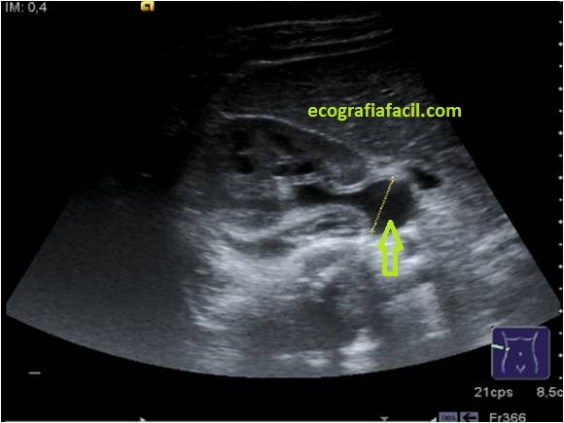
Las Hidronefrosis se pueden presentar en casos leves, como este:

In the image above you can see a Kidney where the cortex and the renal sinus are clearly differentiated, the Calyllic Champs are observed … Hydronephrosis can occur in mild cases, such as this:

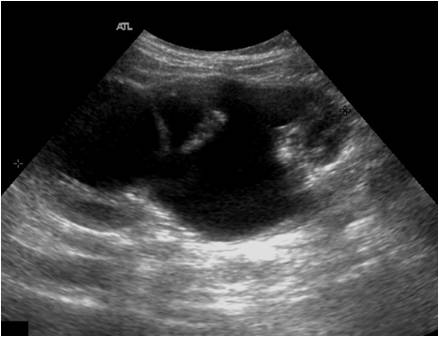
Donde encontramos un «pelvis extrarrenal», anecoica, grande en la salida del riñón hacia el Uréter…El parénquima renal está prácticamente conservado, casi normal o normal…Pero en extremos graves, como la hidronefrosis de III-IV grado encontramos estas imágenes:

Where we find an «extrarenal pelvis», anechoic, large at the exit of the kidney to the ureter … The renal parenchyma is practically preserved, almost normal or normal … But in severe extremes, such as hydronephrosis of III-IV degree we find these images:

Observad que aquí el Riñón está «colapsado» por una importante cantidad de líquido dentro del órgano, lógicamente es anecoico y el parénquima renal puede verse afectado, disminuido al punto que si no se actúa el riñón podría sufrir daños en su función…

En ocasiones podemos encontrar otra figura patológica que estudiaremos en su micropost particular, el Megauréter.

Entre estos dos extremos podemos encontrar cantidad de imágenes que deberán ser interpretadas y clasificadas por lxs radiólogxs.

Observe that here the Kidney is «collapsed» by a significant amount of fluid inside the organ, logically it is anechoic and the renal parenchyma can be affected, diminished to the point that if the kidney is not acted it could suffer damages in its function … Sometimes I can find another pathological figure that we will study in its particular micropost, the Megauréter. Between these two extremes we can find quantity of images that must be interpreted and classified by the radiologists.

Música…


109. Ecografía de Abdomen Pediátrica.

En este Post , en esta noche de Paz, quiero contaros el protocolo de abdomen en la Ecografía Pediátrica, que aunque tiene que ser documentado con las mismas imágenes que el de un adulto, tiene cambios sensibles, por ejemplo en el orden en el que vamos a conseguir las imágenes y además algunos puntos de interés especial que tienes que conocer…

Los cortes a realizar, es decir, las imágenes son iguales que el protocolo de abdomen del adulto que puedes consultar del Post 41 al 59, pero en el mundo de la Pediatría, en los peques, muy peques, entre el nacimiento y los 5 ó 6 años, debemos tener en cuenta:

Empezaremos siempre estudiando la Vejiga, la razón es que con el frío del gel lo más normal es que la/el peque se haga pis y no podamos estudiarla, en muchos estudios vamos a ver como la vejiga se vacía en directo…por eso es imprescindible empezar por ahí.

Prestaremos especial atención a las adrenales, sobre todo de las/los bebés y máxime cuando estén en las UCIs de Neonatología, son focos de sangrado abdominal y estas estructuras son visibles hasta el año de vida de manera normal, después son invisualizables con ecografía hasta que presentan patología tanto en la niñez, adolescencia y en la edad adulta.

Las/los niñas/os sobre todo los más peques y hasta la edad adolescente deben de ser estudiados en decúbito prono para el estudio de riñones ya que la visualización de estas estructuras y en este periodo del crecimiento son muy visualizables desde posterior y cerca de las vértebras, si no lo has probado, inténtalo y cuéntame tus resultados…

Por lo demás no hay más,las imágenes deben ser las del protocolo de adultos, pero en el orden de las agujas del reloj y empezando desde la vejiga.

La sonda será la microcónvex o lineal para los más peques y en la adolescencia estos pacientes deberán ser estudiado con sondas cónvex como las de cualquier adulto, siempre en función de las necesidades de cada paciente.

No se mantendrá en ayunas a los más pequeños, bebés y siempre que se puedan hacer las ayunas, para los pacientes de pediatría no deben superar las 4 horas.

Las indicaciones habituales por las que lxs pediatras nos pedirán estas pruebas, estas:

In this Post I want to tell you the protocol of abdomen in the Pediatric Ultrasound that although it has to be documented with the same images as that of an adult has sensitive changes, for example in the order in which we are going to get the images and also some points of special interest that you have to know … The cuts to be made, that is, the images are the same as the abdomen protocol of the adult that you can consult from Post 41 to 59, but in the world of Pediatrics, in the small ones, very small, between birth and 5 or 6 years, we must take into account: We will always start studying the bladder, the reason is that with the cold of the gel the most normal thing is for the child to pee and we can not study it, in many studies we will see how the bladder empties in direct … that’s why It is essential to start there. We will pay special attention to the adrenals, especially of the babies, and especially when they are in the Neonatal ICUs, they are foci of abdominal bleeding and these structures are visible until the year of life in a normal way, then they are invisible with ultrasound until They present pathology both in childhood, adolescence and in adulthood. The children, especially the youngest ones and up to the adolescent age, should be studied in prone position for the study of kidneys since the visualization of these structures and in this period of growth are very visible from posterior and close to the vertebrae, if you have not tried it, try it and tell me your results … For the rest there is no more, the images should be those of the adult protocol, but in the order of the hands of the clock and starting from the bladder. The probe will be the microconvex or linear for the smallest and in adolescence these patients should be studied with convex probes as those of any adult, always depending on the needs of each patient. Do not keep fasting to the smallest, babies and provided that fasting can be done, for pediatric patients should not exceed 4 hours. The usual indications for which pediatricians will ask for these tests, these:
  • ABDOMEN AGUDO
  • INFECCIÓN DEL TRACTO URINARIO
  • ECTASIA PIÉLICAS
  • SANGRE EN ORINA
  • INSUFICIENCIA RENAL
  • HIDRONEFROSIS
  • MEGAURÉTERES
  • LITIASIS RENALES O BILIARES
  • REFLUJOS GASTROESOFÁGICOS
  • HIPOSPADIAS
  • AGENESIAS
  • TRATAMIENTOS PARA OSTEOGÉNESIS IMPERFECTA
  • MASAS Y QUISTES
  • OBESIDAD
  • MALFORMACIONES
  • etc.
ACUTE ABDOMEN, URINARY TRACT INFECTION,  BLOOD IN URINE, RENAL INSUFFICIENCY, HIDRONEFROSIS,  RENAL OR BILIARY LITHIASIS GASTROESOFÁGIC, REFLUJOS HIPPOSADIES, TREATMENTS FOR IMPERFECT OSTEOGENESIS, MASSES AND CYST, OBESITY, MALFORMATIONS etc.

Dado que las imágenes las tenemos en el protocolo de adulto y solo tenemos que adaptar ese protocolo al abdomen pediátrico y sus particularidades os voy a subir una representación de ellas, y las comentaré por su singularidades e importancia. Después y aunque no es el cometido del Blog, desgranaré minipost a minipost, patología más habitual del abdomen pediátrico visto por ecografía.

Since we have the images in the adult protocol and we just have to adapt that protocol to the pediatric abdomen and its particularities I will upload a representation of them, and I will comment on their singularities and importance. Later and although it is not the Blog’s mission, I will reject minipost to minipost, the most common pathology of the pediatric abdomen seen by ultrasound.

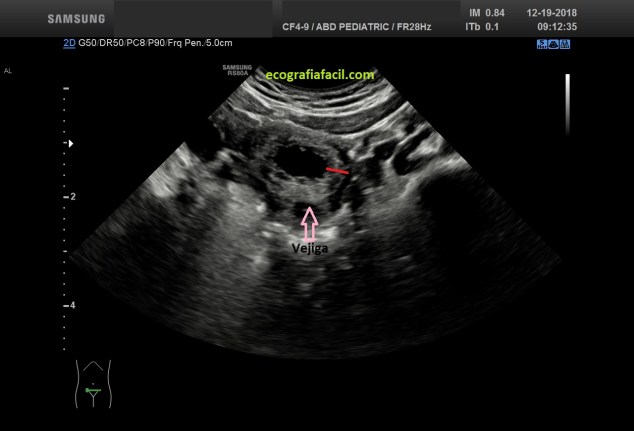
Estas dos imágenes superiores son de una misma paciente, en el mismo estudio, con dos sondas diferentes, con la vejiga llena y vacía post miccional, por eso siempre es imperativo empezar por esta localización, observa la pared de la vejiga vacía…(línea Roja)

These two superior images are from the same patient, in the same study, with two different probes, with the bladder full and empty post micturition, so it is always imperative to start at this location, look at the empty bladder wall … ( Red line)

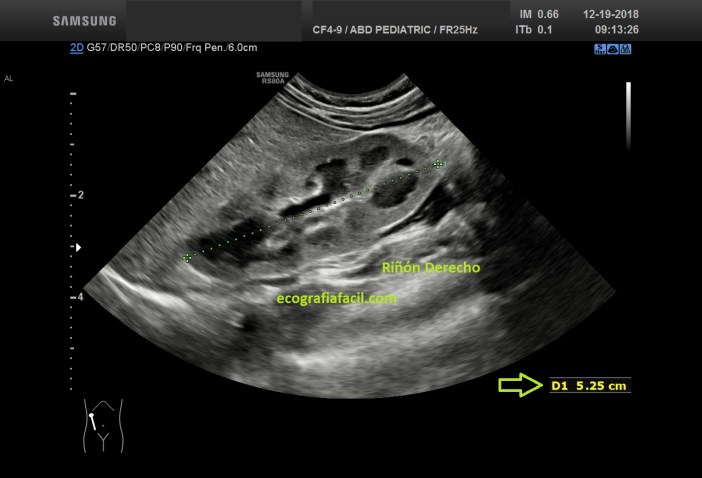
Detalle de un Riñón derecho, estudiado desde anterior, con la medida, de apenas 6 cms, siempre será normal dependiendo de la edad de la/el paciente. Observa el tamaño de las pirámides renales, más grandes que en un adulto.El corte transverso muestra hallazgos parecidos.

Detail of a right kidney, studied from anterior, with the measure, of only 6 cm, will always be normal depending on the age of the patient. Observe the size of the renal pyramids, larger than in an adult. The transverse cut shows similar findings.

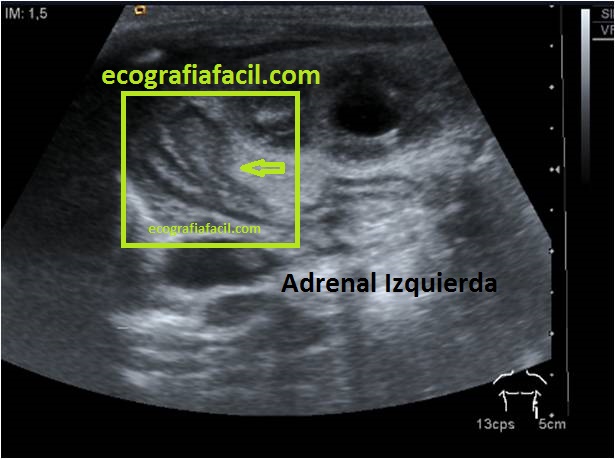
De las más importantes imágenes del protocolo de Ecografía Abdominal en Pediatría, sobre todo en Neonatos que tienen alteración en sus perfiles sanguíneos en relación con el hematocrito, es foco de sangrado neonatal al igual que el Cerebro.Importante.

Of the most important images of the protocol of Abdominal Ultrasound in Pediatrics, especially in Neonates that have alteration in their blood profiles in relation to the hematocrit, is a focus of neonatal bleeding as well as the Cerebro.Very important.

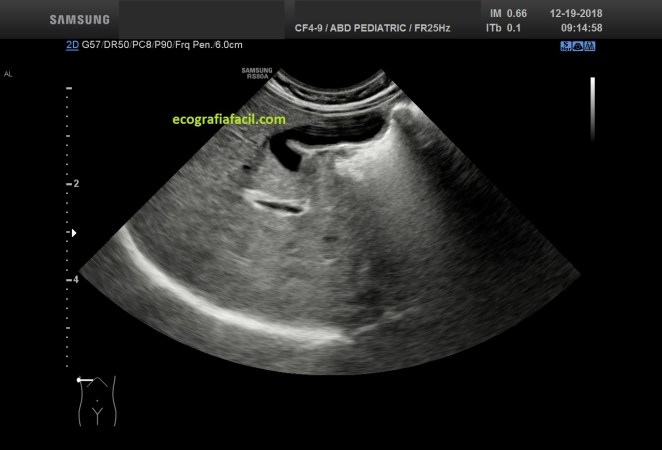
En el hígado el estudio será igual que en el adulto, salvedades como el llanto del bebé o su no colaboración puede dificultar el estudio, es una problema inherente a esta parcela de la ecografía. He querido destacar la Vesícula, en muchas ocasiones la veremos plegada, a veces filiforme, por la falta de ayunas, también normal.

In the liver, the study will be the same as in the adult, exceptions such as the crying of the baby or its non-collaboration can make the study difficult, it is a problem inherent to this plot of the ultrasound. I wanted to highlight the Vesicle, many times we will see it folded, sometimes filiform, for the lack of fasting, also normal.

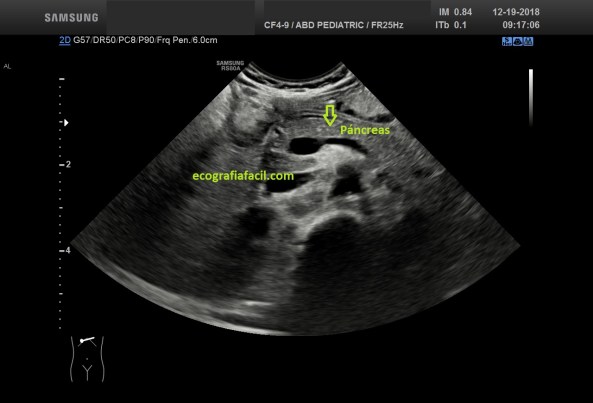
El Páncreas debido al gas intestinal, a la falta de ayuno y a la replección gástrica, en ocasiones es muy difícil de visualizar.

The pancreas due to intestinal gas, lack of fasting and gastric re-appendage, is sometimes very difficult to visualize.

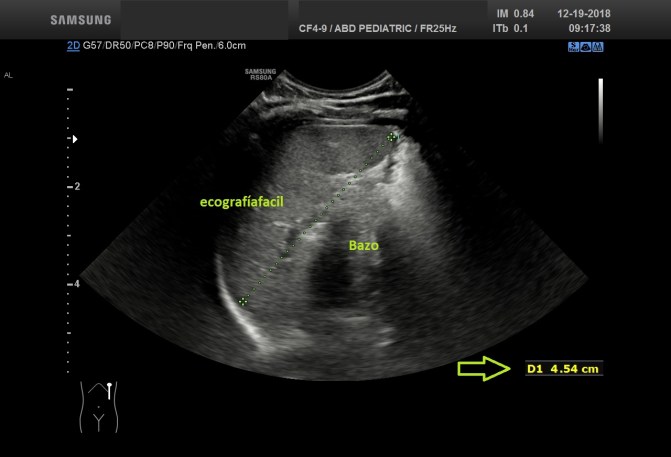
El Bazo, estudiado como los adultos, en dos proyecciones, puede verse incrementado de tamaño por infecciones, típico en niños, su medida será medida en tablas con respecto a la edad de la /el paciente.

Spleen, studied as adults, in two projections, can be increased in size by infections, typical in children, its size will be measured in tables with respect to the age of the patient.

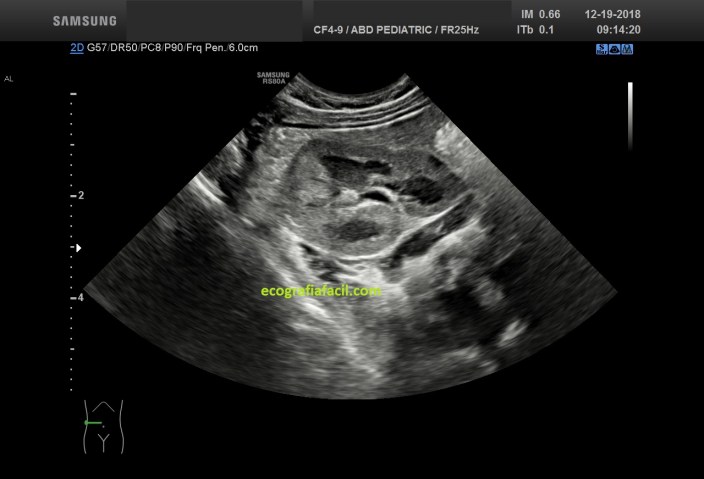
En los pacientes más pequeños, incluso en adolescentes y adultos muy delgadxs se puede acceder desde la parte posterior, paralumbar, obteniendo grandísimos resultados, algunxs bebés son más colaboradores en decúbito prono, los podemos entretener mientras nosotros trabajamos…El riñón derecho, igual.Medida acorde a la edad, recordemos siempre que tenemos que estudiar la adrenal de ambos riñones.

In the smallest patients, even in very thin adolescents and adults can be accessed from the back, paralumbar, deserves great results, some babies are more collaborators in prone position, we can entertain while we work … The right kidney, like Measured according to age, remember that we have to study the adrenal of both kidneys.

Quería desear Feliz Navidad a todas y a todos, este Post es mi modo de decir «Gracias», por leerme, por seguirme…desde hace tanto…Te deseo que la paz y la tranquilidad anide en tu corazón y tengas una maravillosa noche y un Feliz día de Navidad donde la sonrisa no se borre en todo el día.Que Santa te traiga lo que deseas…

I wanted to wish Merry Christmas to everyone,This new post it’s my way of saying «Thank you», for reading me, for following me … for so long …
I wish you peace and tranquility nestled in your heart and have a wonderful night and a Happy Christmas day where the smile is not erased all day long. May Santa bring you what you want …


108. Ecografía de Caderas neonatal

La Eco Pediátrica tiene tres exploraciones que son las más solicitadas por lxs pediatras.

  • Eco de Caderas
  • Eco de Abdomen
  • Eco de SNC:
    • Eco Transfontanelar
    • Eco Canal Vertebral

Dedicamos este Post a la Ecografía de Caderas Neonatal:

Lo más importante es hacerse una composición de lugar de lo que engloba este estudio:

  1. Debemos conocer la anatomía regional.
  2. Debemos saber la imagen que tenemos que conseguir y la ecoestructura que estamos buscando.
  3. Debemos conocer la patología habitual y por tanto saber como es la normalidad.

La Anatomía es vital. Te enlazo esta foto, pero quiero que busques en ella y te quedes con:

  • Cabeza de Fémur
  • Hueso Iliaco
  • Acetábulo
  • Pubis

Toda la anatomía es importante, pero estos cuatro son los puntos cardinales del estudio ecográfico de la Cadera Neonatal. Lo comprenderás a continuación. Esa anatomía que estás viendo en la foto va a ser estudiada desde el lateral, en longitudinal, como corte más importante, es decir, es como si hicieses un corte coronal al cuerpo, ¿te haces a la idea?

De la Anatomía Ecográfica o ecoestructura tenemos que identificar los mismos 4 puntos de arriba, además de anatomía locoregional muy importante también.

The Pediatric Echo has three explorations that are the most requested by paediatricians. Echo of Hips Abdomen eco SNC Eco: Eco Transforntanelar Eco Vertebral Canal We dedicate this Post to the Neonatal Hip Ultrasound: The most important thing is to make a composition instead of what this study includes: We must know the regional anatomy. We must know the image we have to achieve and the eco-structure we are looking for. We must know the habitual pathology and therefore know how is normality. Anatomy is vital. I link this photo, but I want you to look in it and stay with: Femur head Bone Iliaco Acetabulum Pubis The whole anatomy is important, but these four are the cardinal points of the sonographic study of the Neonatal Hip. You will understand it below. That anatomy that you are seeing in the photo is going to be studied from the side, in longitudinal, as the most important cut, that is, it is as if you made a coronal cut to the body, do you make the idea? From the Ultrasound Anatomy or Ecostructure we have to identify the same 4 points above, in addition to very important locoregional anatomy as well.

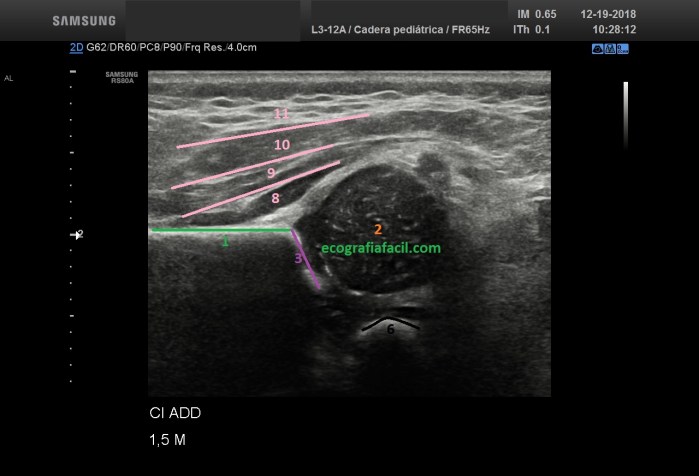
  • 1. Iliaco
  • 2. Cabeza femoral
  • 3. Acetábulo
  • 6. Pubis
  • 8. Glúteo Menor
  • 9. Glúteo mediano
  • 10. Tensor de la Fascia lata.
  • 11. Tejido celular subcutáneo

Sí me he saltado números, pero son aquellos que he considerado como menos importantes con el fin de facilitarte el aprendizaje de aquellos que me parecen vitales respecto del Técnico de Radiología.

Este dibujo que tienes arriba no es más que la representación gráfica del corte o la imagen que tienes que conseguir cuando hagas un estudio de Cadera Neonatal, tiene que quedarte así de bonita:

1. Iliaco 2. Femoral head 3. Acetabulum 6. Pubis 8. Gluteus Minor 9. Medium gluteus 10. Tensioner of the fascia lata. 11. Subcutaneous cellular tissue
Yes I have skipped numbers, but they are those that I have considered as less important in order to facilitate the learning of those that seem vital to me regarding the Radiology Technician. This drawing you have above is nothing more than the graphic representation of the cut or the image that you have to get when you do a Neonatal Hip study, you have to stay that beautiful:

Perfecto, ya controlamos la anatomía y la anatomía ecográfica, lo que tenemos que ver, vamos…

Ahora debemos saber porqué estamos realizando este estudio, que se persigue, cual es el objetivo… El objetivo de este estudio cuando vemos una petición de la/el pediatra, es descartar algún grado de Displasia de Cadera Neonatal en adelante DDC, y el objetivo principal es hacerlo precozmente.

Pincha aquí para que puedas ver los diferentes grados y cómo puede llegar a afectar a la articulación según el grado.

Unas consideraciones básicas de la enfermedad que desde mi punto de vista debemos saber:

  • La DDC es alteración del desarrollo normal de la articulación previo o posterior al nacimiento.
    • SE MANIFIESTA EN EL PRIMER AÑO DE VIDA
  • Es Multifactorial, es decir, muchos factores pueden hacer que la enfermedad se desarrolle, a saber:
    • ANTECEDENTES familiares DE LDDCPARTO DE NALGASNIÑA, el índice es mayor es este sexoTORTÍCOLIS CONGÉNITAOLIGOAMNIOSDEFORMIDAD MMII, simplemente un pliegue asimétrico en la anatomía de la/el paciente, por ejemplo que en la nalga derecha tenga tres pliegues y el izquierda solo dos, en la exploración en la consulta de pediatría, es suficiente para poder pedir esta exploración.
  • Puede provocar diferentes formas de inestabilidad y enfermedades que dejen secuelas como una cojera permanente.
  • EXPLORACIÓN FÍSICA por parte de la pediatra con los test de Ortolani y Barlow dirigirá la prueba. Un «click» de cadera es suficiente para poder pedir una ecografía de caderas.
  • DETECCIÓN PRECOZ ES VITAL PARA SU TRATAMIENTO CON ÉXITO
  • 1,5 POR CADA MIL NIÑXS PADECEN ESTA PATOLOGÍA
Perfect, we already control the anatomy and the ultrasound anatomy, what we have to see, come on … Now we must know why we are doing this study, which is pursued, what is the objective … The objective of this study when we see a request of the pediatrician, is to rule out some degree of Neonatal Hip Dysplasia onwards DDC, and the The main objective is to do it precociously. Click here to see the different grades and how it can affect the articulation according to the grade. Some basic considerations of the disease that from my point of view we should know: CDD is an alteration in the normal development of the joint before or after birth. IT IS MANIFESTED IN THE FIRST YEAR OF LIFE It is multifactorial, that is, many factors can cause the disease to develop, namely: FAMILY BACKGROUND OF LDDCPARTO DE NALGASNIÑA, the index is higher is this sex CONGENITAL TORTÍCOLIS OLIGOAMNIOS DEFINITION MMII, simply an asymmetric fold in the anatomy of the patient, for example that in the right buttock has three folds and the left only two, in the examination in the pediatric office, it is sufficient to be able to request this exploration. It can cause different forms of instability and diseases that leave sequelae such as a permanent limp. PHYSICAL EXPLORATION by the pediatrician with the Ortolani and Barlow tests will direct the test. One «click» of the hip is enough to be able to request an ultrasound of the hips. EARLY DETECTION IS VITAL FOR YOUR TREATMENT WITH SUCCESS 1.5 FOR EVERY THOUSAND CHILDREN SUFFER FROM THIS PATHOLOGY

Material que vamos a necesitar es:

  • Preset específico en nuestro equipo
  • PACIENTE MENOR DE 6 MESES, por encima de esta edad el núcleo de osificación de la cabeza del fémur impedirá que podamos ver el pubis y por tanto esta exploración será NO VÁLIDA, se tendrá que efectuar RX Pelvis.
  • Eventualmente y en casos de cadera luxada, puede ser solicitada una ecografía nada más nacer la/el bebé.
  • SONDA LINEAL DE ALTA FRECUENCIA Y GEL

Técnica Ecográfica:

  • TÉCNICA DINÁMICA QUE PERMITE DETERMINAR POSICIÓN Y ESTABILIDAD DE LA CABEZA FEMORAL, ASÍ COMO DESARROLLO ACETABULAR
  • INSTRUCCIONES AL ACOMPAÑANTE DEL NIÑO
  • INMOVILIZACIÓN FIRME
  • CALIDAD Y PRECISIÓN
  • Cortes longitudinales, coronales al cuerpo, en adducción forzada y en posición neutra (pierna estirada), eventualmente podemos realizar corte axial de la cadera.
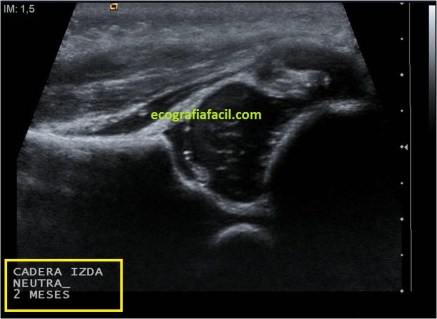
  • Debemos indicar siempre en la pantalla, la cadera que estamos estudiando, si es en Adducción Forzada o Neutra y la edad de la/el bebé. Recuadro amarillo imagen siguiente.
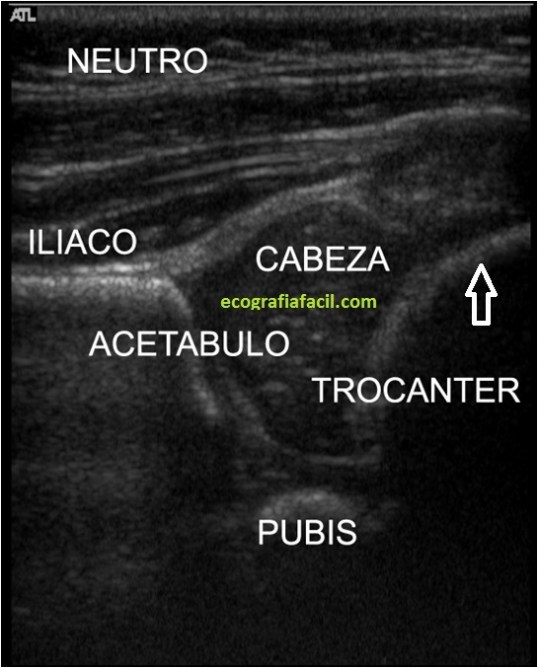
  • En el mismo corte deben verse siempre y nítidamente Iliaco, Acetábulo, Cabeza Femoral, Musculatura y Pubis en la Adducción, sumándole el Trocánter Mayor a la posición neutra.

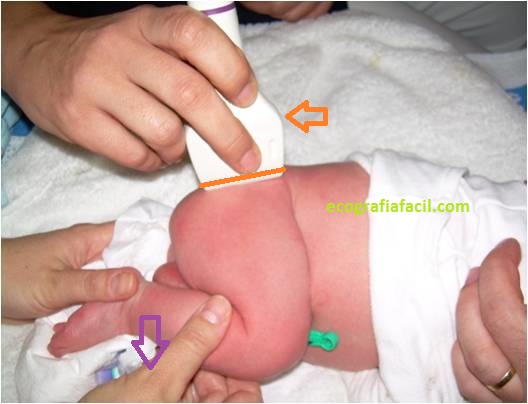
La técnica no es fácil, eso sí, cuando hagas la primera, las siguientes son todas iguales. Colocar a la/el bebé, bien posicionado de lado apoyando el lado contralateral, bien sujeto, palpa el trocánter mayor y ahí posiciona la sonda como ves en las imágenes…no te muevas mucho, ahora solo es buscar hasta encontrar la imagen idónea, tendrás que usar el Cine del ecográfico. Suerte y paciencia.

Material that we will need is: Specific preset in our team PATIENT LESS THAN 6 MONTHS, above this age the ossification nucleus of the head of the femur will prevent us from seeing the pubis and therefore this exploration will be NOT VALID, RX Pelvis will have to be performed. HIGH FREQUENCY LINEAR PROBE AND GEL
Ultrasound Technique: DYNAMIC TECHNIQUE THAT ALLOWS TO DETERMINE POSITION AND STABILITY OF THE FEMORAL HEAD, AS WELL AS ACETABULAR DEVELOPMENT INSTRUCTIONS TO THE CHILD’S COMPANION FIRM IMMOBILIZATION QUALITY AND PRECISION Longitudinal cuts, coronal to the body, in forced adduction and in neutral position (stretched leg), eventually we can perform axial hip cutting. We must always indicate on the screen, the hip we are studying, whether it is in forced or neutral adduction and the age of the baby. In the same section, Iliaco, Acetabulum, Femoral Head, Musculature and Pubis in the Adduction must always be clearly seen, adding the Greater Trochanter to the neutral position.
The technique is not easy, though, when you do the first, the following are all the same. Place the baby, well positioned on the side supporting the contralateral side, well attached, palpate the greater trochanter and positional there the probe as you see in the images … do not move much, now it is only to search until you find the ideal image , you will have to use the Ultrasound Cinema. Good Luck and patience.

Cortes:

CORTE SAGITAL CON CADERA ADDUCCIÓN FORZADA, observa la colocación de la sonda y de la/el paciente, la sujeción ejercida por el familiar.

SAGITAL CUT WITH HIPS FORDUCED ADDUCTION, observes the placement of the probe and the patient, the restraint exercised by the relative.

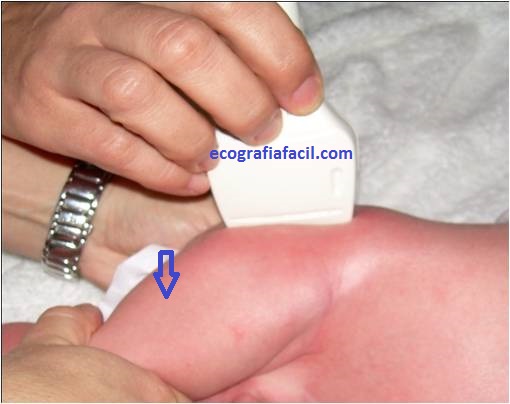
CORTE SAGITAL CON CADERA NEUTRA (PIERNA ESTIRADA), como marca la flecha azul es momento de estirar la pierna, con este movimiento vamos a cambiar la posición de la articulación y se nos va a meter el trocánter mayor dejándonos su sombra posterior (flecha blanca), esto será un criterio de calidad para saber que lo estamos haciendo bien.

SAGITAL CUT WITH NEUTRAL HIP (STRETCHED LEG), as it marks the blue arrow it is time to stretch the leg, with this movement we are going to change the position of the joint and we are going to get the greater trochanter leaving us its posterior shadow (white arrow) , this will be a quality criterion to know that we are doing well.

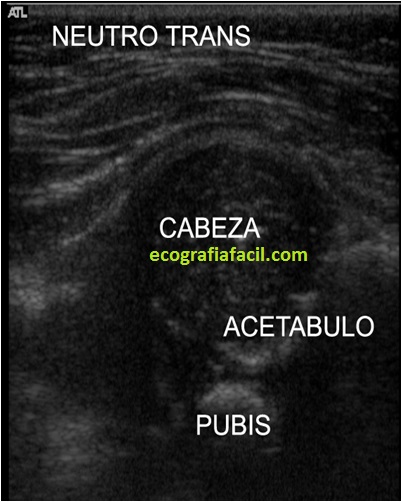
CORTE TRANSVERSAL CON CADERA NEUTRA, esta corte es complementario, pero no es vital para el estudio.

TRANSVERSAL CUT WITH NEUTRAL HIP, this cut is complementary and is not vital for the study.

Hemos descrito el estudio en inmovilización, o técnica de Graf. Esta técnica también puede hacerse dinámica para valorar estabilidad en movimiento.

El trabajo de la Radióloga o radiólogo es valorar básicamente dos aspectos:

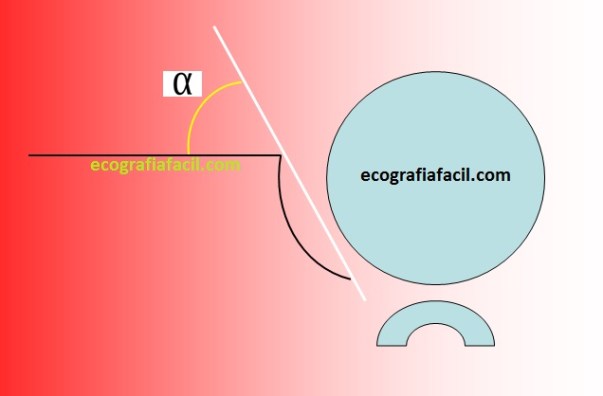
El Recubrimiento Acetabular: En esta imagen tenemos una línea que es imaginaria y que sería la que proyectaría el Iliaco si continuásemos su trazada…bien, esta línea divide la cabeza femoral en dos partes, donde la parte profunda (línea negra) de la circunferencia tiene que ser mayor que la parte superficial (línea blanca).

Se valorará el porcentaje de recubrimiento acetabular que debe ser Mayor o igual a 60%, como en la imagen inferior, siendo 50% si la circunferencia fuese dividida en dos partes iguales.

We have described the study in immobilization, or Graf technique. This technique can also be made dynamic to assess stability in movement. The work of the Radiologist or radiologist is to assess basically two aspects: The Acetabular Coating: In this image we have a line that is imaginary and that would be the one that would project the Iliaco if we continued its trajectory … well, this line divides the femoral head into two parts, where the deep part (black line) of the circumference must be greater than the surface part (white line). The percentage of acetabular coating that must be greater than or equal to 60%, as in the lower image, will be assessed, being 50% if the circumference were divided into two equal parts.

El Grado de Madurez, que vendrá dado por el ángulo alfa, que es el ángulo formado por el iliaco y acetábulo o techo óseo, a medida que aumenta, indica mayor madurez siendo:

  • + de 60º siempre normal
  • Entre 50º y 60º normal si la/el bebé es menor de 2 meses y  patológico si es mayor de 2 meses de edad
  • Ángulo Alfa menor de 50º será siempre siempre patológico
The Degree of Maturity, which will be given by the angle alpha, which is the angle formed by the iliac and acetabulum or bone ceiling, as it increases, indicates greater maturity, being: + 60º always normal Between 50º and 60º normal if the baby is less than 2 months old and pathological if it is older than 2 months of age Alpha angle less than 50º will always be always pathological

Clasificación para hallazgos ecográficos a tener en cuenta:

  • CADERA INMADURA
    • –Cobertura acetabular > 60%
    • –Ángulo alfa < 60º
    • –En la maniobra de stress no se modifica
    • –Se normaliza sin ningún tratamiento, requiere control ecográfico.
  • CADERA INESTABLE
    • Ángulo alfa < 60º
    • Se luxa con la maniobra de stress
  • CADERA SUBLUXADA
    • Ángulo alfa 50º-40º
    • Deformidad del acetábulo
  • CADERA LUXADA
    • Ángulo alfa <40º
    • Cabeza del fémur fuera de la cavidad acetabular

Existe un ángulo Beta que no lo voy a incluir puesto que está en desuso.

Classification for sonographic findings to consider:
HIP IMMATURE – Acetabular opening> 60% -Angle angle <60º -In the stress maneuver it is not modified -It is normalized without any treatment, requires ultrasound control.
UNSTABLE HIP Alpha angle <60º It luxates with the stress maneuver
SUBLUXED HIP Alpha angle 50º-40º Acetabulum deformity
LUXATED HIP Alpha angle <40º Head of the femur outside the acetabular cavity

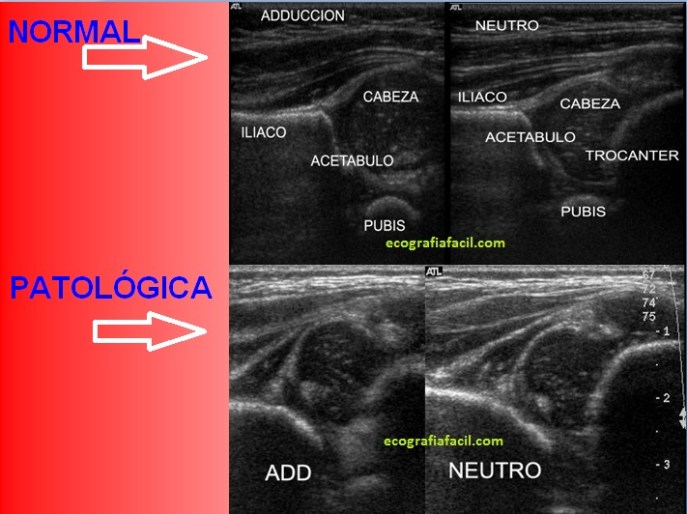
Para terminar solo me queda mostrarte como se ve una exploración normal y otra patológica:

Las imágenes hablan por si mismas, la perfecta correlación de estructuras en la armónica normalidad y la ausencia de ángulo entre iliaco y acetábulo en la patológica…

The images speak for themselves, the perfect correlation of structures in harmonic normality and the absence of angle between iliac and acetabulum in the pathological .

Una máxima de la ecografía de cadera neonatal dice que UNA CADERA PATOLÓGICA JAMÁS CONSEGUIREMOS VERLA NORMAL, pero UNA CADERA NORMAL SÍ PODEMOS HACER QUE PAREZCA PATOLÓGICA, mira:

A maxim of neonatal hip ultrasound says that ONE PATHOLOGICAL HIP NEVER WILL WE SEE IT NORMAL, BUT A NORMAL HIP IF WE CAN MAKE IT LOOK PATHOLOGICAL, look:

La mala práctica induce a error en el diagnóstico, muchxs pacientes, con patología de caderas deben llevar arnés de Pavlik, la técnica correctamente ejecutada anula posibles errores de diagnóstico.

The bad practice leads to error in the diagnosis, many patients, with pathology of hips must wear Pavlik harness, the correctly executed technique cancels possible diagnostic errors.

Naranjas en Agosto…


107. Ecografía Pediátrica. Consideraciones.

Vamos a empezar lo que va a ser el último gran bloque del Blog. Es la Ecografía Pediátrica. Apasionante, como pocas, tiene esta técnica unas características propias y protocolos que son exclusivos de este área y que tienen que ver con las particularidades de este tipo de pacientes, que por su edad y la maduración de sus tejidos nos permiten ver estructuras anatómicas que en adultos no son estudiables con Ecografía y vamos a estudiarlos, aquí…

Let’s start what is going to be the last big block of the Blog. It’s the Pediatric Ultrasound. Exciting, like few others, this technique has its own characteristics and protocols that are unique to this area and that have to do with the characteristics of this type of patients, which due to their age and the maturation of their tissues allow us to see anatomical structures that in adults they are not studied with Ultrasound and we are going to study them, here …

Consideraciones:

Considerations:
  • PEDIÁTRICO
    • DESDE SU NACIMIENTO HASTA LOS 14 AÑOS
  • NO ES UN ADULTO EN MINIATURA, esto es vital, cuando trabajamos en una sala de pediatría tenemos que entender que el estos pacientes, sobre todo los más pequeños pueden sentir miedo, inseguridad, de estar en un lugar que no conocen frente a alguien que no conoce que le explica que le va a hacer algo que no sabe qué es…
  • PUEDE HABER DOLOR, que provoque llanto, por ejemplo. El llanto es la única manera que tiene un/a bebé de demostrar este dolor, nunca lo desdeñemos. Este dolor puede ser:
    • TRAUMÁTICO, INFLAMATORIO E ISQUÉMICO
  • NIVEL DE LUZ ADECUADO en la sala.
  • COMPAÑÍA DE FAMILIAR, siempre que sea posible, que es siempre…
    • INSTRUCCIONES CLARAS Y CONCISAS, muy importante, diría que vital, una colaboración del familiar, en ocasiones nos ayudará a manejar situaciones límite, donde hay que intentar que el paciente pediátrico sea colaborador, en otras ocasiones, cuando el razonamiento no es posible, el uso de la fuerza, sin causar daño, obviamente, será determinante.
  • EFECTIVIDAD, necesitamos que este tipo de pacientes esté en la sala lo menos posible, que se les moleste lo que sea necesario, no podemos recrearnos con una/un niño que no está en su hábitat y que además puede estar enfermo.
  • TRUCOS, muchas veces utilizar juguetes, algo que les llame la atención puede hacer que sean colaboradores, incluso conocer sus canciones, según la edad, o sus dibujos favoritos puede hacer que la convesación sea relajante para ellos…hablando de conversar….
  • HABLAR: Contar lo que vamos a hacer, cómo lo vamos a hacer, ser empáticxs y procurar no ser agresivos ni visual ni con el lenguaje hará que la niña o el niño se sientan segurxs.
  • LA SALA:
    • MATERIAL, sondas específicas y protocolos adaptados.
      • Este tipo de paciente tienen una horquilla de edad que hace que su anatomía, siento pediátricos, sea muy diferente, un paciente bebé es muy diferente a un paciente pediátrico de 14 años, que necesitará ajustes ecográficos de adulto, por ejemplo, profundidad…
    • LUZ ADECUADA
    • LIMPIEZA, primordial…sobre todo del equipo cuando vayamos a ir a realizar ecografía portátiles a la unidad de Neonatos, donde las sondas que entran en una incubadora deben limpiarse con jabones que acaben con los gérmenes que no deben entrar en la incubadora.
    • TEMPERATURA ADECUADA, muchxs pacientes estarán con muy poca ropa, a veces desnudxs, no pueden pasar frío, la sala debe estar calentita y confortable
    • Tener una decoración infantil en la sala es muy buena idea.
PEDIATRIC FROM HIS BIRTH UNTIL 14 YEARS OLD NOT A MINIATURE ADULT, this is vital, when we work in a pediatric ward we have to understand that these patients, especially the little ones, may feel afraid of being in a place they do not know in front of someone they do not know. He explains that he is going to do something that he does not know what it is …
MAY HAVE PAIN, which causes crying, for example. Crying is the only way a baby has to show this pain, never disdain it. This pain can be: TRAUMATIC, INFLAMMATORY AND ISCHEMIC ADEQUATE LIGHT LEVEL in the room.
FAMILY COMPANY CLEAR AND CONCISE INSTRUCTIONS, very important, I would say that vital, a collaboration from the family, will sometimes help us to handle extreme situations, where we must try to make the pediatric patient a collaborator, at other times, when the reasoning is not possible, the use of force, without causing damage, obviously, will be decisive.
EFFECTIVENESS, we need this type of patients to be in the room as little as possible, to be disturbed as necessary, we can not recreate with a child who is not in their habitat and who may also be sick.
TRICKS, many times using toys, something that catches their attention can make them collaborators, even knowing their songs, according to their age, or their favorite drawings can make the conversation relaxing for them … talking about talking … .
SPEAKING: Telling what we are going to do, how we are going to do it, be empathic and try not to be aggressive neither visual nor with the language will make the girl or the boy feel safe.
THE LIVING ROOM: MATERIAL, specific probes and adapted protocols. This type of patient has an old fork that makes his anatomy, I feel pediatric, is very different, a baby patient is very different from a pediatric patient of 14 years, who will need adult sonographic adjustments, for example, depth …
ADEQUATE LIGHT CLEANING, paramount … especially the equipment when we go to perform a portable ultrasound to the Neonatal unit, where the probes that enter an incubator should be cleaned with soaps that kill germs that should not enter the incubator.
ADEQUATE TEMPERATURE, many patients will be with very little clothes, sometimes naked, they can not get cold, the room should be warm and comfortable Having a children’s decoration in the room is a very good idea.

La Ecografía para niñxs es la técnica de elección por motivos obvios…NO RADIA., aunque es una radiación, esta es NO IONIZANTE, pero además:

  • ES PORTÁTIL, TIEMPO REAL, RÁPIDA, BARATA, NO UTILIZA RADIACIÓN IONIZANTE Y NO ES NECESARIO SEDACIÓN
  • INDICADA EN HIDROCEFALIA, MALFORMACIONES, HEMORRAGIA, MASAS, LESIONES VASCULARES…
  • ALTÍSIMA FIABILIDAD DIAGNÓSTICA

Como véis son todo ventajas…aunque a veces, obviamente, puede haber patología que requiera de otro tipos de técnicas de imagen, por ejemplo, TAC o como suele ser habitual, la RMN.

Las Sondas y Equipos:

Los equipos de más calidad deben ser destinados  a las salas donde se efectúe la ecografía infantil, es una opinión personal.

  • SONDA DE 7,5 A 15 MHZ PARA ALTA RESOLUCIÓN para abdómen y cráneo casi siempre, sobre todo cuando son muy pequeños.
  • Cuando son adolescentes o su talla sea mayor, deberemos usar sondas de adulto y siempre CADERAS, TESTES, MÉDULA, PARED, CUELLO serán estudiados con sondas lineales, recordando que, a menos profundidad de estudio, más frecuencia debemos usar…siguiendo la norma que usaremos la máxima Frecuencia en todos los estudios en todos los ámbitos de la ecografía para tener más resolución.
  • SONDA DE 3,5 A 6 MHZ PARA PENETRACIÓN, como he dicho antes, para pacientes mayores o que por tamaño, deban ser estudiados así.
  • SONDAS DE adaptadas PARA FONTANELAS Y ABDOMEN en bebés, entendamos que en ocasiones y en la UCIs de Neonatos tendremos pacientes que no superen el kilo de peso…grandes prematuros, que son extremadamente pequeñxs.
  • EQUIPO CON CINE, nos permitirán volver hacia atrás (rebobinar), cuando el paciente sea mueva o no sea colaborador, por ejemplo, en las caderas.
  • CHUPETE Y MUCHA PACIENCIA
Ultrasound for children is the technique of choice for obvious reasons , although it is a radiation, it is NOT IONIZING, but also:
IT IS PORTABLE, REAL TIME, QUICK, CHEAP, IT DOES NOT USE IONIZING RADIATION AND IT IS NOT NECESSARY SEDATION INDICATED IN HYDROCEPHALY, MALFORMATIONS, HEMORRHAGE, MASSES, VASCULAR INJURIES …
DIAGNOSTIC RELIABILITY As you can see, they are all advantages … although sometimes, obviously, there may be pathologies that require other types of imaging techniques, for example, CT or, as is usually the case, NMR. The Probes and Equipment: The highest quality equipment should be allocated to the rooms where the children’s ultrasound is performed, it is a personal opinion.
PROBE FROM 7.5 TO 15 MHZ FOR HIGH RESOLUTION for abdomen and skull almost always, especially when they are very small. When they are teenagers or their size is bigger, we should use adult probes and always HIPS, TESTS, MARROW, WALL, NECK will be studied with linear probes, remembering that, unless depth of study, more frequency we should use … following the norm that we will use the maximum frequency in all studies in all areas of ultrasound to have more resolution.
PROBE FROM 3.5 TO 6 MHZ FOR PENETRATION, as I said before, for elderly patients or that by size, should be studied like this. PROBES OF adapted FOR FONTANELAS AND ABDOMEN in babies, we understand that in occasions and in the ICU of Neonates we will have patients that do not exceed the kilo of weight … big premature, that are extremely babies.
EQUIPMENT WITH CINEMA, will allow us to go backwards (rewind), when the patient is moving or is not a collaborator, for example, in the hips. Pacifier AND PATIENCE

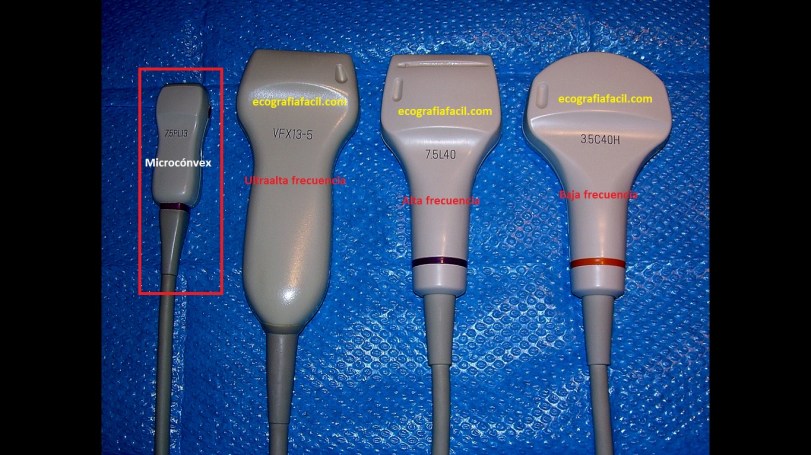
Diferentes tipos de sondas, siendo la del recuadro rojo, la idónea para estudios de recién nacidos.

Te invito a que revises los enlaces del Post para entender mejor las diferentes sondas y sus frecuencias.

Si no disponemos de una sonda adaptada, usaremos siempre una lineal de alta frecuencia.

A Sota…


106. Pared Abdominal.

Muchxs me habéis pedido un Post sobre la pared abdominal y su protocolo para buscar hernias.

Las hernias de la pared abdominal muy habituales y pueden darse de muy diversos aspectos y localizaciones, como siempre aquí vamos a ver las localizaciones más habituales.

Lo primero es conocer la musculatura abdominal, vamos a fijarnos en el abdomen donde se marquen los músculos abdominales centrales o Rectos Abdominales, sí, la tan deseada tableta de chololate…

Por los flancos de los rectos anteriores tenemos los Músculos Oblícuos del Abdomen.

Una vez que manejamos la anatomía conozcamos las regiones del abdomen donde más suelen darse estas hernias:

Many of you have asked me for a post about the abdominal wall and its protocol to look for hernias. Hernias of the abdominal wall are very common and can occur from very different aspects and locations, as always here we will see the most common locations. The first thing is to know the abdominal muscles, we are going to look at the abdomen worked by an athlete, where the abdominal muscles are marked or Abdominal Straight, yes, the much desired chololate tablet … On the flanks of the anterior rectus we have the Obliquus Abdomen Muscles. Once we manage the anatomy we know the regions of the abdomen where these hernias tend to occur:
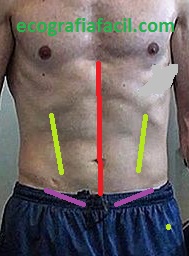
La Línea Alba, marcada en rojo en la Imagen Superior. Suelen darse dos tipos de patología, las Diástasis de los Rectos Anteriores y las Hernias Epigástricas.

La línea Verde marca las fibras que separan Rectos Anteriores y Oblícuos, donde suelen darse Hernias de Spiegel, la denominada línea Semilunar de Spiegel, normalmente son eventraciones y no hernias, que son más raras en esta localización…

La línea morada marca la localización de las hernias Inguinales cuando el tejido herniado pasa de la cavidad abdominal a la región inguinal.

Ya sabemos donde tenemos que buscar, el problema es cómo buscar. La técnica de exploración de las hernias es difícil, sobre todo de las inguinales. Debemos siempre localizar los lugares de sospecha, donde la/el paciente indicará que tiene un bulto que con la tos, o con los esfuerzos se puede hacer más grande…Primero lo haremos en relajación, luego en Valsalva, siempre así…

Las epigastricas y las de Spiegel son más fáciles, simplemente seguimos la línea que estemos estudiando, pero las inguinales tiene su propia técnica…Si la sospecha de Hernia Inguinal es en un hombre, debemos localizar el canal inguinal, desde el testículo, subiendo por el canal, en dirección a la pala iliaca y en axial…sí, es complicado…en ese recorrido, como la foto de abajo, haremos varias valsalvas, para ver si encontramos dicha hernias, si vemos que algo «protruye» hacia superficial, podemos estar delante de una hernia inguinal…

The Alba Line, marked in red in the Higher Image. There are usually two types of pathology, the Diastasis of the Anterior Rectum and the Hernia Epigastric Hernia. The Green line marks the fibers that separate Anterior and Obliquus Rectum, where Herpias de Spiegel tend to occur, the so-called Semilunar Spiegel line, they are usually hernias and not hernias, which are more rare … The purple line marks the location of the Inguinal hernias when the herniated tissue passes from the abdominal cavity to the inguinal region. We already know where we have to look, the problem is how to search. The technique of exploration of hernias is difficult, especially inguinal. We must always locate the places of suspicion, where the patient will indicate that he has a lump with the cough, or with the efforts can be made bigger … First we will do it in relaxation, then in Valsalva, always like this … The epigastrics and the Spiegel are easier, we just follow the line we are studying, but the inguinal has its own technique … If the suspicion of Inguinal Hernia is in a man, we must locate the inguinal canal, from the testicle, going up by the channel, in the direction of the iliac and axial blade … yes, it is complicated … in this route, as the photo below, we will make several valsalvas, to see if we find such hernias, if we see that something «protrudes» «superficial, we can be in front of an inguinal hernia ..
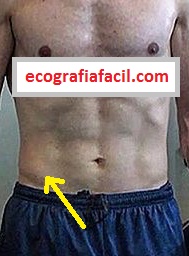
En las mujeres localizamos la línea imaginaria que une la sínfisis púbica la arteria iliaca, esa línea que la marca la línea morada de la primera imagen va ser nuestra guía para que haciendo Valsalva, podamos identificar una posible hernia.

Las hernias pueden ser de contenido graso o de contenido gástrico, estas son las más peligrosas, pueden incarcerarse y pueden ser potencialmente mortales.

Realizaremos la ecografía con sondas de alta frecuencia, en paciente muy obesxs tendremos más dificultades técnicas y emplearemos sondas de baja frecuencia, en estos casos, puede ser que la ecografía no sea suficientemente resolutiva y entrará el juego el TAC.

El aspecto de las hernias será muy variado, en principio, las encontraremos como «sacos» a los que llamaremos «sacos herniarios» y que serán saculaciones de tejido graso o de asas intestinales que escapan de las líneas estudiadas en la primera imagen, a través de un cuello, que será la rotura del tejido que debe contener el tejido herniado…te enseño fotos:

In women we locate the imaginary line that joins the symphysis pubis iliac artery, that line that marks the purple line of the first image will be our guide so that doing Valsalva, we can identify a possible hernia. Hernias can be of fat content or gastric content, these are the most dangerous, can be incarcerated and can be life threatening. We will perform sonography with high frequency probes, in very obese patients we will have more technical difficulties and we will use low frequency probes, in these cases, it may be that the ultrasound is not sufficiently resolutive and the TAC will enter the game. The appearance of the hernias will be very varied, in principle, we will find them as «sacs» which we will call «herniated sacs» and which will be sacculation of fatty tissue or intestinal loops that escape the lines studied in the first image, through of a neck, which will be the breakage of the tissue that the herniated tissue must contain … I show you photos:

Te voy a mostrar la anatomía de una hernia, no hay ninguna igual…con eso te digo todo…ecográficamente tienen este aspecto:
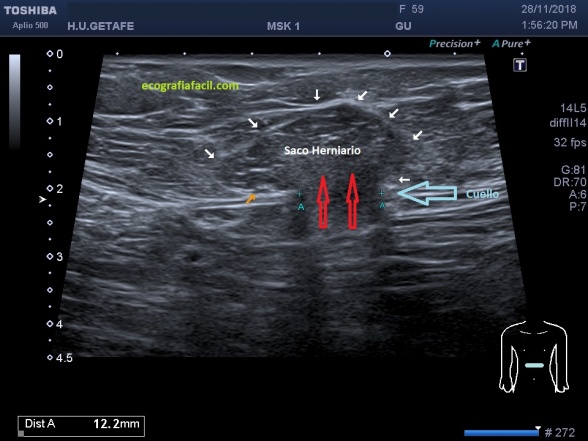
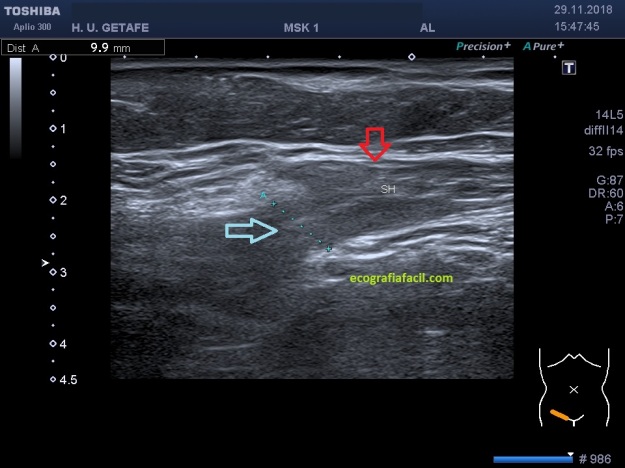
Corte axial.Hernia Epigástrica.La flechas blancas pequeñas delimitan el saco herniario.Las Flechas rojas alargadas el sentido en el que el epiplon escapa a través de la rotura que marca el cuello de las dos «A» pequeñas que marcan una rotura de 12,2 mms.

Axial cut. Epigastric hernia. The small white arrows delimit the hernia sac. The red arrows elongate the sense in which the omentum escapes through the break that marks the neck of the two small «A» that mark a break of 12.2 mms.

Corte Longitudinal, ahora observa la línea hiperecogénica y fina que separa Epiplon de la grasa del tejido celular subcutáneo. Al romperse esta capa fina, el epiplon escapa por su separación.

Longitudinal Cut, now observe the hyperechogenic and thin line that separates Epiplon from the fat of the subcutaneous cellular tissue. When breaking this thin layer the omentum, escapes by its separation.

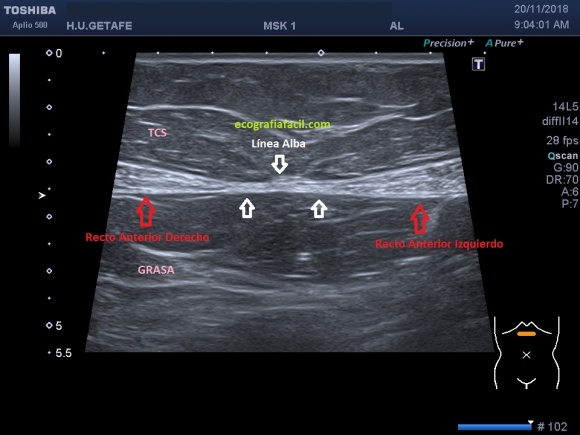
Separación y aspecto Normal de ambos rectos anteriores:

Normal separation and aspect of both muscles:
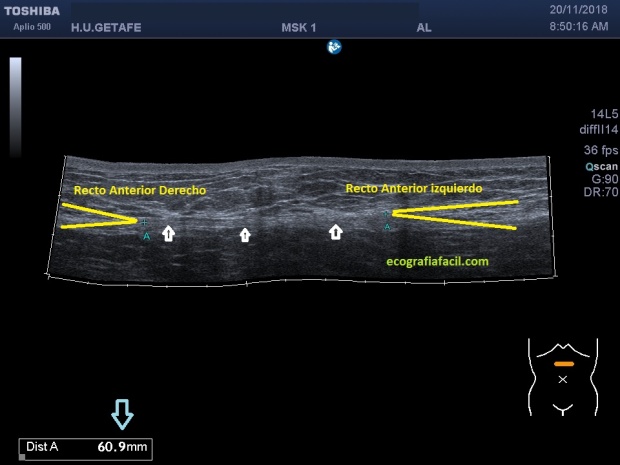
La Diástasis es la separación sin rotura los rectos anteriores: Observa la medida superior a 4cms.

The Diastasis is the separation without breaking the anterior muscles: Observe the measurement superior to 4cms
Siempre que estudiemos una hernia debemos medir su cuello, es decir, la medida exacta de la rotura.Mira:

Whenever we study a hernia we should measure its neck, that is, the exact measurement of the break.
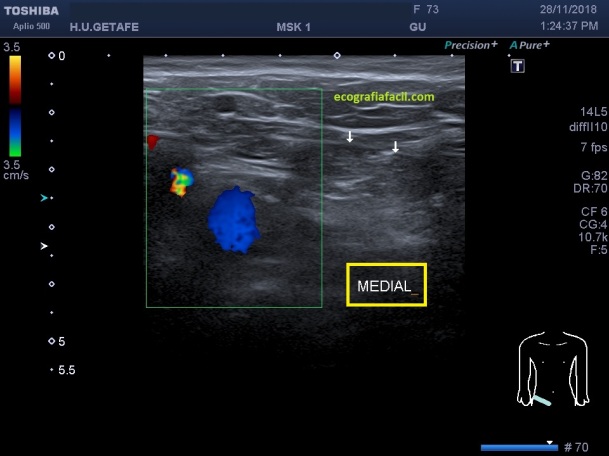
Además debemos tener en cuenta la localización de dicha hernia, en el caso de la inguinales, para que la/el Radióloga/o pueda informar correctamente sobre el tipo de hernia que es, respecto de su situación.Tomaremos como referencia los grandes vasos iliacos, mira:

We must also take into account the location of said hernia, in the case of the inguinal, so that the Radiologist can correctly inform about the type of hernia that is, with respect to its situation. We will take as reference the great iliac vessels, look:
Ya sé que ver una hernia sin movimiento es muy difícil, además sé que este estudio es un claro nivel 3 en tu aprendizaje, pero bueno, ya sabemos más sobre ellas…ahora te invito a que veas una hernia en «dedo de guante» en acción…

I know that seeing a hernia without movement is very difficult, I also know that this study is a clear level 3 in your learning, but hey, we already know more about them … now I invite you to see a hernia in «glove finger» » in action..
Mira el tejido herniado sale a través del cuello….y su forma en forma de dedo de guante, es una hernia inguinal.

Look at the herniated tissue coming out through the neck … and its shape in the form of a glove finger, is an inguinal hernia.

Espero que con este complicado post hayas podido entender un poco más las hernias que puede haber en el Abdomen, que ya os digo que las aquí presentadas, son un ramillete de las más representativas.

I hope that with this complicated post you have been able to understand a little more the hernias that there may be in the Abdomen, which I already tell you that those presented here are a bunch of the most representative.

El día ha sido larguísimo, me he vaciado, a veces no quedan fuerzas, lo sé, pero quería terminar el Post, porque en ese lugar sagrado junto al río me enseñaron que «Un Atlético nunca se rinde»…Vamos¡¡¡ 


105. Protocolo MMII.

Aquí tenemos un nuevo protocolo Doppler, el estudio Doppler venoso de miembros inferiores.

Veréis que es muy sencillo y que el modo Doppler realmente es solo una herramienta más para tener un diagnóstico adecuado.

  1. Transductores de alta frecuencia. Usaremos una frecuencia entre 7 y 9 Mh.
  2. Paciente en decúbito supino/prono. Iniciaremos la exploración con el paciente en decúbito supino con la rodilla ligeramente doblada y con la pierna abierta hacia el lateral. Para el estudio del hueco poplíteo y de las venas posteriores de la pierna situaremos al paciente en decúbito prono.

Exploración

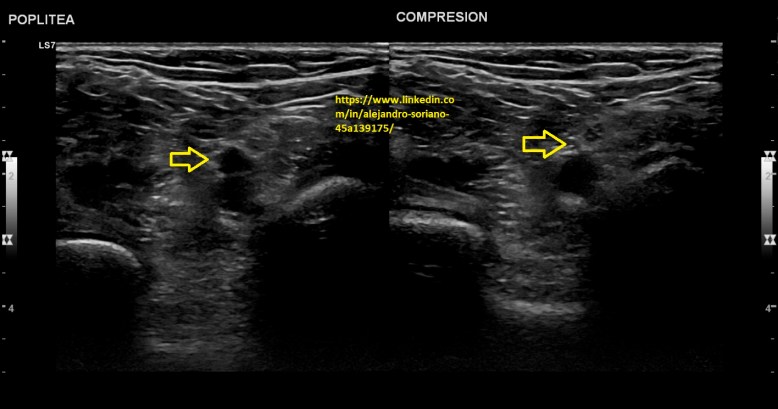
La exploración consistirá en seguir el trayecto venoso profundo del miembro inferior mediante barridos transversales. Iremos comprimiendo en todo su trayecto para comprobar que no exista ningún trombo.

aquí ya hemos alcanzado pericia en esta técnica de la Ecografía y la anatomía en este caso, se supone aprendida así que vamos…

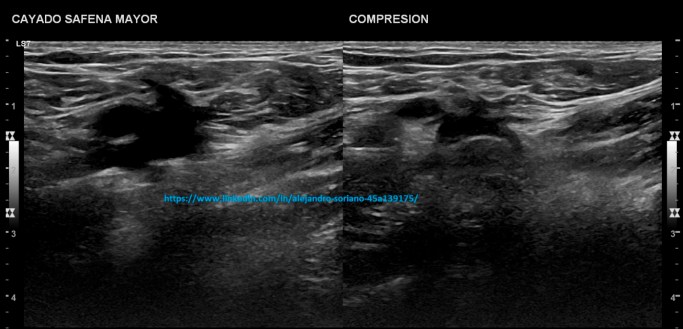
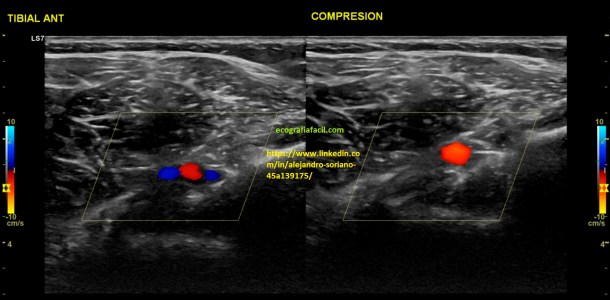
Usaremos la opción “dual” para observar en una pantalla el paquete vascular sin compresión y en la otra comprimido, donde visualizaremos solo la arteria, ya que la vena queda comprimida en caso de ausencia de trombo.

Según el protocolo que tengamos en nuestro servicio el estudio terminará en el momento en que identifiquemos un trombo; o tendremos que realizar el barrido completo hasta las venas más distales de la pierna.

De igual manera según nuestro protocolo tendremos que realizar un corte longitudinal de cada vena del sistema venoso profundo para estudiar la dirección del flujo y su velocidad; o únicamente de la región trombosada para confirmar que no existe flujo y por tanto la existencia del trombo.

El estudio se hará unilateral en caso de sospecha de trombosis venosa o bilateral en caso de TEP.

Here we have a new Doppler protocol, the venous Doppler study of lower limbs. You will see that it is very simple and that the Doppler mode really is just another tool to have an adequate diagnosis. High frequency transducers.
We will use a frequency between 7 and 9 Mh. Patient in the supine / prone position.
We will begin the examination with the patient in the supine position with the knee slightly bent and with the leg open towards the lateral.
For the study of the popliteal gap and the posterior veins of the leg, we will place the patient in the prone position. Exploration: The exploration will consist of following the deep venous path of the lower limb through transverse sweeps.
We will be compressing throughout your journey to check that there is no thrombus.
We will use the «dual» option to observe on one screen the vascular package without compression and on the other tablet, where we will visualize only the artery, since the vein is compressed in the absence of thrombus. According to the protocol that we have in our service, the study will end at the moment in which we identify a thrombus; or we will have to perform the complete sweep to the most distal veins of the leg. In the same way, according to our protocol, we will have to make a longitudinal section of each vein of the deep venous system to study the direction of the flow and its velocity; or only from the thrombosed region to confirm that there is no flow and therefore the existence of the thrombus. The study will be made unilateral in case of suspicion of venous thrombosis or bilateral in case of PE.

Empecemos:

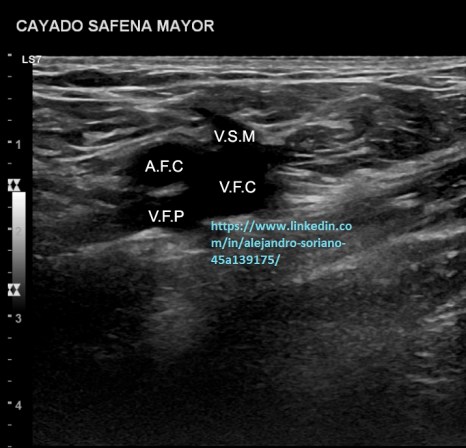
  • Comenzaremos por el cayado de la safena mayor. En el caso de que encontremos en este punto un trombo, tendremos que seguir el recorrido venoso hacia craneal (hacia las iliacas) para comprobar toda su extensión.

Donde veremos:


A.F.C: Arteria femoral común.

V.F.C: Vena femoral común.

V.F.P: Vena femoral profunda.

V.S.M: Vena safena mayor.

Let us begin: We will begin with the arch of the greater saphena. In the event that we find a thrombus at this point, we will have to follow the venous path to the cranial (towards the iliac) to check its entire extension. Where we will see:
A.F.C: Common femoral artery.
V.F.C: Common femoral vein.
V.F.P: Deep femoral vein.
V.S.M: Vein safena major.

En la gran mayoría de los estudios, si no existe patología, solo seremos capaces de observar la desembocadura de la vena femoral profunda. En raras ocasiones veremos una buena porción de su trayecto.

In the vast majority of studies, if there is no pathology, we will only be able to observe the opening of the deep femoral vein. On rare occasions we will see a good portion of your journey.


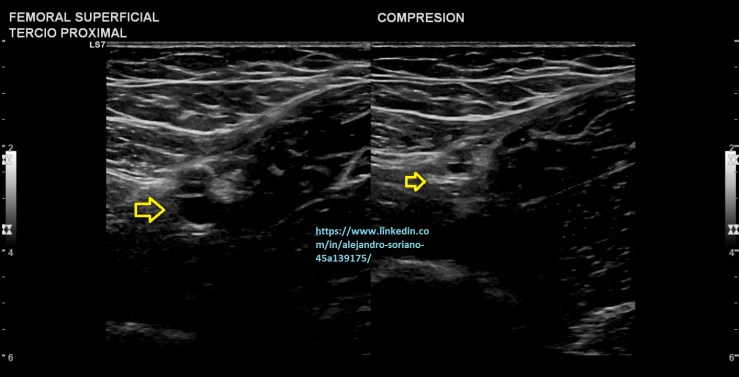
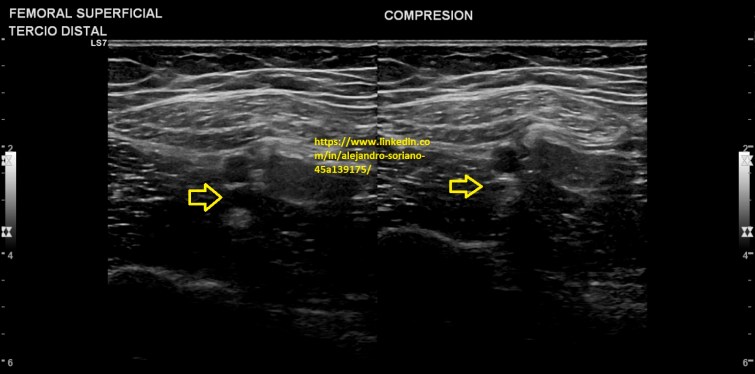
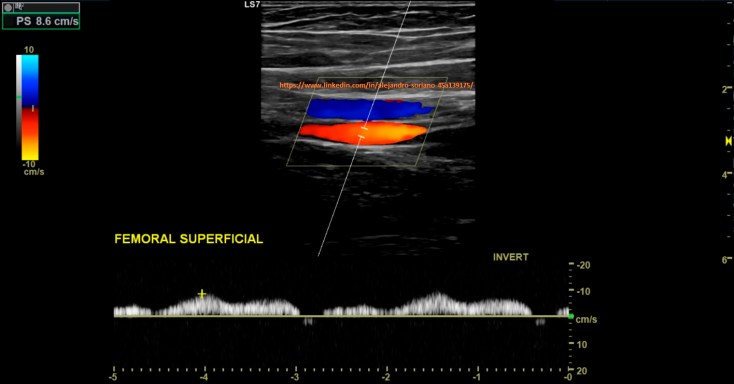
  • Seguiremos por femoral superficial. La estudiaremos en todo su trayecto.
 We will continue by superficial femoral. We will study it throughout its journey.


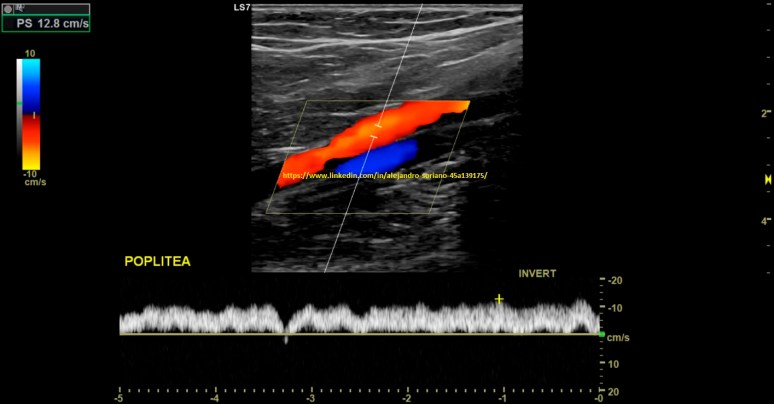
  • Vena poplítea. A partir de este momento si la situación del paciente lo permite le pediremos que se ponga en decúbito prono, ya que de esta manera nos será más fácil el estudio de las venas distales de la pierna.
Popliteal vein From this moment, if the patient’s situation permits, we will ask him to put himself in the prone position, since in this way it will be easier for us to study the distal veins of the leg.


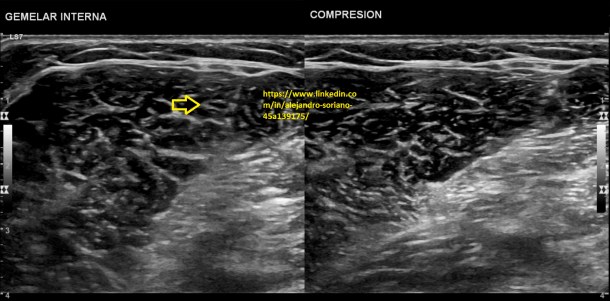
  • Venas distales de la pierna. Por último estudiaremos las venas distales de la pierna. Esto es complicado ya que si no están trombosadas será difícil visualizarlas por su pequeño tamaño. Os dejo unos ejemplos:
Distal veins of the leg. Finally we will study the distal veins of the leg. This is complicated because if they are not thrombosed it will be difficult to visualize them because of their small size. Here are some examples:

La patología habitual es la Trombosis Venosa Profunda o TVP, una enfermedad de tratamiento médico urgente.

Iba a hacer un anexo al post con la patología habitual, pero revisando literatura en Internet he encontrado esta auténtica maravilla, perfectamente explicada para que sepáis lo que hay que saber de esta TVP. Quiero felicitar al autor/a de este fenomenal documento docente del que he aprendido tanto.

Quiero agradecer a Alejandro Soriano su desinteresado aporte al Blog con estos 4 Posts sobre el Doppler realizados como es él, con una profesionalidad excepcional. Un trabajo maravilloso que eleva el nivel de este Blog y por el que estoy muy agradecido y encantado de tenerle al lado, es una persona excepcional. Gracias Alejandro.

Con estos posts acabamos el recorrido por la parte más importante de esta técnica Doppler con sus dos protocolos habituales y más realizados, en un futuro desarrollaré el Doppler Renal y eventualmente el de MMSS.


No me gustan estas tardes grises y frías…echo de menos mi Verano, y aunque a veces sin esperar te sorprende el Sol, yo necesito su presencia a diario, tan abrasador, tan insondable…

104. Doppler TSA.

Consideraciones básicas:

Anatomía:

ESTUDIO DE ARTERIAS QUE IRRIGAN EL CEREBRO.

CARÓTIDAS INTERNA Y EXTERNA Y VERTEBRALES

LAS CARÓTIDAS ASCIENDEN POR EL CUELLO Y SE DIVIDEN A NIVEL DEL ÁNGULO DE LA MANDÍBULA EN INTERNA Y EXTERNA.

LA DERECHA NACE EN LA RAMA INNOMINADA

LA IZQUIERDA EN EL CAYADO AÓRTICO

CADA CARÓTIDA INTERNA SE DIVIDE EN OFTÁLMICA, CEREBRAL MEDIA Y CEREBRAL ANTERIOR.

LAS VERTEBRALES SE ORIGINAN EN LAS SUBCLAVIAS, PASAN POR LOS AGUJEROS TRANSVERSOS DE LAS CERVICALES Y FORMAN LA BASILAR.

STUDY OF ARTERIES THAT IRRIGATE THE BRAIN.
INTERNAL AND EXTERNAL AND VERTEBRAL CAROTID THE CAROTID ASCENDED BY THE NECK AND ARE DIVIDED AT THE ANGLE OF THE ANGLE OF THE INTERNAL AND EXTERNAL MANDIBLE.
THE RIGHT IS BORN IN THE INNOMINATED BRANCH
THE LEFT IN THE AORTIC CAYADO
EVERY INTERNAL CAROTID IS DIVIDED INTO OPHTHALMIC, MIDDLE AND ANTERIOR CEREBRAL
THE VERTEBRALES ARE ORIGINATED IN THE SUBCLAVIAS, PASS THROUGH THE TRANSVERSE HOLES OF THE CERVICAL AND FORM THE BASILAR.

Ateromatosis:

ENFERMEDAD ATEROMATOSA CAROTÍDEA es la patología habitual.

CONTROL POSTQUIRÚRGICO normalmente mediante Stents Carotídeos.

LA ISQUEMIA SECUNDARIA A ATEROMATOSIS DE AC ES RESPONSABLE DEL 25% DE ACV…

NORMALMENTE LA PLACA DE ATEROMA SE LOCALIZA EN LA PROXIMIDAD DE LA BIFURCACIÓN.

CAROTIDEA ATTEROMATOSA DISEASE
POST-SURGICAL CONTROL
SECONDARY ISCHEMIA TO ACTERATOSIS OF AC IS RESPONSIBLE FOR 25% OF ACV
NORMALLY THE PLATE IS LOCATED IN THE PROXIMITY OF THE BIFURCATION

Protocolo:

¿Quieres empezar a hacer estudios de Doppler? ¿Qué te parece comenzar por el estudio Doppler de TSA?

Hoy veremos un protocolo que puedes utilizar y que te permitirá evaluar todas las estructuras que deberemos estudiar de manera sencilla.

  1. Antes que nada elige el transductor adecuado. Usaremos los de alta frecuencia, por lo general con unos 9Mh podremos hacer el estudio sin ningún problema. En pacientes que tengan buena transmisión del sonido y se pueda acceder a las estructuras a estudiar con cierta facilidad podemos aumentar la frecuencia.
  2. Coloca al paciente en decúbito supino con cuello en hiperextensión. Para tener mejor acceso a los vasos podremos girar ligeramente la cabeza del paciente.
  3. Comencemos con la exploración. Siempre seguiremos el mismo orden para no olvidarnos de nada.

Para hacer un estudio morfológico de los vasos y observar el recorrido que tienen haremos barridos transversales.

Para evaluar la dirección del flujo y sus velocidades lo haremos en longitudinal.

El estudio se hará siempre bilateral.

Nuestro objetivo es buscar estenosis de los vasos fundamentalmente por placas de ateroma.

Do you want to start doing Doppler studies? What do you think about starting with the TSA Doppler study? Today we will see a protocol that you can use and that will allow you to evaluate all the structures that we should study in a simple way. First of all choose the right transducer. We will use the high frequency, usually with about 9Mh we can do the study without any problem. In patients who have good sound transmission and can access the structures to study with some ease we can increase the frequency. Place the patient in the supine position with a hyperextension neck. To have better access to the vessels we can turn the patient’s head slightly. Let’s start with the exploration. We will always follow the same order so we do not forget anything. To make a morphological study of the vessels and observe the route they have we will make cross sweeps. To evaluate the direction of the flow and its speeds we will do it in longitudinal. The study will always be bilateral. Our objective is to look for stenosis of the vessels, fundamentally by atheromatous plaques.

El orden será:

1- Arteria carótida común (ACC).

  • Mediremos el complejo íntima-media y después haremos su estudio Doppler (color y pulsado).
1. Common carotid artery (ACC). We will measure the intima-media complex and then we will do its Doppler study (color and pulsed).
1. ACC transversal.
2. ACC longitudinal. Medición del complejo intima – media.
3. ACC longitudinal. Estudio Doppler color.
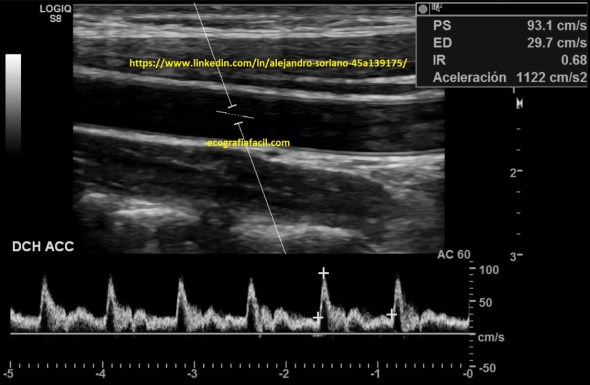
4. ACC longitudinal. Estudio Doppler pulsado.
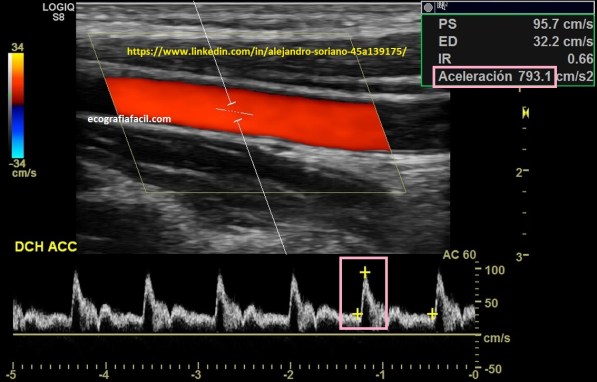
5. ACC longitudinal. Estudio triplex
Funcionamiento del Triplex.

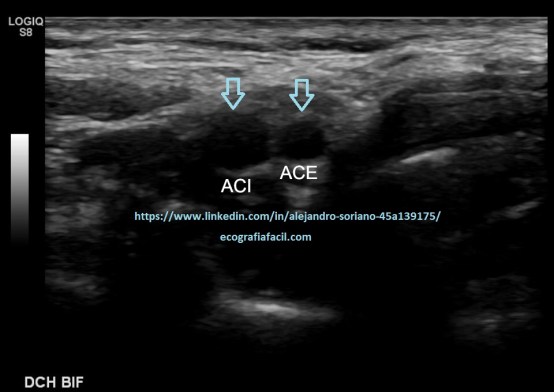
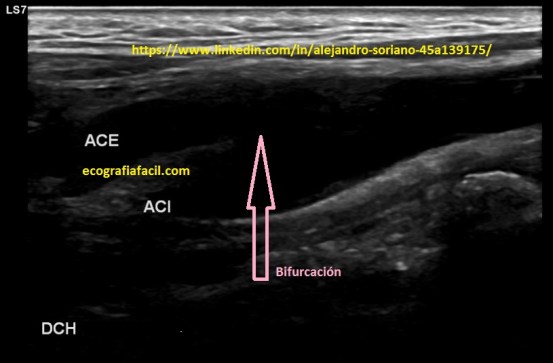
2- A continuación estudiaremos la bifurcación carotídea. En la mayoría de los casos ACI es más lateral y posterior que ACE.

2. Next we will study the carotid bifurcation. In most cases ACI is more lateral and posterior than ACE.
Bifurcación axial.
Bifurcación Longitudinal.

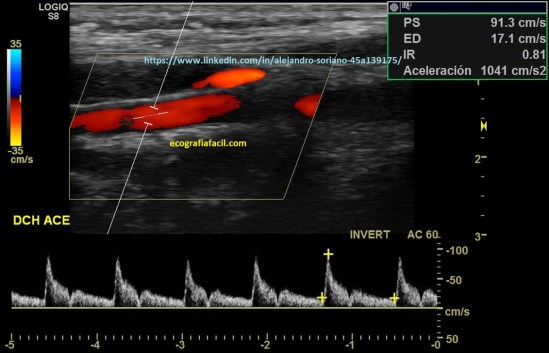
3- Arteria carótida externa (ACE). Sabemos que la estamos estudiando porque morfológicamente podremos observar en ocasiones pequeñas ramas que se originan en ella.

En el estudio del espectro observaremos una onda de alta resistencia (existe mucha diferencia entre el punto más alto de la sístole y el punto más bajo de la diástole, estando esta última muy próxima a la línea base).

3. External carotid artery (ACE). We know that we are studying it because morphologically we can observe sometimes small branches that originate in it. In the study of the spectrum we will observe a wave of high resistance (there is a great difference between the highest point of the systole and the point lowest of the diastole, the latter being very close to the baseline).
ACE o ECA

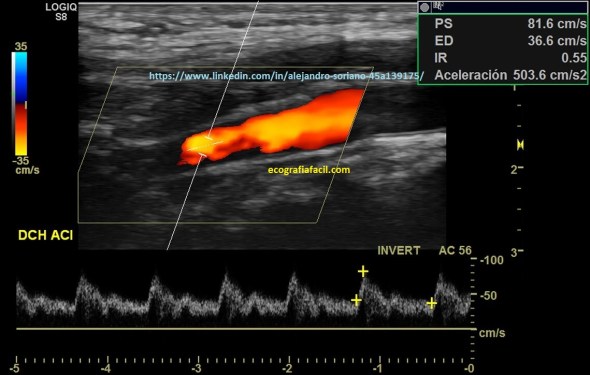
4- Arteria carótida interna (ACI). Observaremos un espectro de baja resistencia (no existe tanta diferencia entre el punto más alto de la sístole y el más bajo de la diástole).

4. Internal carotid artery (ACI). We will observe a spectrum of low resistance (there is not much difference between the highest point of the systole and the lowest point of the diastole).
ACI o ICA.

5- Arteria vertebral (AV). Para visualizarlas nos posicionaremos en la bifurcación carotídea. En este lugar haremos cortes longitudinales hasta observarlas entre las apófisis transversales.

5. Vertebral artery (AV). To visualize them we will position ourselves in the carotid bifurcation. In this place we will make longitudinal cuts until we observe them between the transverse processes.
Arteria Vertebral.

Patología:

La patología habitual, suele aparecer en esta forma en las imágenes de ecografía:

Normalidad, bifurcación libre de placas.

Normalidad, doppler power normal, sin alteraciones.

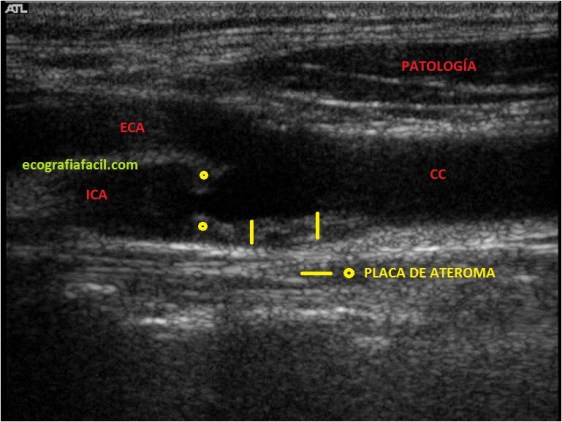
Señalado con puntos amarillos y líneas del mismo color, patología ateromatosa…

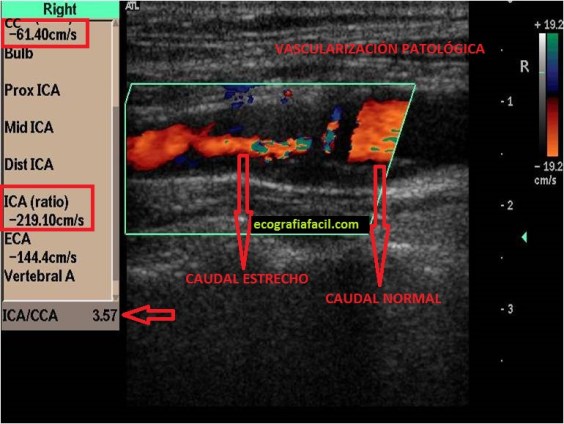
Representación patológica de la estrechez producida en la vascularización en la zona de placas de ateromatosis

Previo a la estrechez, el calibre de la Carótida Común y su medición son normales.

Posterior a la estrechez, el paso de la vascularización está comprometido haciendo que la velocidad de paso de la sangre, como el rápido de un riachuelo, aumenta muchísimo, siendo mucho más alta…

El equipo hace un cálculo matemático entre los valores de la ICA y la CC, ese valor no debe superar un estándar, en este caso de 1,80 que marcaría una irrigación cerebral comprometida en este vaso…en este caso la medida es mucho más alta, como puedes ver de 3,57 según marca la flecha roja, clarísimamente patológica.

Esta es, de modo muy básico la interpretación de la patología más encontrada en estos estudios.

Por cierto, siempre atentxs cuando hagamos este tipo de estudios al Tiroides, por proximidad, en muchos casos encontraremos patología nodular tiroidea.

Pathological representation of the narrowing produced in the vascularization in the area of ​​atheromatosis plaques.Prior to the narrowing, the caliber of the Common Carotid and its measurement are normal. After the narrowing, the passage of vascularization is compromised by making the speed of blood flow, like the barrel of a stream, increase dramatically, being much higher … The team makes a mathematical calculation between the values ​​of the ICA and the CC, that value should not exceed a standard, in this case 1.80 that would mark a cerebral irrigation compromised in this vessel … here, in this case, the measurement is higher , as you can see from 3,57 as marked by the red arrow, clearly pathological. This is, in a very basic way, the interpretation of the most common pathology found in these studies. By the way, always attentive when we do this type of studies to the Thyroid, by proximity, in many cases we will find nodular thyroid pathology.

Madrugada de canciones en bucle…


103. El Doppler Pulsado.

Hoy es Viernes y toca Post, de la mano de Alejandro, seguimos recorriendo este apasionante mundo del Doppler…

Doppler pulsado

Nos sirve para conocer la velocidad en un punto determinado del flujo que queremos estudiar.

Su ventaja es que nos permite seleccionar la profundidad y el tamaño del volumen de la muestra que queremos estudiar.

Los parámetros básicos que usaremos son:

  • Volumen de la muestra: se situará en el centro del vaso y deberá tener un tamaño acorde a éste.
  • Tendremos que tener un comando en la botonera o en el submenú digital que se denomine «muestra» y con él regular convenientemente el tamaño de ésta.
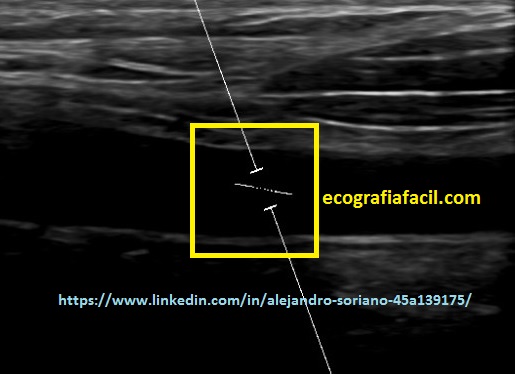
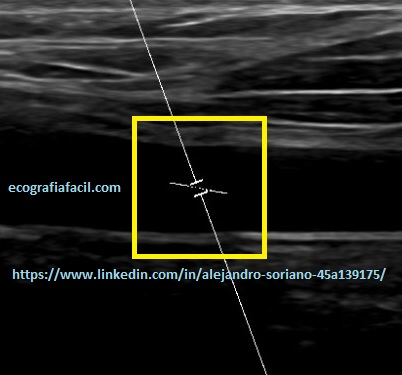
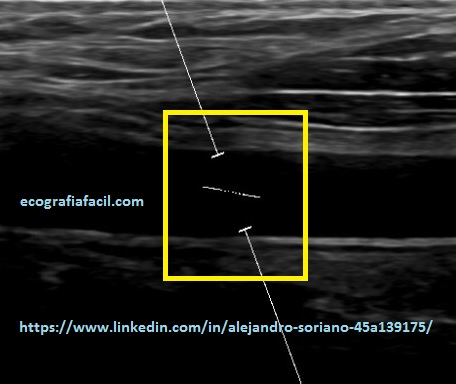
It helps us to know the speed at a certain point in the flow we want to study. Its advantage is that it allows us to select the depth and size of the volume of the sample that we want to study. The basic parameters that we will use are: Volume of the sample: it will be placed in the center of the glass and it will have to have a size according to it. We will have to have a command in the keypad or in the digital submenu that is called «sample» and with it conveniently regulate the size of this.
Volumen de la muestra normal.
Volumen de la muestra demasiado pequeño.
Volumen de la muestra demasiado grande.


  • Ángulo: la línea de la angulación debe quedar paralela a las paredes del vaso para obtener datos precisos.
  • Disponemos un comando en la botonera o en el submenú digital que se denomine «Angle o Ángulo» y con él regular convenientemente el tamaño de ésta.
Angle: the line of the angulation must be parallel to the walls of the vessel to obtain accurate data. We have a command in the keypad or in the digital submenu that is called «Angle» and with it, conveniently regulate the size of it.
Ángulo no paralelo e inferior a 60º.Imagen 10.
Ángulo paralelo y superior a 60º.Imagen 11.
Ángulo paralelo e inferior a 60º.Imagen 12.


Como vemos en las tres imágenes con distintas angulaciones obtendremos un espectro bastante decente pero no en todos los casos obtendremos datos suficientemente fiables.

En la imagen 10 tenemos un ángulo inferior a 60º pero la línea de la angulación no es paralela.

En la imagen 11 hemos conseguido poner la línea paralela pero a cambio de una angulación superior a 60º; por tanto, tendremos que “jugar” con la angulación del vaso y la del propio Doppler para tener un ángulo inferior a 60º y que quede la línea paralela a la pared del vaso como tenemos en la imagen 12. Esto nos permitirá tener la tranquilidad de que los datos obtenidos serán más fiables.

As we see in the three images with different angulations we will obtain a good spectrum but not in all the cases we will obtain sufficiently reliable data. In the picture 10 we have an angle inferior to 60º but the line of the angulation is not parallel. In the image 11 we have managed to put the parallel line but in exchange for an angulation superior to 60º; therefore, we will have to «play» with the angulation of the vessel and that of the Doppler itself to have an angle less than 60º and that the line be parallel to the vessel wall as we have in image 12. This will allow us to have the tranquility of that the data obtained will be more reliable.
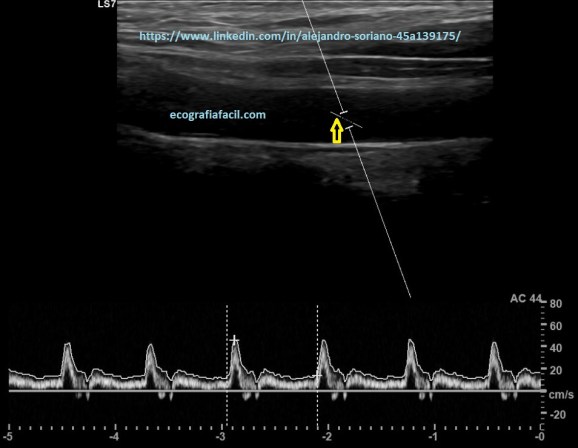
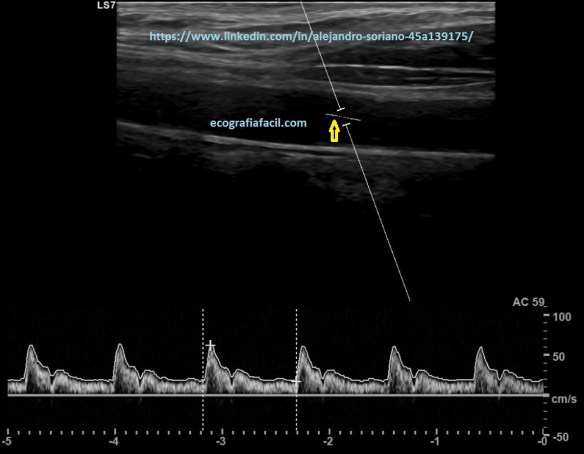
  • Línea base: línea continua que aparece en el espectro. La modificaremos por tres motivos:
    • Para medir adecuadamente el espectro.
    • Para evitar “aliasing”.
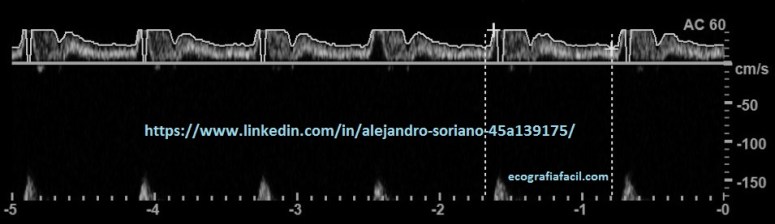
    • Para representar los flujos que se alejan y los que se acercan a la sonda. Los que se alejan aparecerán debajo de la línea base, mientras que los que se acercan por encima.
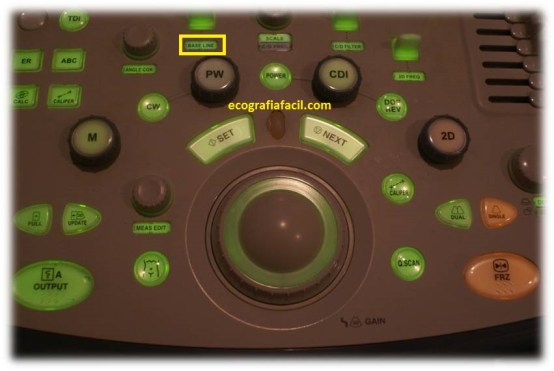
    • En la botonera o menú encontraremos «línea base» para regular esta línea.

Baseline: continuous line that appears in the spectrum. We will modify it for three reasons: To properly measure the spectrum. To avoid «aliasing.» To represent the flows that move away and those that approach the probe. Those that move away will appear below the baseline, while those that are approaching above. In the keypad or menu we will find «baseline» to regulate this line.

Comando de Línea Base.


Normal.Bien.
Línea base alta.
Línea base baja


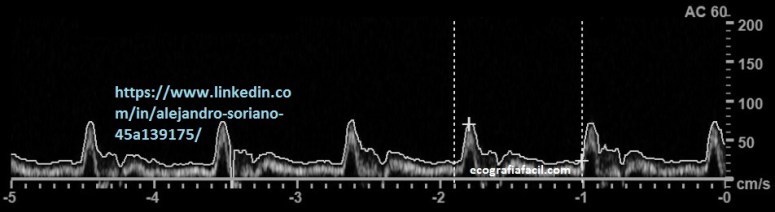
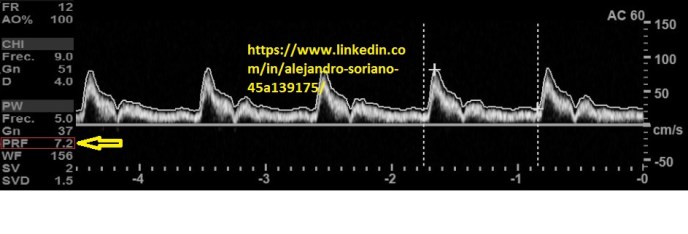
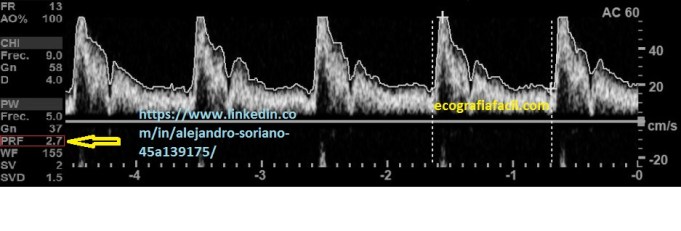
  • Frecuencia de repetición de pulsos o escala de velocidades: la ajustaremos a las velocidades del estudio.
  • Con un rango de velocidades altas tendremos un espectro demasiado pequeño, lo que nos dificultará su evaluación; un rango demasiado bajo producirá “aliasing”.
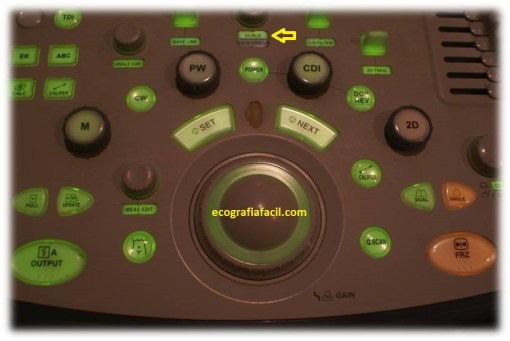
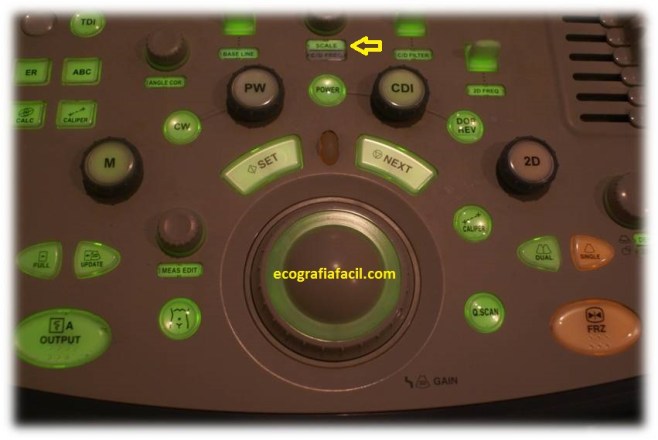
  • El comando que buscaremos será el de la «escala»
Frequency of repetition of pulses or scale of speeds: we will adjust it to the speeds of the study. With a range of high speeds we will have a spectrum that is too small, which will make it difficult for us to evaluate it; a too low range will produce «aliasing». The command that we will look for will be the «scale»
Escala


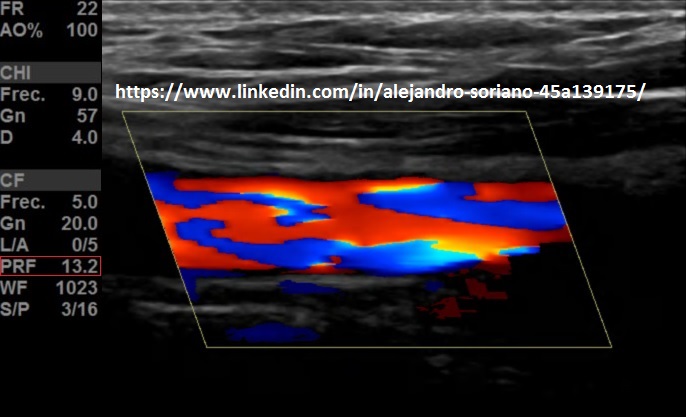
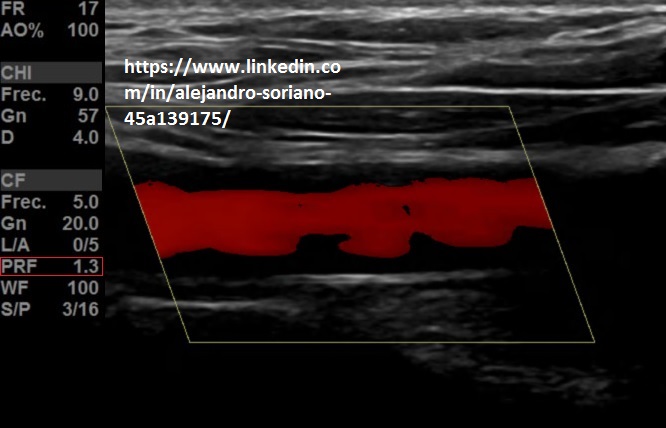
PRF Adecuado


PRF Alto


PRF Bajo

Junto a la imagen 2D podemos usar al mismo tiempo el Doppler color y pulsado (modo triplex) pero no es recomendable ya que el equipo utilizará demasiados recursos y los datos obtenidos no serán tan fiables.

Along with the 2D image we can use the color and pulsed Doppler at the same time (triplex mode) but it is not recommended, the equipment will use too many resources and the data obtained will not be reliable.


102. El Doppler.Nociones Básicas. Doppler Color.

Empezamos una nueva andadura, explorando el «mundo doppler», tantas veces solicitado para subir…aquí lo tenéis, para ello cuento con un colaborador de lujo, autor de la mayor parte del Post y de sus magníficas fotos. Se llama Alejandro, es un experto, aunque muy joven,  TSID  ecografista que maneja envidiablemente el Doppler y le he pedido que os contase este maravilloso mundo, pero no solo eso, es un gran profesor de la materia y lo más importante, una persona excelente.

We started a new journey, exploring the «Doppler world», so many times asked to upload … here you have it, for this I have a luxury collaborator, author of most of the Post and its magnificent photos. His name is Alejandro, he is an expert, although very young, TSID sonographer who handles the Doppler enviously and I asked him to tell you about this wonderful world, but not only that, he is a great teacher of the subject and most importantly, an excellent person .

En este post nos adentraremos en el estudio Doppler de una manera simple, sencilla y práctica.

Para empezar tómate una buena dosis de cafeína para mantenerte despierto, es broma, sólo necesitas leer detenidamente y comprenderás el interesante estudio Doppler.

El modo Doppler es un Modo de Trabajo. Hoy vamos a ver el Doppler color.

El efecto Doppler puede definirse como el cambio de la frecuencia de una onda sonora con el movimiento del emisor respecto al receptor.

Lo podremos explicar utilizando como ejemplo el silbato de un tren. Éste emite un sonido de frecuencia constante, que:

  • Si está detenido, el tono que percibimos no varía y es el mismo que emitido.
  • Al acercarse, percibimos un tono más alto debido a que las ondas sonoras se comprimen y por tanto tiene mayor frecuencia.
  • Al alejarse, percibimos un tono más bajo debido a que las ondas sonoras se expanden y existe menor frecuencia.

El estudio Doppler ampliará la información anatómica permitiendo conocer la distribución de los vasos respecto al tejido, así como conocer la velocidad y comportamiento del flujo sanguíneo si es necesario.

Se puede representar mediante color (Doppler color y Doppler energía o Doppler Power) o mediante una curva o un espectro (Doppler continuo o Doppler pulsado).

Por tanto, en nuestro estudio Doppler, el foco fijo lo representa el transductor y el objeto en movimiento sería el flujo sanguíneo.

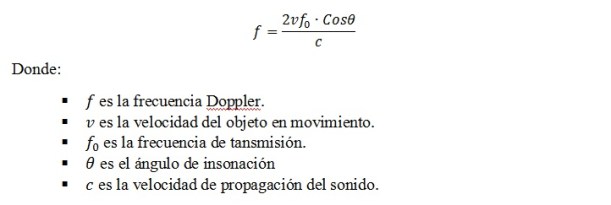
In this post we will enter the Doppler study in a simple, simple and practical way. To start, take a good dose of caffeine to keep you awake, kidding, you just need to read carefully and you will understand the interesting Doppler study. The Doppler mode is a Work Mode. Today we are going to see the color Doppler. The Doppler effect can be defined as the change of the frequency of a sound wave with the movement of the emitter with respect to the receiver. We can explain it using the whistle of a train as an example. It emits a constant frequency sound, which: If it is stopped, the tone that we perceive does not change and is the same as that issued. When approaching, we perceive a higher tone because the sound waves are compressed and therefore have more frequency. When moving away, we perceive a lower tone because the sound waves expand and there is less frequency. The Doppler study will expand the anatomical information allowing knowing the distribution of the vessels with respect to the tissue, as well as knowing the speed and behavior of the blood flow if necessary. It can be represented by color (color Doppler and Doppler energy or Power Doppler) or by a curve or spectrum (continuous Doppler or pulsed Doppler). Therefore, in our Doppler study, the fixed focus is represented by the transducer and the moving object would be the blood flow. This effect is defined with the equation:

Tendremos en cuenta para nuestra práctica diaria:

  • El cambio de frecuencia será proporcional a la velocidad del objeto, es decir cuanto mayor frecuencia de transmisión mayor es la frecuencia Doppler:
    • Se recomienda usar frecuencias de transmisión bajas para calcular velocidades altas y utilizar altas frecuencias para velocidades más bajas.
  • La angulación entre el haz de ultrasonidos y la dirección del vaso:
    • El máximo cambio de frecuencia Doppler ocurre cuando la sangre fluye directamente hacia el transductor o se aleja de él, por tanto el ángulo óptimo es de 0 ó 180 º.
    • Cuando el coseno del ángulo se aproxima a 90º la diferencia de frecuencia disminuye.
    • A 90º el coseno es 0, por lo que no se genera ningún cambio en la frecuencia y por tanto no tendríamos datos.
    • Se recomienda que el ángulo Doppler se sitúe entre 40 y 60º para obtener información

Nos centraremos en los dos modos Doppler que más usaremos habitualmente, en este post, veremos el:

We will take into account for our daily practice:
The change in frequency will be proportional to the speed of the object, that is, the higher the frequency of transmission, the higher the Doppler frequency: It is recommended to use low transmission frequencies to calculate high speeds and to use high frequencies for lower speeds.
The angulation between the ultrasound beam and the direction of the vessel: The maximum change in Doppler frequency occurs when blood flows directly to or away from the transducer, so the optimal angle is 0 or 180 degrees. When the cosine of the angle approaches 90 ° the frequency difference decreases. At 90º the cosine is 0, so no change in the frequency is generated and therefore we would not have data. It is recommended that the Doppler angle be between 40 and 60º to obtain information We will focus on the two Doppler modes that we will most commonly use, in this post, we will see the:

Doppler color

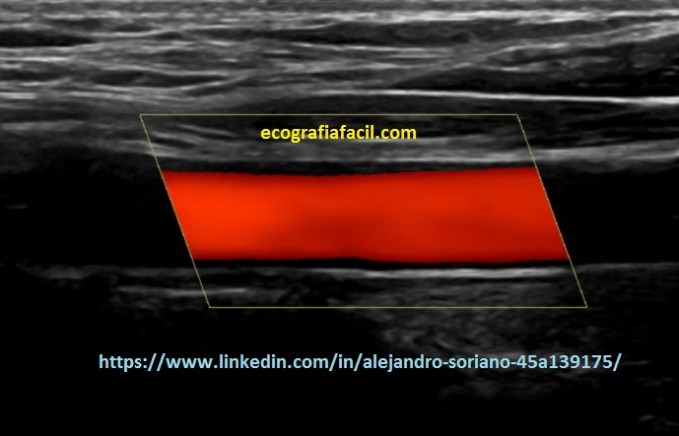
Se coloca un ROI que se superpone a la imagen 2D dándonos a conocer la distribución de los vasos respecto al tejido. Nos permite conocer la velocidad promedio del volumen de la muestra y su dirección.

Está establecido que los flujos que se aproximen a la sonda tengan colores rojizos, mientras que los que se alejan son colores azulados.

Es muy útil para el estudio de los vasos, pero vital para conocer la vascularización de estructuras sospechosas de patología, desde tendinopatías hasta lesiones tumorales.

Los parámetros más utilizados en la práctica son:

An ROI is placed that is superimposed on the 2D image, letting us know the distribution of the vessels with respect to the tissue. It allows us to know the average speed of the volume of the sample and its direction. It is established that the flows that approach the probe have reddish colors, while those that move away are bluish colors. It is very useful for the study of vessels, but vital to know the vascularization of structures suspected of pathology, from tendinopathies to tumor lesions. The parameters most used in practice are:
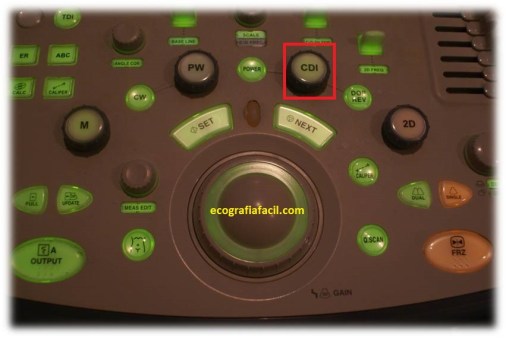
  • Caja color: siempre la ajustaremos al tamaño de la estructura a estudiar, ya que afectará a la resolución espacial y temporal.
Color box: we will always adjust it to the size of the structure to be studied, since it will affect spatial and temporal resolution. It is activated in a command like this:

Es el modo de trabajo CDI, doble color, a su lado el botón de POWER, un solo color.

Si es demasiado grande tendremos un mayor espacio entre líneas y por tanto menor resolución; mientras que si es demasiado pequeña perderemos información. Es un ajuste dependiente de la operadora o el operador del equipo, en nuestro caso, la/el Técnico de Imagen.

It is the working mode CDI, double color, next to the POWER button, a single color. If it is too large we will have a greater space between lines and therefore lower resolution; while if it is too small we will lose information. It is a dependent adjustment of the operator or the operator of the equipment, in our case, the Image Technician.

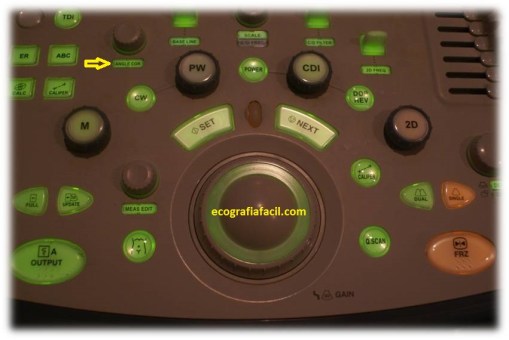
  • Angulación de la caja color: se angula en el sentido del vaso sanguíneo para valorar adecuadamente las velocidades de su flujo.
  • Encontraremos un comando en nuestro menú o botonera, llamado «Angle» (Flecha amarilla), que varíe la angulación de esta caja de color…puede variar en función de cada casa comercial y normalmente aparece en los submenús una vez que hemos activado el modo de trabajo Doppler.
Angulation of the color box: it angulates in the direction of the blood vessel to properly assess the velocities of its flow. We will find a command in our menu or keypad, called «Angle» (yellow arrow), which varies the angulation of this color box … it can vary depending on each commercial house and normally appears in the submenus once we have activated the Doppler working mode.

Esta angulación solo podremos realizarla con las sondas lineales.

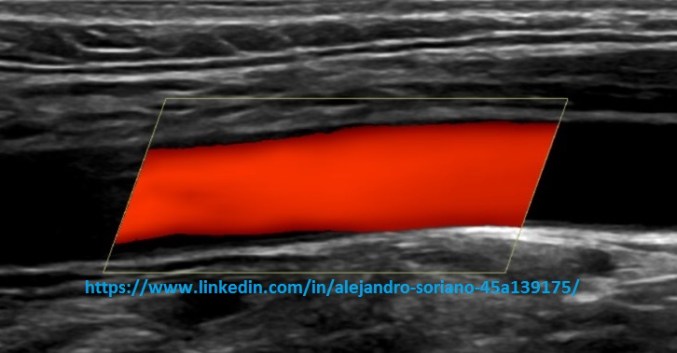
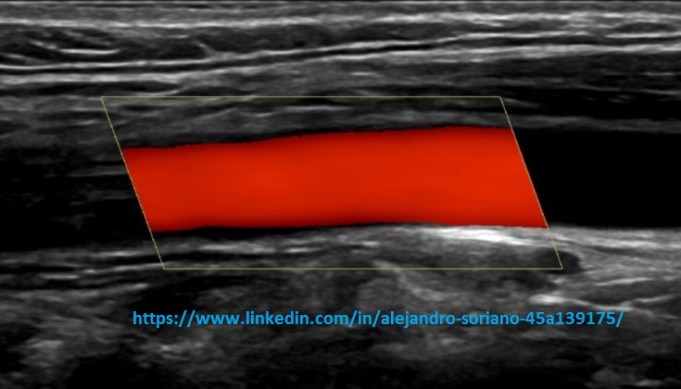
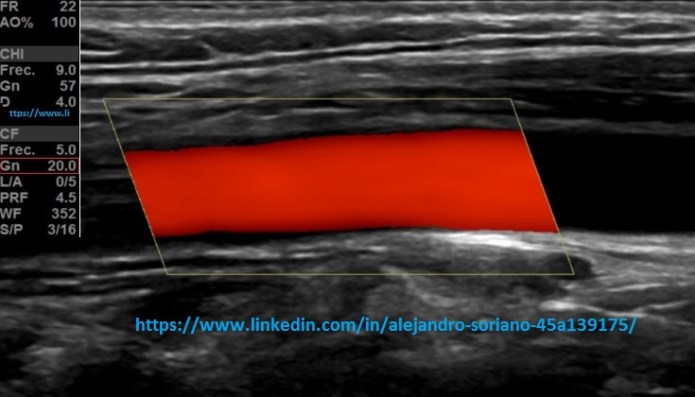
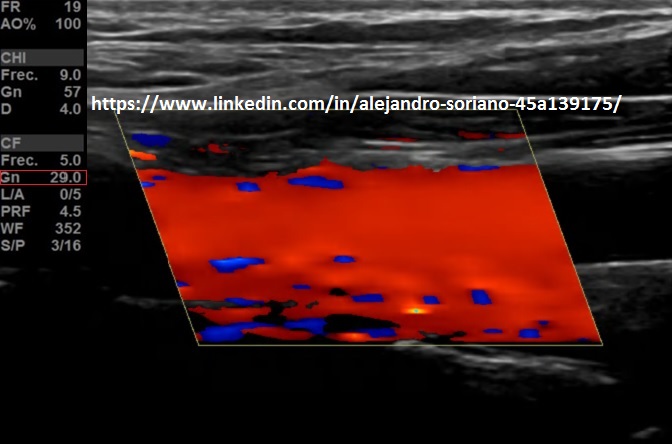
  • Ganancia: sabremos que tenemos la ganancia adecuada cuando no veamos artefacto en “confeti” que se produce por exceso de ésta; y cuando veamos el vaso relleno por completo ya que veremos zonas sin pintar cuando la ganancia es baja.
  • Tendremos en el mismo botón del modo de trabajo del Doppler, la capacidad de variar este valor, girando la rueda.Esto es de modo general, puede haber excepciones, según cada casa comercial.
Gain: we will know that we have the adequate profit when we do not see an artifact in «confetti» that is produced by excess of it; and when we see the filled glass completely since we will see unpainted areas when the gain is low. We will have in the same button Doppler work mode, the ability to vary this value, turning the wheel. This is generally, there may be exceptions, according to each commercial house.
Valores Normales de Ganancia.
Ganancia Excesiva. Artefacto de confeti.
Ganancia Escasa.
  • Frecuencia de repetición de pulsos (PRF) o escala de velocidades: la modificaremos en función del flujo que estemos estudiando; para flujos de alta velocidad la aumentamos para evitar “aliasing”; para bajos flujos la disminuiremos para tener mayor sensibilidad.
  • Podremos variar este valor en algún ajuste ecográfico situado en nuestra botonera o menú, que se denomine, generalmente, «escala»(Flecha amarilla).
Frequency of repetition of pulses or scale of speeds: we will modify it depending on the flow we are studying; for high-speed flows we increase it to avoid «aliasing»; for low flows we will decrease it to have greater sensitivity. We can vary this value in some ultrasound adjustment located in our keypad or menu, which is called, generally, «scale» (Yellow arrow).

PRF alto.
PRF bajo.

Vamos paso a paso, integra este conocimiento…hay mucho más…próximamente.

Let’s go step by step, integrate this knowledge … there is much more … coming soon.

Y yo con este frío…


101. Ecografía de Partes Blandas.

El Tejido Celular Subcutáneo, en adelante TCS, es una de las estructuras que han aparecido en todas las imágenes de la Eco MSK situado bajo la piel…hemos visto patologías que afectan a tejidos del aparato locomotor, pero el TCS también puede albergar su patología, variada, por cierto.

Es fácil encontrarse en la sala con peticiones de médicos por pacientes que acuden a consulta con «bultos» en localizaciones muy variables, a veces únicos, en ocasiones pueden ser varios.

La mayoría de las ocasiones la sospecha de este tipo de lesiones son los Lipomas, pertenecientes casi siempre al TCS.

Estas masas son normalmente benignas y muy frecuentes. Los lipomas tienen un aspecto muy definido que hace que su diagnóstico por ecografía suele ser definitivo si cumple unos criterios de benignidad, a saber:

  • SUBCUTÁNEA
  • ELÍPTICA
  • BIEN DELIMITADA
  • COMPRESIBLE
  • ESTRÍAS LINEALES REFLECTANTES CORTAS PARALELAS A LA PIEL
  • NO SEÑAL DOPPLER-COLOR (Vital).
The subcutaneous cellular tissue, hereinafter TCS, is one of the structures that have appeared in all the images of the MSK Eco located under the skin … we have seen pathologies that affect tissues of the locomotor system, but the TCS can also house its pathology, varied, by the way. It is easy to be in the room with requests from doctors for patients who come to consultation with «lumps» in very variable locations, sometimes unique, sometimes there can be several. Most of the times the suspicion of this type of lesions is the Lipomas, almost always belonging to the TCS. These masses are usually benign and very frequent. Lipomas have a very definite aspect that makes their diagnosis by ultrasound usually definitive if it meets certain criteria of benignity.

Pueden ocasionar dudas diagnósticas para la/el Radiolóloga/o si no cumplen estos criterios, en cuyo caso suelen acabar en pruebas como la RMN.

Los lipomas también pueden ser intramusculares, en algunos de estos casos, potencialmente quirúrgicos.

Estas lesiones TIENEN PREDILECCIÓN ESPECIAL POR LA CINTURA ESCAPULAR y TRAS ECO CONCLUYENTE NO REQUIERE MÁS PRUEBAS DIAGNÓSTICAS NI BIOPSIAS.

Suelen tener un crecimiento lento. Si el crecimiento fuese rápido y/o tuviese Doppler Color podríamos estar delante de un Liposarcoma. Estos tumores son mucho más raros de ver.

El TCS puede verse afectado por otra patología denominada Lipomatosis Grasa que suele verse con asiduidad en pacientes obesos y donde la afectación del TCS no aparece definida ni medible.

Hay otros muchos tipos de bultos que pueden tocarse bajo la piel, con aspecto diferentes, pero por ser el más habitual, repasamos el Lipoma.

Necesitamos saber la localización del bulto, poner mucho Gel, tener una sonda lineal y no comprimir, el objetivo principal es saber si ese lipoma es del TCS o Muscular.

They can cause diagnostic doubts for the Radiologist if they do not have these criteria, in which case they usually end up in tests such as MRI. Lipomas can also be intramuscular, in some of these cases, potentially surgical. These lesions HAVE SPECIAL PREDILECTION THROUGH THE ESCAPULAR WAIST and AFTER CONCLUDING ECO does NOT REQUIRE MORE DIAGNOSTIC TESTS OR BIOPSIES. They tend to have a slow growth. If the growth was fast and / or had Color Doppler we could be in front of a Liposarcoma. These tumors are much more rare to see. The TCS can be affected by another pathology called Fat Lipomatosis that is frequently seen in obese patients and where the involvement of the TCS is not defined or measurable. There are many other types of lumps that can be touched under the skin, with different appearance, but being the most common, we review the Lipoma. We need to know the location of the lump, put a lot of gel, have a linear probe and not compress, the main objective is to know if that lipoma is of the TCS or Muscular.

Fotos:

Debemos conocer primero el tejido con su aspecto normal…Piel Hiperecogénica, TCS Hipoecogénico y Tejido Muscular Hiperecogénico con respecto al TCS.

We must first know the tissue with its normal appearance … Hyperecogenic Skin, Hypoechogenic TCS and Hyperecogenic Muscle Tissue with respect to the TCS.

Localizar el bulto, medirlo en axial y longitudinal, comprobar su aspecto y nunca debemos dejar de poner el Doppler…

Locate the lump, measure it axially and longitudinally, check its appearance and we should never forget to put the Doppler…

Hemos visto una lesión tipo del TCS, típica de Lipoma, lesión benigna diagnosticada mediante Ecografía.

Te presento otra lesión de las muchas que pueden aparecer en el TCS que no cumple criterior de benignidad y que a criterio de la Radióloga/o deberá ser estudiada con RMN y eventualmente con Biopsia, mira:

We have seen a type lesion of the TCS, typical of Lipoma, a benign lesion diagnosed by ultrasound. I present another lesion of the many that can appear in the TCS that does not meet benign criteria and that at the Radiologist’s discretion should be studied with MRI and eventually with biopsy, see:

La lesión es heterogénea, pero es que además no es ovalada y…

The lesion is heterogeneous, but it is also not oval and …

…está vascularizada¡¡¡
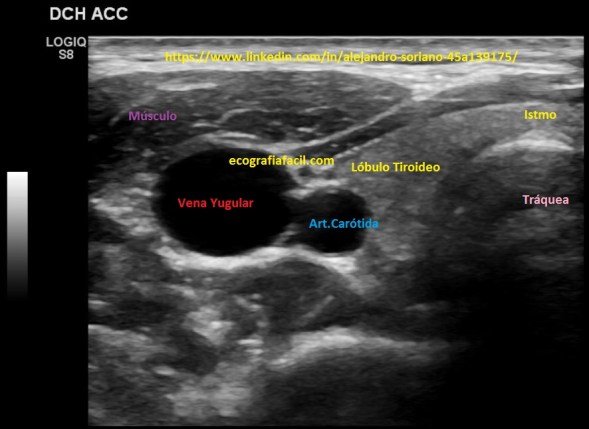
…It is vascularized¡¡¡
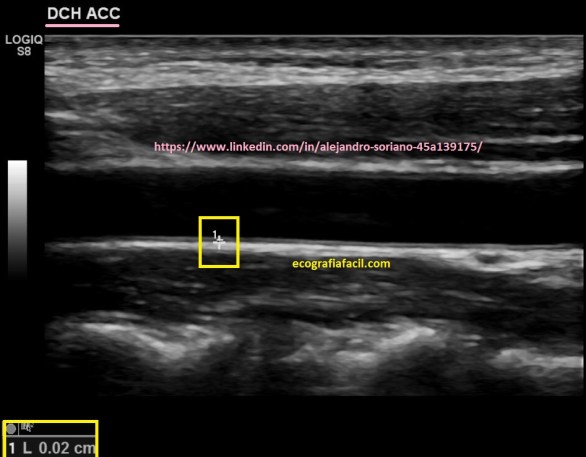
Vamos…Adelante¡¡¡¡