120. Apendicitis.

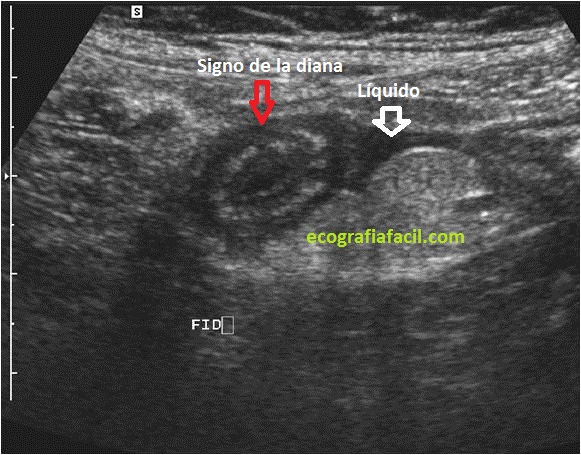
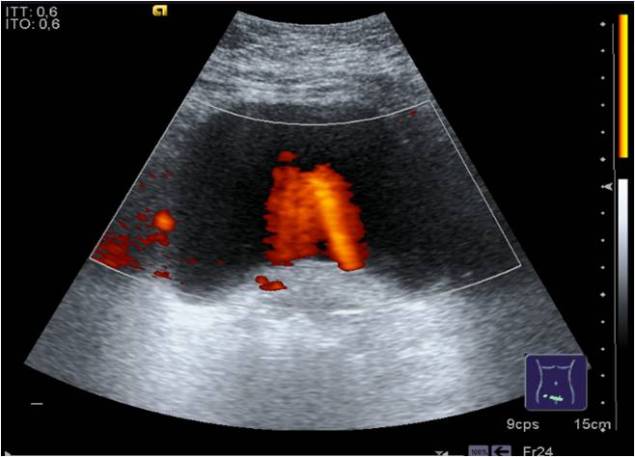
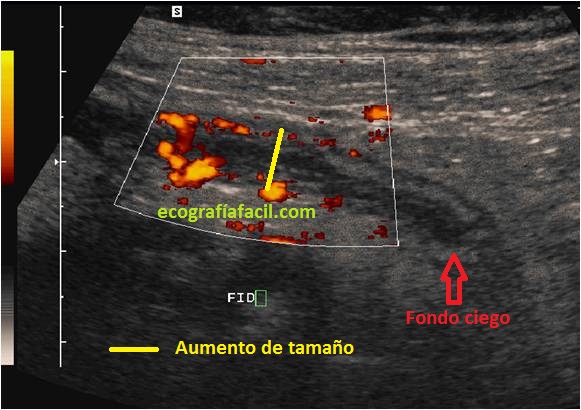
Es una de la exploraciones ecográficas más repetidas en la urgencias, en adultos, pero también en pacientes de Pediatría, este micropost va dedicado a esta patología:

  • SONDA LINEAL de alta frecuencia, eventualmente podemos usar la de baja frecuencia en pacientes con obesidad.
  • ESTUDIO DE FOSA ILIACA DERECHA
  • LA ECO ES ÚTIL CUANDO EL CLÍNICO TIENE SIGNOS AMBIGUOS
  • SIGNOS ECOGRÁFICOS:

–ESTRUCTURA TUBULAR CON EXTREMO CIEGO NO COMPRESIBLE

–DIÁMETRO DE TUBO DE 6MM O MAYOR

–LÍQUIDO ATRAPADO EN APÉNDICE NO PERFORADO

–SIGNO DE LA DIANA o capas concéntricas.

–APENDICOLITO: FOCO ECOGÉNICO CON SOMBRA ACÚSTICA

–HIPERVASCULARIZACIÓN DEL APÉNDICE CON DOPPLER-COLOR

It is one of the most repeated ultrasound scans in the emergency department, in adults, but also in Pediatric patients, this micropost is dedicated to this pathology: High frequency LINEAR PROBE, we can eventually use the low frequency in patients with obesity.
STUDY OF FOSA ILIACA RIGHT ECHO IS USEFUL WHEN THE CLINIC HAS AMBIGUOUS SIGNS
ECOGRAPHIC SIGNS:
TUBULAR STRUCTURE WITH BLIND EXTREME NOT COMPRESSABLE
– TUBE DIAMETER OF 6MM OR GREATER
-COLLED LIQUID IN NON
-PERFORATED APPENDIX
-SIGN OF THE DIANA or concentric layers.
-APENDICOLITO: ECOGENIC FOCUS WITH ACOUSTIC SHADOW
-HIPERVASCULARIZATION OF THE APPENDIX WITH DOPPLER-COLOR


Jamás, Jamás…que en las buenas y en las malas…estoy descontrolado…(mi favorita)


119. Reflujo Gastroesofágico.

Reflujo gastroesofágico es una de las patologías que pueden provocar vómitos en los pacientes lactantes y según el grado, pérdida de peso. Hace unos años era habitual que esta cuestión hiciese que lxs pediatras pidiesen de forma habitual una ecografía para descartar esta patología, se ha dejado de hace, o se hace de forma residual ya que el tratamiento con leches antirreflujo solucionan el problema en la mayoría de las ocasiones y el diagnóstico es clínico básicamente.

Me parece una técnica tan específica de los lactantes que no quería dejar de exponértela.

  • EL BEBÉ HARÁ UNA TOMA E INMEDIATAMENTE DESPUÉS EMPEZARÁ LA PRUEBA
  • LOCALIZAREMOS UNIÓN ESÓFAGO-GÁSTRICA, buscando el teórico lugar donde se localice el Cardias CON UN CORTE PARASAGITAL donde veamos la parte final del esófago en Longitudinal Y PERMANECEREMOS INMÓVILES DURANTE 10 MINUTOS, si durante ese tiempo se produce paso del estómago al esófago MÁS DE 3 ocasiones EN 10 MINUTOS, ES POSITIVO.
  • UN RESULTADO NEGATIVO NO ES CONCLUYENTE
  • DURANTE EL EPISODIO DE REFLUJO la/el paciente ESTARÁ MOLESTX Y PUEDE MOVERSE ya que antes de tener el episodio el/la lactante se incomoda por el malestar que le produce el vómito, hay que estar prevenidos.
  • Se complementa la prueba con una eco abdominal completa.
Gastroesophageal reflux is one of the pathologies that can cause vomiting in breast-feeding patients and, depending on the degree, weight loss.
A few years ago it was common for this question to cause pediatricians to request an ultrasound to rule out this pathology, it has been stopped, or it is done in a residual way since the treatment with antireflux milks solve the problem in most of the cases. The diagnosis is basically clinical.
It seems to me a technique so specific to infants that I did not want to stop exposing it.
THE BABY WILL MAKE A TAKE AND IMMEDIATELY AFTER THE TEST WILL BEGIN WE WILL LOCATE ESOPHAGUS-GASTRIC UNION, looking for the theoretical place where the Cardias is located WITH A PARASAGITAL CUT where we will see the final part of the esophagus in Longitudinal AND WE WILL REMAIN INMOBILITIES FOR 10 MINUTES, if during that time there is passage from the stomach to the esophagus MORE THAN 3 times IN 10 MINUTES, IT IS POSITIVE.
A NEGATIVE RESULT IS NOT CONCLUSIVE
DURING THE REFLUX EPISODE, the patient WILL BE MOLESTX AND CAN MOVE since before the episode the infant becomes uncomfortable because of the discomfort produced by vomiting, we must be aware of it. The test is complemented with a complete abdominal echo.

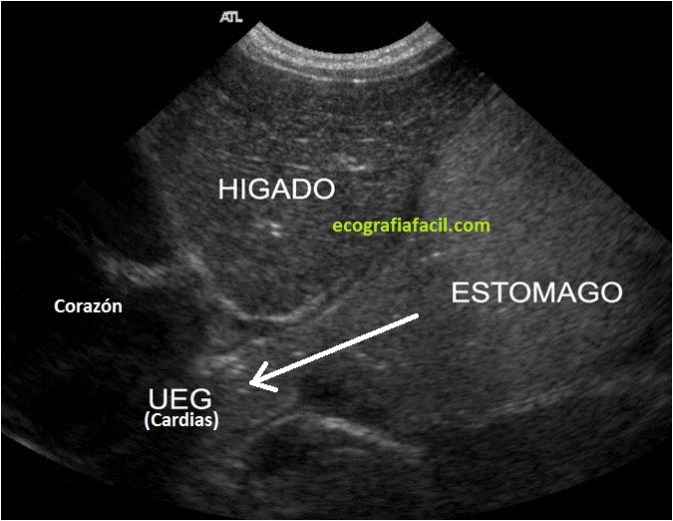
Esta es la imagen que debemos conseguir. La flecha indica la salida que busca el contenido gástrico del estómago, como se ve en la imagen donde el Cardias está abierto y se está produciendo el episodio de reflujo.

This is the image we should get. The arrow indicates the exit that seeks the gastric content of the stomach, as seen in the image where Cardias is open and the episode of reflux is occurring.

Siempre Brilla el Sol…


118. Invaginación intestinal.

Buen fin de semana…Otra típica patología de la edad infantil, sobre todo la primera infancia…es la Invaginación intestinal.

  • ES LA CAUSA MÁS FRECUENTE DE OBSTRUCCIÓN INTESTINAL DE INTESTINO DELGADO EN NIÑOS ENTRE 6 MESES Y 4 AÑOS
  • DOLOR ABDOMINAL ESPASMÓDICO E INTERMITENTE CON VÓMITOS Y HECES EN JALEA DE GROSELLA
  • NORMALMENTE LA ECO SE UTILIZA PARA CONFIRMAR, PUES LOS SÍNTOMAS SON CONCLUYENTES PARA UN CIRUJANO
  • SE INTENTA REDUCCIÓN CON ENEMA por  la urgencia pediátrica…
  • UTILIZAREMOS SONDA LINEAL de alta frecuencia
  • SIGNOS semiologógicos ecográficos:
  1. –MASA OVAL HIPOECOGÉNICA
  2. –ANILLO HIPOECOGÉNICO CON ECOGENICIDAD CENTRAL
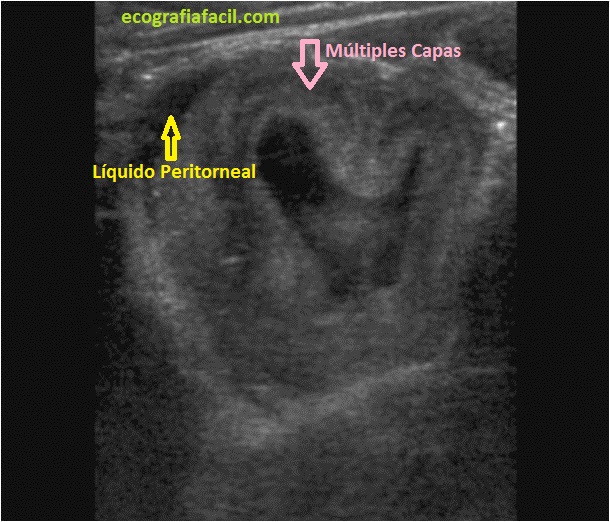
  3. –MÚLTIPLES CAPA Y ANILLOS CONCÉNTRICOS
  4. –PEQUEÑA CANTIDAD DE LÍQUIDO PERITONEAL, GRAN CANTIDAD SUGIERE PERFORACIÓN.
Another typical pathology of childhood, especially early childhood … is the intestinal Invagination. IS THE MOST FREQUENT CAUSE OF INTESTINAL OBSTRUCTION OF THE SMALL INTESTINE IN CHILDREN BETWEEN 6 MONTHS AND 4 YEARS OLD PAIN, ABDOMINAL, ESPASMÓDICO AND INTERMITTENT WITH VOMITING AND FECTS IN GROSELLA JELLY NORMALLY THE ECHO IS USED TO CONFIRM, SINCE THE SYMPTOMS ARE CONCLUSIVE FOR A SURGEON SEE REDUCTION WITH ENEMA by in the pediatric emergency … WE WILL USE A HIGH-FREQUENCY LINEAR PROBE SIGOGRAPHICAL SIGNOLOGICAL SIGNS:
-MUCH OVAL HYPOECHOGENIC
– HYPOECOGENIC ACID WITH CENTRAL ECOGENICITY
– MULTIPLE LAYER AND CONCENTRIC RINGS
-THE QUANTITY OF PERITONEAL LIQUID, LARGE QUANTITY SUGGESTS PERFORATION

Buscaremos en la tripa de la/el paciente buscando imágenes similares a estas, recorriendo con nuestra sonda lineal toda la región, focalizando en la eventual zona de dolor, el aspecto patológico de la tripa invaginada nos llamará la atención.

We will look in the gut of the patient looking for images similar to these, traveling with our linear probe throughout the region, focusing on the eventual area of ​​pain, the pathological aspect of the invaginated gut will draw attention.


Mi Verano y  mi Sol, poder sentir cómo me abrasas, aunque no pueda tocarte…

117. Estenosis hipertrófica de píloro.

Este tipo de patología es habitual en los servicios de urgencia pediátrica de los hospitales. Lxs pediatras encuentran pacientes con unos signos que pueden hacerles pensar en esta patología y hacen peticiones para descartar la Estenosis Hipertrófica de Píloro.

  • VÓMITOS Y LLANTO INCONSOLABLE, es típico de estxs lactantes.
  • PRECISIÓN DIAGNOSTICA DEL 100% EN TÉCNICA RELATIVAMENTE FÁCIL, SONDA DE + DE 7,5 MHZ
  • LOCALIZAR PÍLORO EN con el/la paciente en OPD
    • Posicionamos en OPD, localizamos estómago y seguimos su recorrido buscando el bulbo gástrico, finalizando el estómago vamos a empezar a ver región pilórica. Tenemos que estudiar esta región en axial y en longitudinal.
  • HALLAZGOS:
  1. –MASA MUSCULAR ENGROSADA HIPOECOGÉNICA INMEDIATAMENTE SUPERFICIAL A LA MÁS ECOGÉNICA CAPA MUCOSA DEL CONDUCTO PILÓRICO
  2. –MASA MUSCULAR DE MÁS DE 2 MM ES PATOLÓGICA, MAyor de 3mms 100% seguridad  en el diagnóstico.
  3. –LONGITUD CANAL PILÓRICO DE 15 MM MÁXIMO
  4. –DIÁMETRO DEL PÍLORO MAYOR DE 11 MM
  • OTROS HALLAZGOS:

–PERISTALTISMO DE LUCHA EN ANTRO

–NO APERTURA DE PÍLORO

This type of pathology is common in the pediatric emergency services of hospitals. Pediatricians find patients with signs that can make them think about this pathology and make requests to rule out Pyloric Hypertrophic Stenosis. VOMITING AND UNCOMFORTABLE CRYING, is typical of these infants. DIAGNOSTIC PRECISION OF 100% IN RELATIVELY EASY TECHNIQUE, PROBE + 7.5 MHZ LOCALIZE PILLS IN with the patient in OPD,
We position in OPD, locate stomach and continue its journey looking for the gastric bulb, ending the stomach we will begin to see pyloric region. We have to study this region in axial and longitudinal.
 FINDINGS: MUSCULAR MASSIVE HYPOECHOGENIC IMMEDIATELY SUPERFICIAL TO THE MOST ECOGENIC MUCOUS LAYER OF THE PILORETIC DUCT -MUSCULAR MASS OF MORE THAN 2 MM IS PATHOLOGICAL -PILORIC CHANNEL LENGTH OF 15 MM MAXIMUM – DIAMETER OF THE PILLAR GREATER THAN 11 MM OTHER FINDINGS: -THE CONTROL OF ANTRO FIGHT -NO PILLOW OPENING

En la imagen vemos un corte axial de una tripa. el píloro, está engrosada, hipoecogénica lo marca la flecha roja, y se mide con una medida que indica la flecha amarilla, en azul la luz del píloro…

In the image we see an axial cut of a gut. the pylorus, is thickened, hypoechoic marked by the red arrow, and is measured with a measure that indicates the yellow arrow, in blue the light of the pylorus

Para esta técnica es necesario una gran dosis de paciencia.

A great deal of patience is necessary for this technique.

No puedo con este frío…me consume…


116. Riñón en Herradura

Gracias, antes de nada, por hacer que este Blog siga creciendo, en Insta, más de 500 seguidores y me encanta porque es mi red favorita…os espero para que visites el perfil y sigas el Blog…

Thanks, first of all, for making this Blog keep growing, in Insta, more than 500 followers and I love it because it’s my favorite network … I’m waiting for you to visit the profile and follow the Blog …

Tenemos, dentro de las malformaciones habituales a nivel renal que podemos encontrar por «casualidad» en la edad infantil, los Riñones en Herradura.

Es una figura que en ecografía suele ser un hallazgo, a veces en la edad adulta si nunca se exploró el abdomen, casi siempre en la edad pediátrica…

Te enlazo aquí para que conozcas en imágenes esta figura malformativa y te presento la imagen ecográfica, que es a veces difícil de explorar, puesto que vamos a ver unos riñones malrotados o situados de forma anómala y tenemos que ver siempre la independencia morfológica de ambos polos renales…

We have, in the usual malformations at the renal level that we can find by «chance» in childhood are the Kidneys in Horseshoe. It is a figure that in ultrasound is usually a finding, sometimes in adulthood if the abdomen was never explored, almost always in the pediatric age … I link you here so that you know in images this malformative figure and I present the sonographic image, which is sometimes difficult to explore, since we are going to see some malformed or abnormally located kidneys and we must always see the morphological independence of both poles kidney …

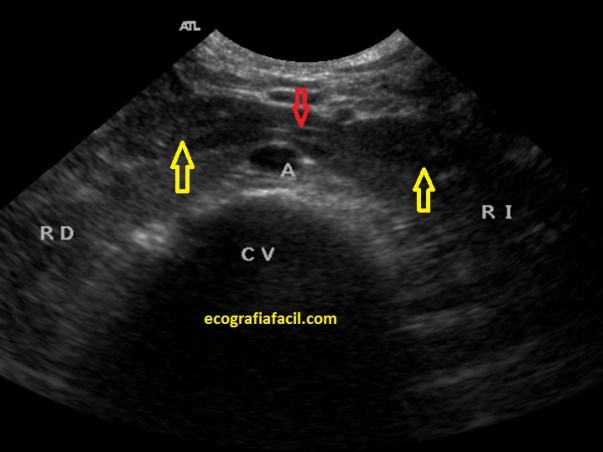
El aspecto del riñón en herradura en cuanto a su semiología es de lo más normal, pero cuando hacemos la exploración vamos a poder comprobar que el polo inferior del riñón, normalmente el derecho, porque es el que primero se explora, se orienta  y continua buscando la línea media y comprobaremos como pasa por encima de Aorta, es decir, anterior a ésta y a la Cava Inferior, lógicamente.

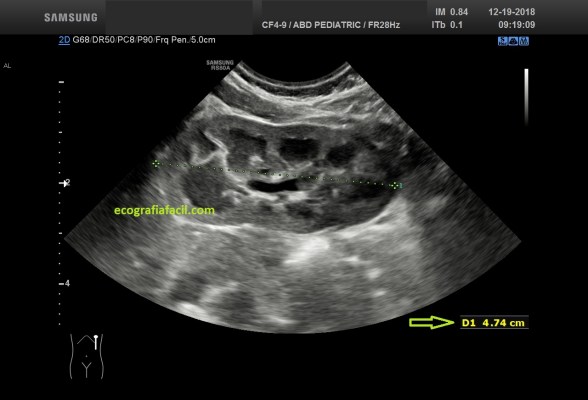
Las flechas amarillas marcan ambos riñones y la flecha roja su unión.

Casi siempre se unen los polo inferiores de los riñones.

The aspect of the horseshoe kidney in terms of its semiology is the most normal, but when we do the exploration we will be able to verify that the lower pole of the kidney, usually the right one, because it is the one that is first explored, is oriented and continues to search the middle line and we will check how it passes over Aorta, that is, prior to this and to the Lower Cava, logically. The yellow arrows mark both kidneys and the red arrow their union. The lower poles of the kidneys are almost always joined.

El esfuerzo por aprender es costoso, pero más lo es el de desaprender, y es igual de necesario…


115. Nefrocalcinosis.

Seguimos en este año 2019 en el que te deseo mucha Salud, y que la vida te sea muy favorable, no es perfecta, no es todo color de rosa, pero que sea lo más amable posible.

Otro MicroPost para hablar de una patología poco habitual en pediatría, pero que como figura patológica muy llamativa ecográficamente podemos ver es la Nefrocalcinosis, te lo enlazo para que conozcas más de esta patología. rara en pediatría como he dicho antes, pero es tan llamativo el caso que quería presentarlo aquí.

Datos básicos:

-Es la calcificación del parénquima renal. Puede se distrófica o metastásica.

-La calcificación distrófica se debe al depósito de calcio como consecuencia de una isquemia o necrosis.

-La nefrocalcinosis metastásica suele deberse a estados hipercalcémicos. (Insuficiencia renal, hipoparatiroidismo y neoplasias malignas.)

Vamos a ver unos riñones así en la ecografía:

We continue in this year 2019 in which I wish you much Health, and that life is very favorable, is not perfect, it is not all rosy, but that is as friendly as possible. Another MicroPost to talk about an unusual pathology in pediatrics, but that as a very striking pathological figure we can see ultrasound is Nephrocalcinosis, I link it to you to know more about this pathology. rare in pediatrics as I said before, but the case is so striking that I wanted to present it here. Basic data: – It is the calcification of the renal parenchyma. It can be dystrophic or metastatic. -Dystrophic calcification is due to the deposit of calcium as a result of ischemia or necrosis. -The metastatic nephrocalcinosis is usually due to hypercalcemic states. (Renal insufficiency, hypoparathyroidism and malignant neoplasms.) We are going to see some kidneys like this in the ultrasound:

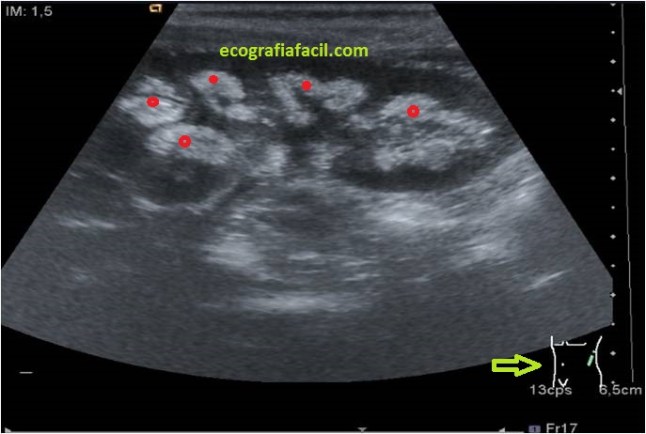
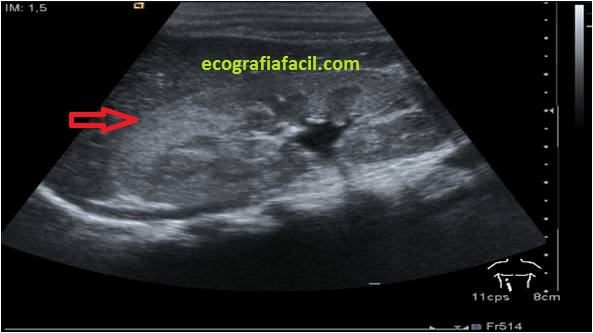
En las imágenes superiores ves un corte longitudinal y otro axial del riñón.Marcado con círculos o flechas rojas, los pielones caliciales hiperecogénicos, muy llamativamente, indican patología a dicho nivel, la corteza renal, hipoecogénica y normal.

In the upper images you see a longitudinal and axial cut of the kidney. Marked with red circles or arrows, the hyperechoic calyceal skin, very strikingly, indicates pathology at this level, the renal cortex, hypoechoic and normal.

Vértigo…Soñar, Esfuerzo y Saber Esperar.


114. Litiasis.

Imposible despedir el año sin un post, este, que tan solo es una excusa para decirte Gracias y Muy Feliz 2019. Vamos¡¡

Los cálculos renales son muy frecuentes.

En la ecografía son focos hiperecogénicos con sombra posterior nítida.

Si el cálculo pasa a uréter puede quedar detenido en 3 zonas donde disminuye la luz ureteral:

  1. Unión ureteropélvica.
  2. Cruce del uréter con los vasos iliacos.
  3. En la unión uretero-vesical.

Ya hemos hablado de ellos en los adultos, y pensaréis que en la infancia es mucho más raro este tipo de patologías, y es verdad, pero pongo esta imagen aquí porque hay ciertas patologías y algunos tratamientos que hacen que en la infancia sea necesario el control a la búsqueda de estas litiasis en aquellxs niñxs que son sometidos a estos tratamientos…por ejemplo en patologías como la Osteogénesis Imperfecta y su tratamiento con determinadas sustancias que refuercen el hueso.

Kidney stones are very frequent. On ultrasound they are hyperechoic foci with sharp posterior shadow. If the stone passes to the ureter, it can be stopped in 3 areas where the ureteral lumen decreases: Ureteropelvic junction. Crossing the ureter with the iliac vessels. In the uretero-vesical junction.
We have already talked about them in adults, and you will think that in childhood this type of pathologies is much rarer, and it is true, but I put this image here because there are certain pathologies and some treatments that make it necessary in childhood to control to the search of these stones in those children who are subjected to these treatments … for example in pathologies such as Osteogenesis Imperfecta and its treatment with certain substances that strengthen the bone.

Como se ve una litiasis:

Litiasis Renal
Litiasis en unión uretero-vesical.

Estas imágenes ya las hemos visto anteriormente, pero las pongo y aprovechamos para repasar conceptos básicos de la semiología ecográfica.

These images we have seen before, but I put them and take the opportunity to review basic concepts of ultrasound semiology.

Siempre que tengamos litiasis es aconsejable ver el Jet Vesical.

Este es el último Post de 2018…Ha sido un año increíble, solo puedo decir «Gracias» de Corazón, por seguir el Blog, por leerme, por aprender conmigo…por estar en la redes, me gusta notar que estás al otro lado…Gracias¡¡¡

Para 2019 te deseo Salud, que seas muy feliz, que te rías mucho, que estés bien contigo…

Este Post era solo una excusa para decirte Gracias y Muy Feliz 2019.

113. Suprarrenales o Adrenales.

Repasamos las Glándulas Suprarrenales, son de vital importancia en el estudio del abdomen pediátrico, especialmente en el de los neonatos, muy particularmente en aquellxs que están internados en las Unidades de Cuidados Intensivos Neonatales, donde su control mediante ecografía al igual que el Cerebro son vitales en la búsqueda de sangrados.

La búsqueda de estas estructuras la hemos repasado en el Post 109 donde hemos visto su anatomía normal. La búsqueda de estas glándulas no es fácil, pero en neonatos es fácil verlas porque son unas formaciones serpentiformes, hiperecogénicas dentro rodeadas de una envoltura hipoecogénica que se presentan en forma de «V», mira:

The adrenal glands are of vital importance in the study of the pediatric abdomen, especially in the neonates, particularly those who are admitted to the Neonatal Intensive Care Units, where their control by ultrasound as well as the Brain are vital in the Search for bleeds. The search of these structures we have reviewed in Post 109 where we have seen their normal anatomy. The search for these glands is not easy, but in neonates it is easy to see them because they are serpentine, hyperechogenic formations surrounded by a hypoechoic envelope that appear as a «V», look:
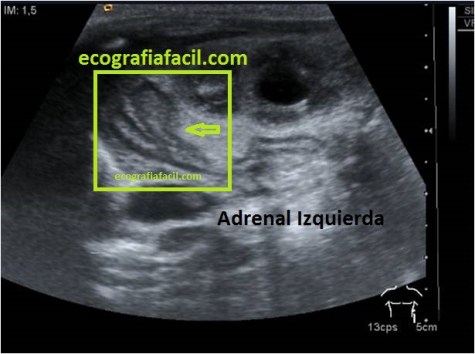
Partiendo de la normalidad, cualquier cambio en la ecoestructura de la anatomía debe ser susceptible de sospecha en esta región, sobre todo siempre que se busquen sangrados internos tanto en el Cerebro como en la Suprarrenal o Adrenal.

Starting from normality, any change in the anatomy of the anatomy should be suspect in this region, especially whenever internal bleeds are sought in the Brain, Adrenal or Adrenal.
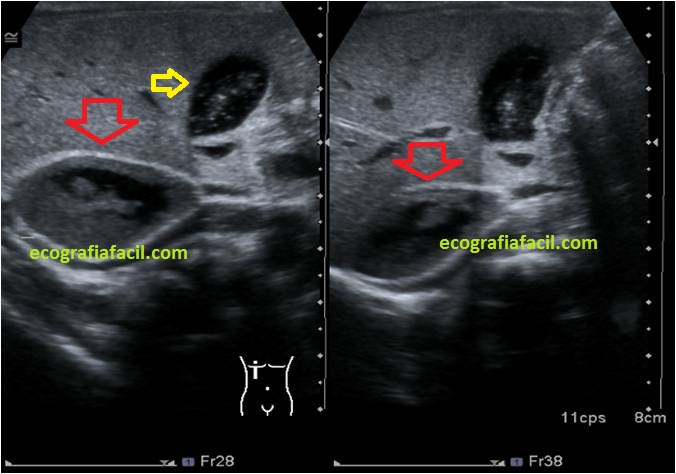
Esta foto tiene gran cantidad de información, en primer lugar la que nos muestran las flechas rojas. Es una Glándula Adrenal que ha sangrado, hiperecogénica y anecoica, ecoestructuralmente muy modificada con respecto a la foto de normalidad.

Además la flecha amarilla nos muestra una Vesícula Biliar con contenido hiperecogénico en su interior, cuando sabemos que debe ser anecoica, pero en pacientes neonatos, este hallazgo es habitual y «normal».

This photo has a lot of information, first of all the one shown by the red arrows. It is an Adrenal Gland that has bled, hyperechoic and anechoic, eco-structurally very modified with respect to the normality picture. In addition, the yellow arrow shows a biliary vesicle with hyperechogenic content inside, when we know that it should be anechoic, but in neonatal patients, this finding is common and «normal».

Las Adrenales deben ser estudiadas también con mucho celo en pacientes de sexo femenino que debuten con trastornos hormonales, pubarquia precoz o similares, donde será estudio obligatorio al igual que los ovarios.

Adrenal glands should also be studied with great zeal in female patients who debuted with hormonal disorders, early pubarche or similar, where it will be mandatory study as well as the ovaries.

El Esfuerzo a veces titánico, día a día o post a post, aunque sea duro, te enseña, que nunca nos falte esta necesidad de crecer, que nunca pueda la desidia o cualquier forma de energía negativa que nos rodea con nuestro afán de mejorar cada día.

 

112 Megauréteres.

Como os he hablado en el 111 de la Pielonefritis, comentaba que una de sus causas podría ser el reflujo, es decir, cómo el contenido de la vejiga puede llegar al Riñón y por tanto si está infectada, afectar al éste…

Para ello el malfuncionamiento de los Uréteres puede ser una de esas causas…entre otras…en este enlace os dejo un completo repaso por aquellas patologías habituales de malformaciones nefro-urológicas en edad pediátrica, es interesantísimo y me parece vital su entendimiento.

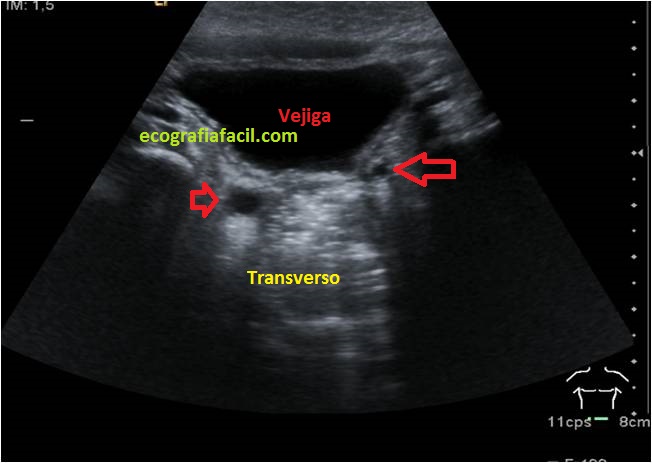
El Megauréter es la visualización de los Uréteres dilatados distalmente, que de forma habitual no tienen que ser vistos con ecografía, y además, se ven con un aumento de tamaño, anecoicos, redondos en transverso y alargados en longitudinal en las cercanías de su llegada a la vejiga…no es muy técnico lo que he contado, pero espero que lo hayáis entendido…¿no?, no te preocupes, mira las imágenes:

We have spoken in the 111 of the Pyelonephritis, that one of its causes could be the reflux, that is to say, as the content of the bladder can reach the Kidney and therefore if it is infected, affect the kidney … For this the malfunction of the ureters can be one of those causes … among others … in this link I leave you a complete review of those common pathologies of nephro-urological malformations in pediatric age, it is very interesting and I think your understanding is vital . The Megauréter is the visualization of the ureters that usually do not have to be seen with ultrasound, and in addition, they are seen with an increase in size, anechoic, round in transverse and elongated in longitudinal in the vicinity of their arrival to the bladder. ..it is not very technical what I have told, but I hope you have understood … no ?, do not worry, look at the images:

Megauréter bilateral, flechas rojas, anecoicos y redondos.

Bilateral megaureter (red arrows) anechoic and round.

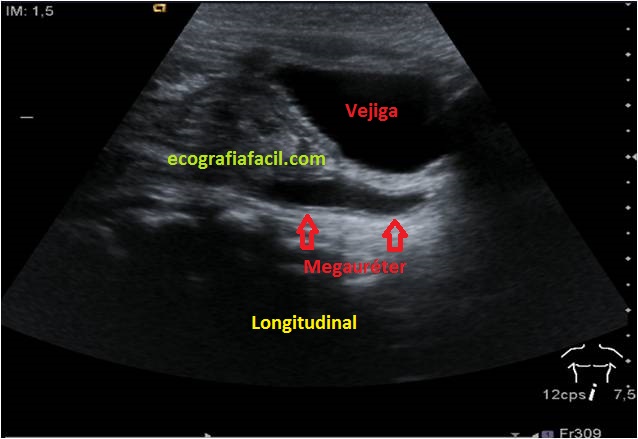
En Longitudinal, el Uréter derecho se alarga y busca su entrada en la vejiga, durante la exploración éstos pueden variar su tamaño al drenar la orina en la vejiga que puede estudiarse con Jet Ureteral que no es más que colocar el Doppler Color a la altura de la entrada de ambos uréteres en la vejiga y esperar a que la orina eyectada en la vejiga sea detectada por el Color como un flujo que nos representará en color dentro de la vejiga…eso certificará sin más que los uréteres están drenando su contenido, mira:

In Longitudinal, the right Ureter lengthens and looks for its entrance in the bladder, during the exploration these can vary their size when draining the urine in the bladder that can be studied with Ureteral Jet that is not more than to place the Color Doppler at the height of the entrance of both ureters in the bladder and wait for the urine ejected in the bladder to be detected by the Color as a flow that will represent us in color inside the bladder … that will certify without further ado that the ureters are draining their contents, look:

Verde.

111. Pielonefritis.

Dentro de los procesos infecciosos que afectan al abdomen de lxs pacientes pediátricxs, destaca esta que focaliza en los Riñones y como he hablado de ellos en el Post anterior, vamos a ver los signos o semiología habitual de esta patología en esta localización, empezamos, es la Pielonefritis:

Es la inflamación tubulointersticial del riñón, en pacientes pediátricxs suele ser aguda.

– Habitualmente ocurre por infección de orina, por reflujo, o por diseminación hematógena.

– Hallazgos ecográficos:

  1. Aumento global del riñón.
  2. Alteración de la ecogenicidad. Como ves en las imágenes que te pongo a disposición, compara la normalidad con la patología y juzga…
  3. Compresión del seno renal.
  4. Masa o masas mal definidas.
  5. Gas en el parénquima renal, provocada por la inflamación.
Within the infectious processes that affect the abdomen of pediatric patients, it stands out that it focuses on the kidneys and as I talked about them in the previous post, we will see the signs or habitual semiology of this pathology in this location, we started, it is Pyelonephritis: It is the tubulointerstitial inflammation of the kidney, in pediatric patients it is usually acute. – It usually occurs due to urine infection, reflux, or hematogenous spread. – Ultrasound findings: Global increase of the kidney. Alteration of echogenicity. As you see in the images that I put at your disposal, compare the normality with the pathology and judge … Compression of the renal sinus. Mass or poorly defined masses. Gas in the renal parenchyma, caused by inflammation.

Normalidad:

Semiología de la Pielonefritis, que puede afectar en diferentes grados, puede ser que no haya afectación, puede que sea una afectación parcial o de sólo un área del riñón, que se verá más hiperecogénica que el resto del Riñón…Mira:

The Pielonefritis, that can affect in different degrees, it can be that there is no affectation, it can be a partial affectation or of only an area of ​​the kidney, that will be more hyperechogenic than the rest of the Kidney … Look

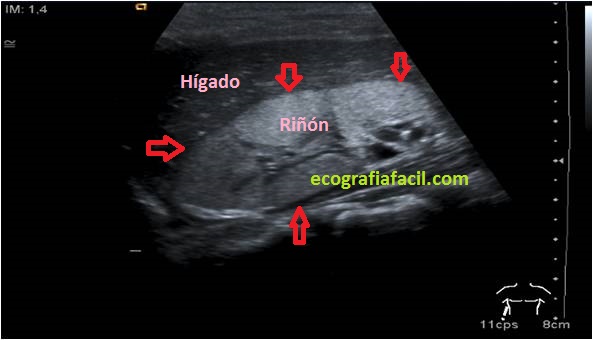
La Pielonefritis puede afectar a todo el órgano aunque es muy poco habitual…pero muy espectacular, mira esta imagen que viene a continuación y observa la relación Hepático Renal de este Post para que veas normalidad y patología…

Riñón hiperecogénico con respecto al Hígado.

The Pyelonephritis can affect the whole organ although it is very unusual … but very spectacular, look at this image that comes next and observe the Hepatic Renal relationship of this Post so you can see normality and pathology …

Espero que hayáis visto el concepto y os gusten estas imágenes tan espectaculares, todas ellas de pacientes de pediatría.

I hope you have seen the concept and you like these spectacular images, all of them pediatric patients.

Hasta Mañana…